Smart heating is one of the most useful upgrades you can make in an apartment. But apartment heating can be quirky: shared boilers, radiators you don’t own, and limits on what you’re allowed to change.
That’s why many renters and flat owners end up comparing two popular options: a smart thermostat with room sensors vs smart radiator valves on each radiator. Both can cut bills and improve comfort, but they work very differently, and one usually fits your situation better than the other.
This guide breaks down how each option works in apartments, how hard they are to install, what they’re like to live with, and which one makes the most sense for your specific type of flat.
Overview: Smart Thermostats vs Smart Radiator Valves in Apartments
Why apartment heating is different from houses
Apartments often have heating setups that are more constrained than houses:
- Shared systems: Many blocks use a central boiler or district heating, where your apartment is just one zone among many.
- Limited access: The main thermostat or heating controls might be in a hallway, cupboard, or even in a locked service area.
- Radiators instead of ducts: In Europe especially, most apartments use hot-water radiators or electric panels, not forced-air systems.
- Landlord rules: Renters may not be allowed to touch wiring or replace existing thermostats.
These constraints mean you can’t always install a traditional smart thermostat like in a detached house. Smart radiator valves (SRVs) and smart thermostats with wireless room sensors try to solve this from different angles.
Quick comparison: when thermostats win and when valves win
Here’s the short version of smart thermostat vs smart radiator valves for apartments:
- Smart thermostat with room sensors is usually better if:
- You have your own boiler and can change the main thermostat wiring.
- You want a simple system that controls the whole flat, plus some room-level intelligence from sensors.
- You like deep smart home integrations (voice control, routines, data graphs).
- Smart radiator valves are usually better if:
- You can’t or don’t want to touch the main thermostat (renter, shared system).
- You have several radiators and want different temperatures per room.
- You want a mostly DIY solution that just replaces existing TRV heads.
In some apartments, a hybrid approach works well: a smart thermostat for boiler control plus a few smart valves in problem rooms.
How Smart Thermostats with Room Sensors Work
Core components: hub, thermostat, room sensors, app
A smart thermostat system with room sensors typically includes:
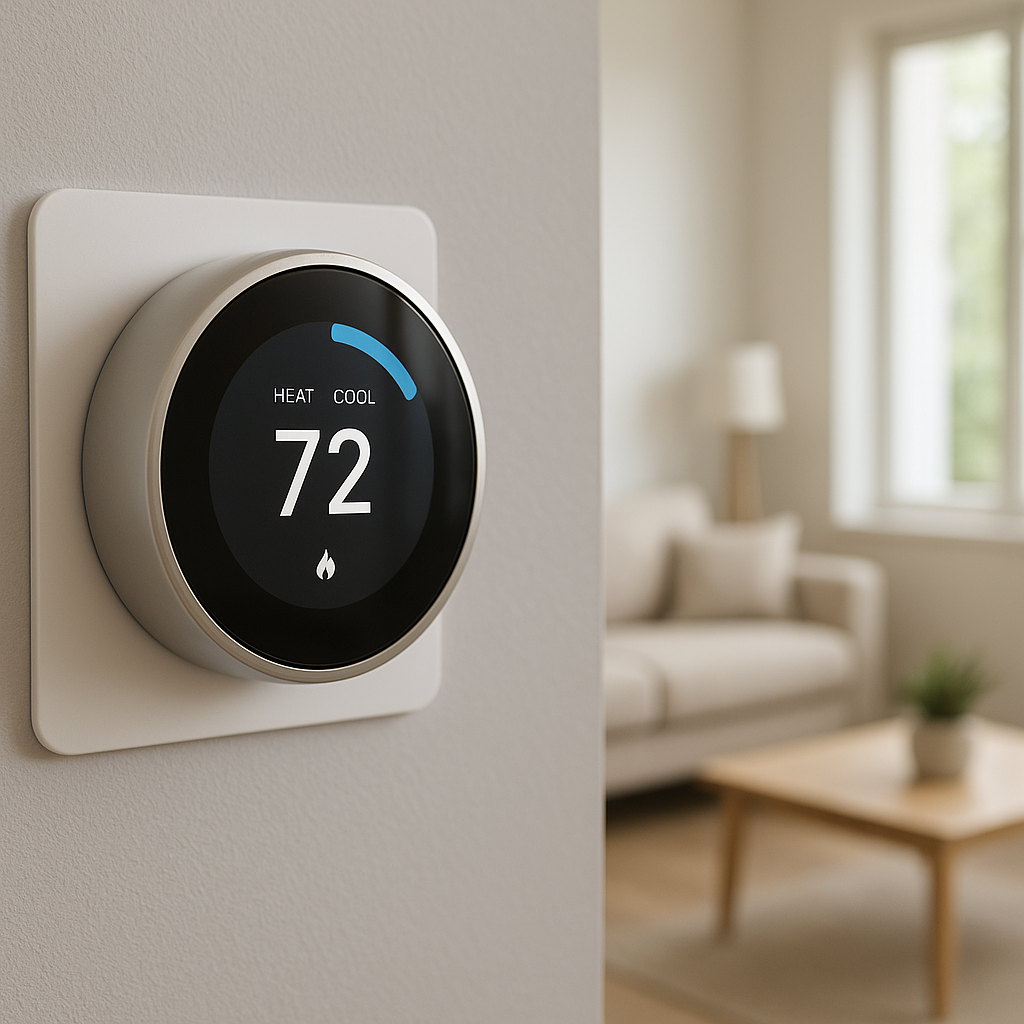
- Smart thermostat: Wired in place of your existing thermostat, directly controlling the boiler or zone valve. Examples include Ecobee, Google Nest, Tado, and Hive Active Heating.
- Room sensors: Small wireless devices you place in key rooms to measure temperature and, in some models, occupancy.
- Hub or bridge (sometimes built-in): Connects the thermostat and sensors to your Wi‑Fi network.
- Mobile app and web portal: Where you set schedules, view temperatures, and adjust settings from anywhere.
Instead of using only the temperature at the hallway thermostat, the system can average readings from multiple rooms or prioritize the room you care about most.
Zoning by room using multiple temperature and occupancy sensors
In a house, “zoning” usually means separate plumbing or ductwork. In many apartments, you don’t have that. Smart thermostats approximate zoning using sensor data and scheduling:
- Room prioritization: You can tell the system to follow the bedroom sensor at night, the living room sensor in the evening, and maybe ignore the kitchen sensor when cooking spikes the temperature.
- Occupancy detection: Some sensors (for example Ecobee SmartSensors) detect motion. If a room isn’t used, the system can stop prioritizing that sensor.
- Weighted averages: The thermostat can heat until the combined average of selected rooms hits the target, reducing overheated hallways and cold corners.
This doesn’t close individual radiators like smart valves do, but it does reduce the chances that one “wrong” thermostat location controls comfort for the whole flat.
Typical apartment setups and compatibility with central or district heating
Whether you can install a smart thermostat with sensors in an apartment depends heavily on your system:
- Individual combi or system boiler: Common in many European flats and some condos. These are usually fully compatible with smart thermostats as long as you can access the wiring.
- Central building boiler with your own wall thermostat: Often compatible, but you may need landlord or building approval to replace the thermostat.
- District heating or shared loop without direct thermostat access: Harder. If your temperature is regulated externally and you only have basic radiator valves, a smart thermostat may not be an option.
- Electric panel heaters with wired wall stats: Some smart thermostats can control electric heaters, but check voltage compatibility carefully and consider an electrician.
In many rented apartments, the limitation isn’t the technology; it’s permission to touch the existing controls.
How Smart Radiator Valves Work
Replacing manual TRVs with smart valves on each radiator
Traditional thermostatic radiator valves (TRVs) let you manually set radiator temperature locally. Smart radiator valves replace the TRV head with a motorized, connected version.
They usually contain:
- A temperature sensor at the valve itself.
- A small motor that opens or closes the valve.
- Batteries (often AA) to power the electronics.
- A radio module (Zigbee, Z‑Wave, proprietary RF, or Wi‑Fi) to talk to a hub or gateway.
If you’re unfamiliar with TRVs in general, the overview at this thermostatic radiator valve article gives useful background on how they manage radiator flow.
Room-by-room temperature control without changing the main thermostat
The big advantage of smart radiator valves in apartments is independence from the main thermostat:
- Individual room setpoints: Set the bedroom to 18°C, the living room to 21°C, and the guest room to 15°C, all on different schedules.
- No wiring changes: You leave the existing thermostat alone, often set a bit higher, and let the valves decide which rooms actually get heat.
- Selective heating: You can effectively “turn off” unused rooms without shutting down the whole system.
Popular examples include Tado Smart Radiator Thermostats, Netatmo Smart Radiator Valves, and Eve Thermo (for Apple HomeKit users).
Wireless communication, batteries, and app control
Smart radiator valves communicate wirelessly with a bridge or directly with your smart home hub:
- Bridge or gateway: Often plugs into your router and coordinates multiple valves in the flat.
- App control: Lets you set room names, schedules, and temperatures individually.
- Battery-powered: Typically 1–2 years of battery life. The app usually warns you when a valve needs new batteries.
Because they’re physically at the radiator, they can react locally (for example, closing if the room overheats from sun or cooking) even if the main thermostat is elsewhere.
Installation in Apartments: What’s Easier and What’s Allowed
Installation requirements for smart thermostats (landlord, building rules, wiring)
Installing a smart thermostat with sensors in an apartment usually involves:
- Removing the existing thermostat: This may void warranties or violate rental agreements if not approved.
- Matching wiring: Some thermostats need a “C-wire” (common) or specific voltage; others work with simple on/off contacts.
- Mounting the new unit: Often in the same position, sometimes moving it for better readings.
Before you start, check:
- Your tenancy agreement or condo rules about altering electrical systems.
- Who is responsible for heating controls (you, landlord, or building management).
- Whether an electrician is required by local regulations.
Owners usually have more freedom, but in some managed buildings even owners must use approved contractors.
Installation requirements for smart radiator valves (DIY vs professional)
Smart radiator valves are generally more renter-friendly:
- Tool-free or simple tools: Many valves unscrew by hand; some need an adjustable spanner.
- No plumbing changes: You swap the valve head, not the valve body or pipework.
- Adapters included: Kits usually include multiple adapters for common TRV types.
Most people can do this DIY in a few minutes per radiator. You only need a professional if:
- Your radiators don’t have TRVs at all (just plain manual valves).
- The existing valve bodies are very old or incompatible.
- You need the system drained to install new valve bodies.
Renters vs owners: which option is more realistic in a rented flat?
For renters, smart radiator valves are usually the realistic route:
- You can often remove them and restore the original heads when you leave.
- You’re not touching mains wiring or shared building controls.
- Upfront cost is modular: start with one or two rooms and expand.
Owners with full control over their heating system can choose either option or combine them. A common pattern is a smart thermostat for overall control plus smart valves in bedrooms or home offices.
Comfort and Control: Room-Level vs Radiator-Level Precision
Temperature accuracy and avoiding hot/cold spots
In apartments, hot/cold spots often come from:
- Hallway thermostats that heat until the hallway is warm while bedrooms lag behind.
- South-facing rooms that get solar gain, overheating earlier.
- Rooms with radiators partly blocked by furniture.
Smart thermostats with room sensors improve this by measuring temperature in the rooms that matter most and using those readings to decide when to run the heating.
Smart radiator valves go a step further. They can limit or boost heat at each radiator, so one sunny room can “back off” while a shaded bedroom keeps heating. This gives finer control, especially in larger or oddly shaped flats.
Scheduling around daily routines and occupied rooms
Both approaches support scheduling, but in different ways:
- Smart thermostats: You set whole-home schedules (e.g., 20°C from 7–9am, 18°C during work hours, 21°C in the evening). Room sensors can shift which room is prioritized at different times of day.
- Smart radiator valves: You set separate schedules for each room. For example, warm up the bedroom before bed and early morning, keep the living room warm in the evening, and leave the hallway cooler all day.
For people with irregular schedules, radiator valves can feel more flexible, but they require more initial setup as you’re managing multiple zones.
Noise, aesthetics, and space constraints in small apartments
In compact flats, small details matter:
- Noise: Smart radiator valves make a brief motor noise when adjusting. It’s usually quiet, but if a valve sits right by your bed, you may notice it at night. Smart thermostats are usually silent.
- Look and feel: A smart thermostat can be a neat focal point on the wall. Smart valves are more visible at floor level, especially on exposed radiators.
- Space: On tight radiators behind sofas or curtains, smart valves might be harder to reach and may read temperature less accurately.
If you’re sensitive to noise or clutter, prioritize quiet valves and think carefully about which radiators really need smart control.
Energy Savings and Running Costs
How much energy smart thermostats can realistically save in apartments
Energy savings from smart thermostats vary based on insulation, climate, and habits. Studies referenced by agencies such as the U.S. Department of Energy suggest that smart scheduling and setbacks can cut heating usage by around 8–10% in typical homes; you can explore their thermostat guidance on this detailed energy saver page.
In apartments, savings may be smaller if:
- Your unit is already well insulated and benefits from heat from neighbors.
- You don’t have full control of the heating hours (central building schedules).
Still, features like automatic setback when you’re away and more accurate temperature control can reduce wasteful overheating.
How smart radiator valves reduce wasted heating in unused rooms
Smart radiator valves can cut waste by:
- Lowering temperatures automatically in rarely used rooms (guest rooms, storage rooms).
- Letting you heat only the spaces you actually occupy, instead of the whole flat.
- Reducing overheating from solar gain or cooking in specific rooms.
In multi-room apartments, this can be more effective than a single smart thermostat, especially if your boiler or building system keeps supplying heat whenever the main thermostat calls for it.
Battery life, maintenance, and long-term ownership costs
Cost isn’t just the purchase price:
- Smart thermostats: Higher upfront cost, but typically no ongoing consumables. Occasional firmware updates via app.
- Room sensors: Often use coin cells that last 1–2 years.
- Smart radiator valves: Each valve uses batteries, usually replaced every 1–2 heating seasons depending on usage.
For a flat with many radiators, factor in the time and cost of replacing multiple sets of batteries every year or two.
Compatibility with Apartment Heating Systems
Central building boiler and single zone thermostats
If your building has a central boiler but each flat has its own zone thermostat:
- A smart thermostat with sensors can usually replace the existing thermostat and control your zone.
- Smart radiator valves can layer additional control on top, fine-tuning individual rooms.
This is one of the best scenarios for combining both technologies, if you’re allowed to change the thermostat.
District heating and shared systems with limited control
With district heating or very centralized control, you might not have a dedicated thermostat at all. Heat arrives whenever the building system is on, and your only controls are:
- Manual radiator valves/TRVs.
- Occasionally a basic timer or limiter.
In this case, a smart thermostat is usually not an option, but smart radiator valves can still give you effective room-level control and scheduling within the constraints of the building system.
Electric radiators, underfloor heating, and mixed systems
Some apartments use electric panel heaters, towel rails, or underfloor heating in specific rooms:
- Smart thermostats can sometimes control electric heating via relays or compatible wall thermostats, but you may need an electrician and brand-specific modules.
- Smart plugs (for portable electric heaters) can add simple on/off control but not precise temperature regulation unless paired with sensors.
- Smart radiator valves work only with water-based radiators, not electric panels.
In mixed systems, you may end up with a combination: smart radiator valves on hot-water radiators plus smart plugs, electric thermostats, or underfloor controllers elsewhere.
Smart Home Integration and Automation
Voice assistants: Alexa, Google Assistant, and HomeKit
Most well-known smart thermostats and radiator valve systems integrate with major voice assistants:
- Alexa: “Set living room to 21 degrees” or “What’s the bedroom temperature?”
- Google Assistant: “Turn the heating down” or “Set home to Eco”.
- Apple HomeKit: Scene-based control such as “Good Night” lowering all rooms.
Smart thermostats often have more mature integrations (e.g., changing modes, viewing history), while smart radiator valves sometimes expose per-room control but fewer advanced commands.
Integrating with smart sensors, smart plugs, and window/door sensors
Smart heating becomes more powerful when it reacts to what’s happening in the flat:
- Window/door sensors: Automatically lower heating in a room if a window is left open for several minutes.
- Motion sensors: Reduce heating in rooms that haven’t seen movement for a while.
- Smart plugs: Cut power to portable heaters or heated throws when the room hits a target temperature.
Some ecosystems (Home Assistant, HomeKit, SmartThings) let you create detailed automations regardless of whether you chose a smart thermostat or radiator valves, as long as all devices are exposed to the same platform.
Geofencing and automation ideas specific to apartment living
Geofencing uses your phone’s location to adjust heating automatically. Useful apartment-friendly ideas include:
- Lowering all setpoints when everyone leaves the building and preheating just before you usually return.
- Keeping only one or two rooms warm if you pop home at lunchtime, rather than the whole flat.
- Running more aggressive setbacks in well-insulated apartments that reheat quickly.
Both smart thermostats and smart radiator valves can use geofencing if supported by their apps or via a smart home hub.
Pros and Cons Summary: Smart Thermostat with Room Sensors
Key advantages for apartment users
- Improves comfort by using temperature readings from actual living spaces, not just a hallway.
- Simple interface: one main device and app to manage rather than many valves.
- Strong smart home integrations, energy reports, and usage history.
- Good fit for smaller apartments where whole-home control is sufficient.
Main drawbacks and limitations in flats
- Requires permission to replace existing thermostat and sometimes professional installation.
- Can’t independently shut off heat to individual radiators without additional hardware.
- Less helpful if building-level schedules or controls limit when your heating can run.
- Upfront cost may feel high if your flat is already fairly efficient.
Pros and Cons Summary: Smart Radiator Valves
Key advantages for apartment users
- Room-by-room control without touching the main thermostat.
- Great for renters: mostly reversible and usually allowed.
- Scalable: start with a couple of key rooms and expand over time.
- Can deliver strong comfort and energy savings in multi-room flats.
Main drawbacks and limitations in flats
- Multiple devices to manage, each with its own batteries.
- Motor noise may be noticeable in very quiet bedrooms.
- Effectiveness depends on building system: if heat is on all the time, valves can only limit, not fully stop, background warmth.
- Upfront cost adds up quickly in large apartments with many radiators.
Which Is Better for Your Apartment? Decision Guide
If you’re a renter with limited permissions
Smart radiator valves are usually the better choice. They:
- Avoid wiring changes and landlord approval in most cases.
- Let you tailor heating per room to match your lifestyle.
- Can move with you to a new flat if the radiators are compatible.
A single-room smart thermostat (e.g., a plug-in unit controlling an electric heater) can supplement this if you rely heavily on one room.
If you own your apartment and can modify wiring
Start by assessing your heating system:
- If you have your own boiler and one main thermostat, a smart thermostat with room sensors is often the most straightforward upgrade.
- If you have several radiators and varying room usage, consider adding smart radiator valves in key rooms after installing the thermostat.
This combination usually gives the best balance of whole-home control and room-level fine-tuning.
If you want maximum comfort vs maximum savings
- Maximum comfort: Use smart radiator valves in living areas and bedrooms so each space stays at your preferred temperature, plus a smart thermostat if you can control the boiler.
- Maximum savings on a budget: A smart thermostat with careful scheduling may be enough in smaller, well-insulated flats. In rented or constrained setups, a few smart valves in the most-used rooms can deliver solid savings.
Recommended Setups and Example Scenarios
Small studio with shared building heating
Scenario: One main room, a small kitchen area, and a bathroom. Heat is supplied from a central system; you have simple radiator valves but no thermostat.
- Best fit: One or two smart radiator valves (main room, possibly bathroom).
- Why: There’s no meaningful place for a smart thermostat, but valves give you basic scheduling and temperature control.
- Extras: A window sensor to cut heating if the balcony door is open.
Two-bedroom apartment with individual boiler
Scenario: Open-plan kitchen/living room, two bedrooms, hallway thermostat, your own gas boiler.
- Best fit: Smart thermostat with 1–2 room sensors as the first step.
- Upgrade path: Add smart radiator valves to bedrooms to keep them cooler during the day and warmer at night.
- Result: Good mix of convenience (one main control) and targeted savings.
Large apartment with multiple radiators and mixed usage patterns
Scenario: Three or more bedrooms, home office, guest room that’s rarely used, several radiators.
- Best fit: Combination system.
- Components: Smart thermostat controlling the boiler, plus smart radiator valves on radiators in living room, bedrooms, and home office.
- Strategy: Keep guest room and storage cooler most of the time, prioritize occupied rooms based on time of day and presence.
Practical Tips for Getting the Most Out of Either Option
Optimal sensor and valve placement in apartments
Placement has a big impact on performance:
- Keep room sensors away from direct sunlight, TVs, and radiators.
- Mount sensors at about chest height where possible.
- For radiator valves, avoid heavy curtains or furniture that trap heat around the valve head.
- Consider an external room sensor if the valve’s location is unrepresentative of room temperature.
Creating efficient heating schedules for weekdays and weekends
Whether using a smart thermostat or valves:
- Start with simple weekday/weekend profiles, then refine.
- Use lower setpoints (16–18°C) when you’re asleep or away.
- Preheat slightly before you wake or arrive home rather than leaving heating on all day.
- In apartments that hold heat well, try deeper setbacks and see if comfort remains acceptable.
Avoiding common mistakes that kill energy savings
To actually save money rather than just gaining convenience:
- Don’t overshoot temperatures “just to warm up faster”—it doesn’t work and wastes energy.
- Avoid leaving windows tilted open for long periods with heating on; use window sensors or quick airing instead.
- Resist constant manual overrides—fine-tune the schedule instead so the system can learn and optimize.
- Check system reports every few weeks to catch rooms that are consistently overheating.
Conclusion: Smart Thermostat vs Smart Radiator Valves for Apartments
Quick recap and recommendation by apartment type and user priority
Smart thermostats with room sensors shine in apartments where you control the boiler and want a clean, central interface with minimal devices to manage. They lift overall comfort and can trim bills with smarter scheduling.
Smart radiator valves excel where your control is limited, especially in rented flats and buildings with shared heating. They bring meaningful room-by-room control without touching wiring and can significantly reduce waste in multi-room apartments.
As a rule of thumb:
- Renter or shared system: Start with smart radiator valves.
- Owner with your own boiler: Begin with a smart thermostat and room sensors; add valves in key rooms for finer control.
- Comfort-focused: Aim for a mixed setup with both technologies if budget and permissions allow.
Choose the option that fits your building’s constraints first, then refine for comfort and savings.
FAQ
Do I need both a smart thermostat and smart radiator valves in an apartment?
No, you don’t need both, but combining them can be powerful. In many small flats, one or the other is enough. In larger apartments with multiple rooms and your own boiler, a smart thermostat plus valves in a few key rooms gives excellent control.
Will smart radiator valves work if the main thermostat is in another flat or locked cupboard?
They can still help, but only within the heat that’s supplied. If the building turns the heat off at certain times, the valves can’t demand more heat—they can only regulate what’s available.
Can smart thermostats or valves damage radiators or boilers?
When installed and configured correctly, they should not damage your system. Most products are designed to work with standard radiators and boilers. Always follow manufacturer instructions and consult a professional if you’re unsure.
Are smart heating devices safe to use in rented apartments?
Yes, as long as you respect your tenancy agreement and local regulations. Swapping valve heads is usually fine; changing wired thermostats might require landlord approval or professional installation.
How long does it take to see energy savings after installing smart heating controls?
Many people notice reductions in the first full heating season. The system needs a few weeks of real-world use to dial in schedules, especially if adaptive or learning features are enabled.