Heat pumps can be incredibly efficient, but only if your thermostat actually understands how to control them. Add in auxiliary (aux) heat or electric strips, and the wrong thermostat can quietly waste a lot of money by running expensive backup heat when the heat pump could have handled the job.
This guide walks through the best smart thermostats for heat pumps with auxiliary heat, how to wire and configure them correctly, and how to avoid getting stuck in emergency heat mode. If you’re a homeowner who just wants a warm house and reasonable bills, this article is for you.
Why Heat Pumps with Auxiliary Heat Need Special Smart Thermostats
How heat pumps, auxiliary heat, and emergency heat actually work
A heat pump moves heat rather than creating it. In heating mode, it pulls heat from outside air and moves it indoors. That works very efficiently in mild and cool weather, but as temperatures drop, the heat pump may not keep up by itself.
That’s where auxiliary heat comes in. Aux heat is usually electric resistance strips in your air handler or, in dual-fuel systems, a gas furnace. It’s much less efficient but provides extra heating power when needed.
Most systems have three related modes:
- Heat pump only: The most efficient mode. The outdoor unit (compressor) handles the heating.
- Auxiliary heat: The thermostat runs the heat pump and turns on the backup heat to help it catch up.
- Emergency heat: The thermostat skips the heat pump and runs only the backup heat. This is meant for system failures or extreme situations.
A smart thermostat must know when to use each of these modes. A standard single-stage thermostat simply cannot manage that complexity correctly. For more background on how heat pumps work, you can review the overview on this heat pump reference page.
Why not every “smart thermostat” is heat-pump compatible
Many popular smart thermostats are designed first for conventional gas furnaces and central AC. They may support only basic heating and cooling terminals and lack:
- A dedicated O/B terminal to control the reversing valve
- Separate terminals for W2/Aux and E (emergency heat)
- Configuration options for balance points, lockouts, and heat pump behavior
Even if the marketing says “heat pump compatible,” some models only support very simple heat pump setups without true aux or emergency control. That can leave your system stuck using inefficient heat more often than necessary.
Common problems when using the wrong thermostat (high bills, cold rooms, short cycling)
Using a thermostat that doesn’t fully support your heat pump and aux heat can cause:
- Sky-high electric bills: The thermostat calls for aux heat far too often, or is wired so that heat calls always trigger electric strips.
- Cold or uneven rooms: The heat pump may shut off too early, or never get a chance to run long enough to warm the whole house.
- Short cycling: Rapid on/off cycles wear out equipment and increase energy use.
- Constant emergency heat: Miswiring or misconfiguration can leave you running only expensive backup heat without realizing it.
A heat-pump-aware smart thermostat solves these issues by properly staging the heat pump and aux heat, using intelligent algorithms rather than simple on/off control.
Key Features to Look For in a Smart Thermostat for Heat Pumps with Aux Heat
True heat pump compatibility and dedicated aux/emergency heat control
The best smart thermostat for a heat pump with aux heat must have:
- An O/B terminal (or software-configured reversing valve) for heat pump direction
- Separate W2/Aux and E (emergency) terminals
- Clear setup options for heat pump type, aux type (electric or gas), and number of stages
Look in the installation manual or spec sheet for explicit mention of “heat pump with auxiliary heat” and diagrams that show O/B and W2/Aux/E connections.
Adjustable lockout temperatures and balance points
Lockout temperatures and balance points determine when the thermostat should switch between heat pump and aux heat. A good smart thermostat lets you set:
- Outdoor lockout for aux heat: Below this temperature, aux can help the heat pump.
- Outdoor lockout for compressor: Below this temperature, the thermostat may disable the heat pump to protect it or favor other heat sources in dual-fuel systems.
- Balance points: Temperatures where the thermostat favors the heat pump vs aux to balance comfort and cost.
These settings directly affect how often your aux strips run, which is where most of the cost difference lies.
Intelligent staging vs basic on/off control
Better smart thermostats can:
- Start with the heat pump only and add aux heat only if the room isn’t warming fast enough
- Use rate-of-change calculations to predict whether aux is actually needed
- Support multi-stage compressors and multi-stage aux heaters
This is different from a basic thermostat that simply flips on aux whenever there’s a large gap between current room temperature and your setpoint.
Energy reports, scheduling, and learning algorithms
Energy reports show how long your system ran in heat pump vs aux or emergency modes. That visibility makes it much easier to tweak settings and see the results.
Look for thermostats that offer:
- Detailed runtime history broken down by stage or heat source
- Flexible schedules (weekday/weekend or per-day)
- Learning features that adapt to your home’s thermal behavior over time
These features work together to keep you comfortable without constantly relying on backup heat.
Wi‑Fi, app control, and integration with Alexa, Google Home, and HomeKit
Wi‑Fi and app control are almost standard now, but integration quality still varies. Strong integrations let you:
- Adjust temperatures with Alexa, Google Assistant, or Siri
- Use routines or scenes (e.g., “Away” to drop your setpoint but avoid triggering emergency heat)
- Link with other smart devices like smart vents, blinds, or fans
If you’re already invested in a smart home platform (Alexa, Google Home, Apple Home), choose a thermostat that natively supports it for the smoothest experience.
Best Smart Thermostats for Heat Pumps with Auxiliary Heat (Top Picks)
Ecobee Smart Thermostat Premium – Best overall for dual-fuel and auxiliary heat control
The Ecobee Smart Thermostat Premium is a strong choice for complex heat pump setups, including dual-fuel systems with a furnace and electric strips. It offers:
- Full O/B, W2/Aux, and E terminal support
- Advanced configuration for heat pump type, aux type, and staging
- Built-in occupancy detection and included SmartSensor for room-by-room comfort
- Detailed runtime reports in the Ecobee app (showing heat pump vs aux usage)
If you live in a climate with big temperature swings or have a dual-fuel setup, Ecobee’s advanced configuration and data visibility are extremely helpful.
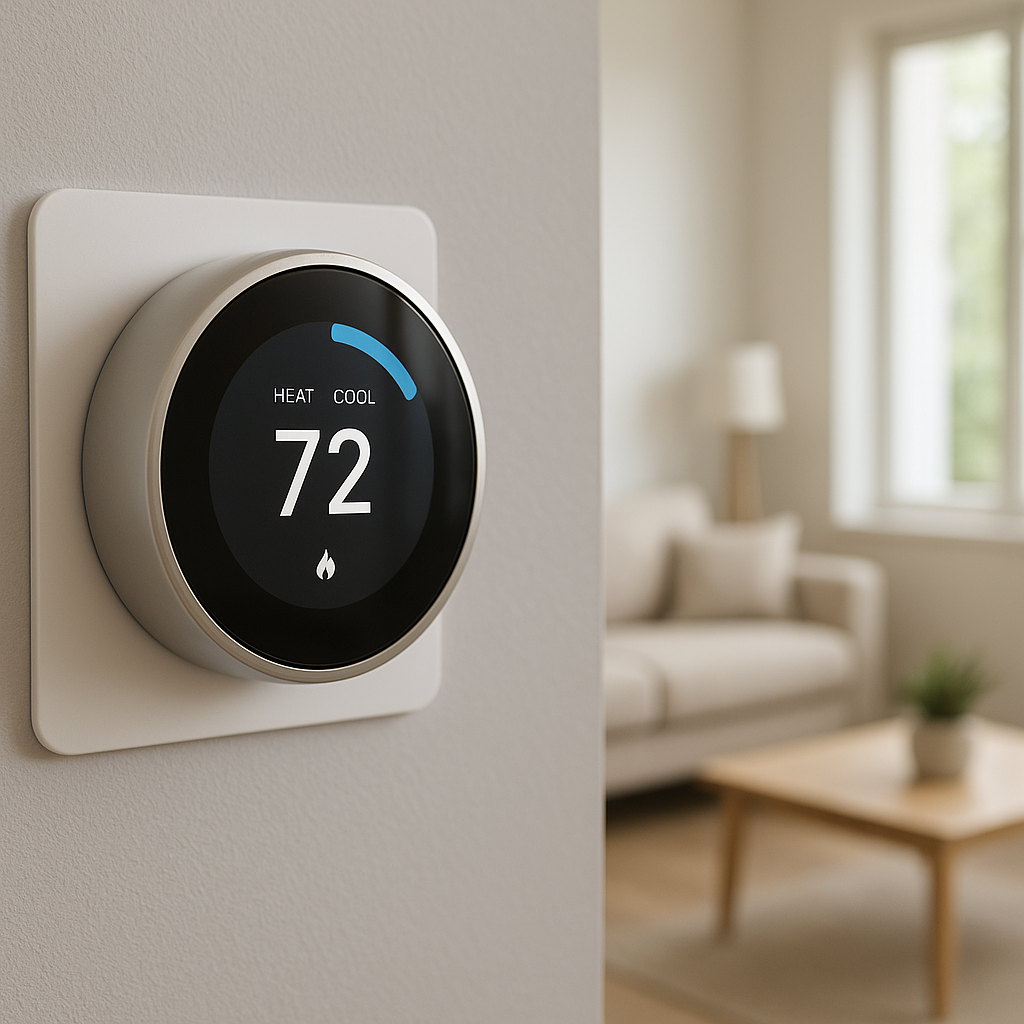
Google Nest Learning Thermostat (3rd Gen) – Smart learning with heat pump balance settings
The 3rd-gen Nest Learning Thermostat supports most heat pump systems and includes:
- Heat pump balance settings to reduce aux heat usage
- Automatic schedule learning based on your manual adjustments
- Energy history charts to see when heating and aux ran
- Strong integration with Google Home and broad smart home support
Nest is particularly appealing if you prefer a “set it and forget it” approach, letting the thermostat learn your routine rather than programming detailed schedules.
Honeywell Home T9 – Strong zoning and remote room sensors for heat pumps
The Honeywell Home T9 works well with many heat pump systems and shines when paired with its room sensors. Key strengths include:
- Support for heat pump systems with aux and emergency heat
- Smart room sensors that prioritize the rooms you care about at specific times
- Good app control via the Resideo/Honeywell Home app
- Decent runtime and usage insights
If some rooms in your home are much colder than others, the T9’s room-based control can reduce the temptation to crank up the whole system (which often triggers more aux heat).
Emerson Sensi Touch Smart Thermostat – Budget-friendly but heat-pump capable
The Emerson Sensi Touch is a more affordable smart thermostat that still supports many heat pump systems with aux heat. It offers:
- Clear wiring terminals for O/B and W2/Aux/E (depending on model)
- Simple setup wizard to specify heat pump type and aux configuration
- Reliable Wi‑Fi control and smart assistant integrations
- No subscription needed for basic energy history
If you’re cost-conscious but still want app control and proper aux heat management, Sensi Touch is worth a look.
Carrier/Bryant Infinity or OEM smart stats – When to choose system-branded thermostats
Some higher-end heat pump systems (especially variable-speed or communicating models) work best with the manufacturer’s own thermostat, such as Carrier/Bryant Infinity controls or similar OEM smart stats.
Choose a branded thermostat when:
- Your outdoor unit and air handler use a communicating control system
- You have advanced features like variable-speed compressors and fan control
- The manual strongly recommends or requires the OEM controller
These thermostats may not be as flashy as third-party options, but they can unlock proprietary efficiency features and ensure all stages and modes operate correctly.
Comparison Table: Smart Thermostats for Heat Pumps with Aux Heat
Side-by-side comparison of features, compatibility, and operating cost controls
| Thermostat | Heat Pump + Aux Support | Lockouts / Balance | Energy Reports | Smart Platforms |
|---|---|---|---|---|
| Ecobee Smart Thermostat Premium | Yes, including dual-fuel and multi-stage | Yes, detailed options | Detailed runtime by stage | Alexa, Google, HomeKit, SmartThings |
| Google Nest Learning Thermostat (3rd Gen) | Yes, most heat pumps with aux | Heat pump balance settings | Energy history & monthly reports | Google Home, Alexa (via skill) |
| Honeywell Home T9 | Yes, supports aux & emergency | Good but less granular than Ecobee | Usage insights in app | Alexa, Google, SmartThings |
| Emerson Sensi Touch | Yes, many heat pumps with aux | Basic compressor/aux settings | Basic runtime data | Alexa, Google, Apple HomeKit (model-dependent) |
| Carrier/Bryant Infinity / OEM | Designed for matching systems | Advanced, system-specific | System-level diagnostics & reports | Varies; sometimes limited |
Which thermostat is best for cold climates vs mild climates
Climate strongly affects which thermostat is best:
- Cold climates: Ecobee Premium or system-branded stats excel thanks to granular lockout and staging controls, plus detailed reporting to dial in aux usage.
- Mild climates: Nest or Sensi Touch often provide enough control, and their learning/scheduling features can keep the heat pump in efficient modes most of the time.
- Mixed climates with zoning issues: Honeywell T9 is helpful if you need room sensors to avoid overusing aux heat to fix cold spots.
How to Know If Your Current Thermostat Supports Aux and Emergency Heat
Checking your existing wiring (O/B, W2/Aux, E terminals explained)
Remove your current thermostat faceplate and look at the wires connected to the base. Common heat pump-related terminals:
- O/B: Reversing valve. Required for most air-source heat pumps.
- W2/Aux: Auxiliary heat (electric strips or secondary heat stage).
- E: Emergency heat. Often tied to the same heat source as W2/Aux but controlled separately.
If you see only R, W, Y, G (and no O/B or W2/Aux), you likely have either a non-heat-pump system or a thermostat that isn’t correctly wired for full heat pump control.
Decoding labels inside your air handler or outdoor unit
Open the panel on your indoor air handler (turn off power first at the breaker) and look for a wiring diagram. This typically shows:
- Which terminals correspond to the heat pump (Y, O/B)
- Which terminals correspond to aux heat stages (W2, W3)
- Whether you have electric heat strips or a furnace as backup
Matching these labels to your thermostat wiring helps you decide if your current thermostat and wiring harness can support a more advanced smart thermostat.
Visual clues your thermostat is misconfigured (constant emergency heat, frequent aux calls)
Even if the wiring is correct, settings may not be. Signs of trouble:
- The thermostat display often shows “EM Heat” or “Emergency Heat” even in moderate weather.
- Your energy bills jumped immediately after installing a new thermostat.
- The outdoor unit rarely runs in winter; you mostly hear only the indoor blower.
- Rooms overshoot the set temperature, then cool off quickly.
These symptoms suggest your thermostat may be stuck in emergency heat, calling aux too aggressively, or not recognizing the heat pump at all.
Installation Checklist: Wiring a Smart Thermostat to a Heat Pump with Aux Heat
Identifying and labeling heat pump wires before removal
Before removing your old thermostat:
- Turn off power to the system at the breaker.
- Take clear photos of the existing wiring and terminal labels.
- Use small stickers or masking tape to label each wire by its terminal (R, C, Y, O/B, W2/Aux, E, G, etc.).
This makes it much easier to wire the new thermostat correctly and to backtrack if something doesn’t work as expected.
Connecting O/B reversing valve, W2/Aux, and E terminals correctly
When installing the new thermostat:
- Connect the wire that was on O or B to the new thermostat’s O/B terminal and configure whether your system uses O or B energizing in heating or cooling.
- Connect the aux heat wire (often W2) to the thermostat’s W2/Aux terminal.
- If you have a separate E wire, connect it to the E terminal (some thermostats internally tie W2/Aux and E together).
Double-check the installation guide for your exact model; the labels and options can vary slightly between manufacturers.
When you need a C-wire or power extender kit
Most modern smart thermostats require a C-wire for constant power. Heat pump systems often have one, but not always at the wall. If you don’t see a C wire connected to your current thermostat:
- Check if an unused wire in the bundle can be connected to C at the air handler.
- Use the manufacturer’s power extender kit (e.g., Ecobee PEK) if included and compatible.
- Consider having an HVAC technician or electrician run a new cable if needed.
Safety tips and when to call an HVAC professional
Always:
- Shut off power at the breaker before touching any HVAC wiring.
- Avoid working inside outdoor units unless you’re trained; they contain high-voltage components.
- Stop and call a professional if you see burned wires, corroded terminals, or unclear diagrams.
An HVAC pro is especially worthwhile if you have multi-stage or dual-fuel systems, communicating equipment, or if your system doesn’t behave as expected after installation.
Must-Do Setup Settings to Avoid Wasting Money in Emergency Mode
Enabling heat pump mode and assigning O/B reversing valve
During thermostat setup, make sure to:
- Select “Heat Pump” as your system type (not just “Electric” or “Gas”).
- Assign the correct wire to the O/B terminal.
- Tell the thermostat whether your reversing valve is energized in heating or cooling (your equipment manual specifies this).
Getting this wrong can lead to the system cooling when it should heat or vice versa.
Configuring auxiliary heat stages and maximum run times
In advanced settings, configure:
- Number of aux stages (1 or more, if applicable).
- How long the heat pump should run before aux is allowed to engage.
- Maximum runtime for aux to prevent it from running indefinitely.
Start with manufacturer recommendations, then fine-tune based on comfort and energy reports.
Setting outdoor temperature lockout and balance points (aux vs compressor)
If your thermostat supports it and you have an outdoor sensor or weather data:
- Set an aux lockout so aux cannot run above a certain outdoor temperature.
- Set a compressor lockout for extreme cold where the heat pump is ineffective or at risk.
- Adjust balance points so the heat pump does most of the work in moderately cold weather.
These settings are powerful tools for controlling energy costs in colder regions.
Tuning temperature swing and recovery settings to reduce aux heat use
Temperature swing (or differential) is how far the room can drift from your setpoint before the system kicks on. Recovery settings control how aggressively the system heats up after a setback.
To minimize aux use:
- Avoid very tight swings that cause constant cycling.
- Use modest setback temperatures at night or when away (e.g., 2–3°F, not 8–10°F, in cold climates).
- Choose slower recovery or “eco” recovery modes so the thermostat doesn’t panic and call aux to close a big temperature gap quickly.
How to Stop Your Heat Pump from Overusing Auxiliary and Emergency Heat
Typical reasons aux heat runs too often
Aux heat may be running more than needed because:
- The thermostat’s heat pump balance is set to “Max Comfort” instead of “Max Savings” or similar.
- Large setpoint jumps (e.g., 62°F to 72°F in a short time) trigger aux to help catch up.
- The outdoor temperature lockouts are set too high.
- There’s a misconfiguration causing the thermostat to think the heat pump is unavailable.
Adjusting schedule and setpoints to minimize aux calls
Scheduling strategy has a big impact on aux use:
- Use gentle temperature setbacks (2–4°F) instead of large swings in colder weather.
- Start preheating earlier before you wake up or arrive home so the heat pump can handle most of the work.
- Avoid frequent manual overrides; let the schedule or learning algorithm do its job.
Using smart features (geofencing, eco modes) without triggering emergency heat
Smart features like geofencing can help, but configure them carefully:
- Set eco or away temperatures that are closer to your normal setpoint in winter to avoid big recovery jumps.
- If your thermostat has a “comfort vs savings” slider for heat pump balance, move it a bit toward savings.
- Disable any option that always uses aux during recovery, if available.
Monitoring runtime reports to fine-tune settings over time
Use your thermostat’s energy or runtime reports to:
- Track how many hours the heat pump vs aux runs each day.
- Compare before/after any setting changes you make.
- Identify patterns, like aux always running at certain times or temperatures.
These reports can turn guesswork into data-driven adjustments, helping you tune your system over a few weeks instead of an entire season.
Smart Thermostat Integrations That Improve Heat Pump Efficiency
Using outdoor temperature sensors or weather data
Many smart thermostats use internet weather data or a wired outdoor sensor to:
- Control compressor and aux lockouts
- Adjust recovery strategies based on outdoor conditions
- Protect the heat pump in extreme temperatures
If your thermostat supports an external sensor, adding one can give you more accurate control than generic online weather for your ZIP code.
Room sensors to fix hot/cold spots instead of cranking the thermostat
Room sensors (Ecobee SmartSensors, Honeywell T9 sensors, etc.) monitor temperatures in key rooms, allowing the thermostat to balance comfort between them. Instead of raising the whole house setpoint because one bedroom is chilly, the thermostat can prioritize that room.
This reduces the need to rely on aux or emergency heat to blast the whole home just to satisfy one problem area.
Linking with smart blinds, fans, and smart plugs for space heaters
Smart home integrations can offload some comfort tasks from your HVAC system:
- Smart blinds can close automatically at night to reduce heat loss.
- Ceiling fans on smart switches can gently mix warm air without raising the thermostat.
- Smart plugs can safely control small supplemental heaters in specific rooms, reducing pressure on the central system.
These tools help keep you comfortable without pushing the heat pump into aux or emergency mode as often.
Troubleshooting: Common Issues After Installing a Smart Thermostat on a Heat Pump
Thermostat shows heat but air is cold
If the thermostat says “Heating” but the air is cool or slightly cool:
- The reversing valve (O/B) may be configured backwards.
- The thermostat may be in cooling mode due to incorrect setup.
- The heat pump might be defrosting; wait a few minutes to see if it returns to heat.
Check O/B settings first; reversing that is a common quick fix after a new thermostat install.
Emergency heat stays on or won’t come on at all
If emergency heat is stuck on:
- Confirm that E and W2/Aux are wired correctly and not jumpered incorrectly.
- Check settings to ensure emergency heat is not forced on continuously.
If emergency heat never comes on when selected:
- Verify that the E terminal is wired to the correct relay on the air handler.
- Ensure the thermostat is configured to control emergency heat and that your system actually has it.
Short cycling, noisy operation, or system lockouts
Short cycling (frequent starts and stops) and noisy compressor operation may indicate:
- Too small a temperature swing or aggressive recovery settings.
- Overly tight lockout temperatures that cause frequent mode switching.
- An underlying mechanical or refrigerant issue unrelated to the thermostat.
System lockouts (where the unit stops until manually reset) can be triggered by protection circuits reacting to incorrect wiring or rapid switching. If this occurs more than once, contact an HVAC technician.
When to revert settings vs when to call an HVAC technician
Try reverting recent setting changes if problems started right after you adjusted balance points, lockouts, or staging. If:
- You smell burning or see smoke
- Breakers trip repeatedly
- The outdoor unit makes loud grinding or screeching noises
turn off the system and call a professional. A smart thermostat can’t fix a failing compressor, blower motor, or damaged heating elements.
Are Smart Thermostats Worth It for Heat Pumps with Aux Heat?
Potential energy savings in cold climates
In colder climates, where aux heat can account for a large chunk of winter energy use, a smart thermostat that intelligently limits aux can save a noticeable amount each season. Studies of programmable and smart thermostats, such as those referenced in discussions about programmable thermostat efficiency, suggest that better control can cut heating and cooling costs by around 10–20% in many homes.
With a heat pump plus aux, a good portion of that savings comes from simply running the heat pump more and the expensive backup heat less.
Payback period vs cost of thermostat and installation
Most smart thermostats suitable for heat pumps cost between the mid-$100s and low-$300s, plus optional installation costs. The payback period depends on:
- Your climate and how often aux heat would otherwise run
- Your electricity rates
- How poorly your old thermostat managed staging and setbacks
For many households with electric aux heat, the thermostat can pay for itself in 1–3 heating seasons through reduced energy bills, especially if you use the advanced settings described earlier.
Who benefits most: all-electric homes, dual-fuel systems, vacation homes
Certain homes see outsized benefits:
- All-electric homes: Every extra hour of aux heat is directly reflected in your electric bill, so better control matters a lot.
- Dual-fuel systems: Smart thermostats can decide when to run the heat pump vs the furnace for the best mix of comfort and cost.
- Vacation or secondary homes: Remote control, smart scheduling, and freeze protection are especially valuable when you’re away.
Buying Checklist: Choosing the Best Smart Thermostat for Your Heat Pump System
Confirming compatibility with your exact heat pump model and wiring
Before you buy:
- Check your system type (heat pump vs straight AC + furnace).
- Verify the presence of O/B, W2/Aux, E, and C wires.
- Use the manufacturer’s online compatibility checker or consult the installation manual.
If your system is a communicating model, you may be limited to the manufacturer’s own smart thermostat or a specific series.
Deciding between DIY installation and professional install
DIY is reasonable if:
- You’re comfortable turning off breakers and handling low-voltage wiring.
- Your existing thermostat already supports a heat pump and aux, so wiring is straightforward.
Consider professional installation if:
- You need a new C-wire run or power extender kit installed.
- Your system has multiple stages, dual-fuel, or complex zoning.
- You’d like the installer to optimize balance points and lockouts for your climate.
Key questions to ask before you buy
Ask yourself (or your HVAC contractor):
- Does this thermostat explicitly support my heat pump with aux and emergency heat?
- Will it integrate with my existing smart home platform?
- How detailed are the energy reports and aux/heat pump breakdowns?
- Can I set outdoor lockouts and fine-tune staging, or are those locked down?
Answering these questions up front will help you choose a thermostat that not only works with your heat pump, but also keeps it from wasting money in emergency mode all winter.
Conclusion
The right smart thermostat can turn a heat pump with auxiliary heat from a potential money pit into an efficient, comfortable heating system. The key is choosing a model that truly understands heat pump staging, wiring it correctly, and taking the time to configure lockouts, balance points, and schedules.
Whether you pick an Ecobee, Nest, Honeywell T9, Sensi, or an OEM thermostat, focus on real heat pump features rather than just Wi‑Fi and voice control. A few thoughtful setup steps today can save you from months of unnecessary emergency heat usage and high utility bills.
FAQ
Can any smart thermostat work with a heat pump with auxiliary heat?
No. The thermostat must explicitly support heat pumps and have the right terminals (O/B, W2/Aux, often E) and configuration options. Always check compatibility before buying.
How do I know if my heat pump is using aux heat?
Many thermostats show “Aux Heat” or a similar icon when aux is running. You may also notice warmer-than-usual supply air and faster temperature rise. Your energy reports, if available, should also break out aux runtime.
Is it bad to use emergency heat all the time?
Emergency heat is safe for the equipment but expensive to run. Running in emergency mode all the time usually means much higher bills and suggests something is wrong with your thermostat settings, wiring, or the heat pump itself.
Do I really need a C-wire for a smart thermostat on a heat pump?
Most modern smart thermostats require a C-wire for reliable power, especially with heat pumps that may run for long periods. Some models include power extender kits, but a proper C-wire is usually the most stable solution.
How often should I adjust my thermostat settings after installing it?
Plan on a tuning period of a few weeks. Review runtime and energy reports weekly, make small changes to balance points or schedules, and then wait a few days to see the impact before changing anything else.