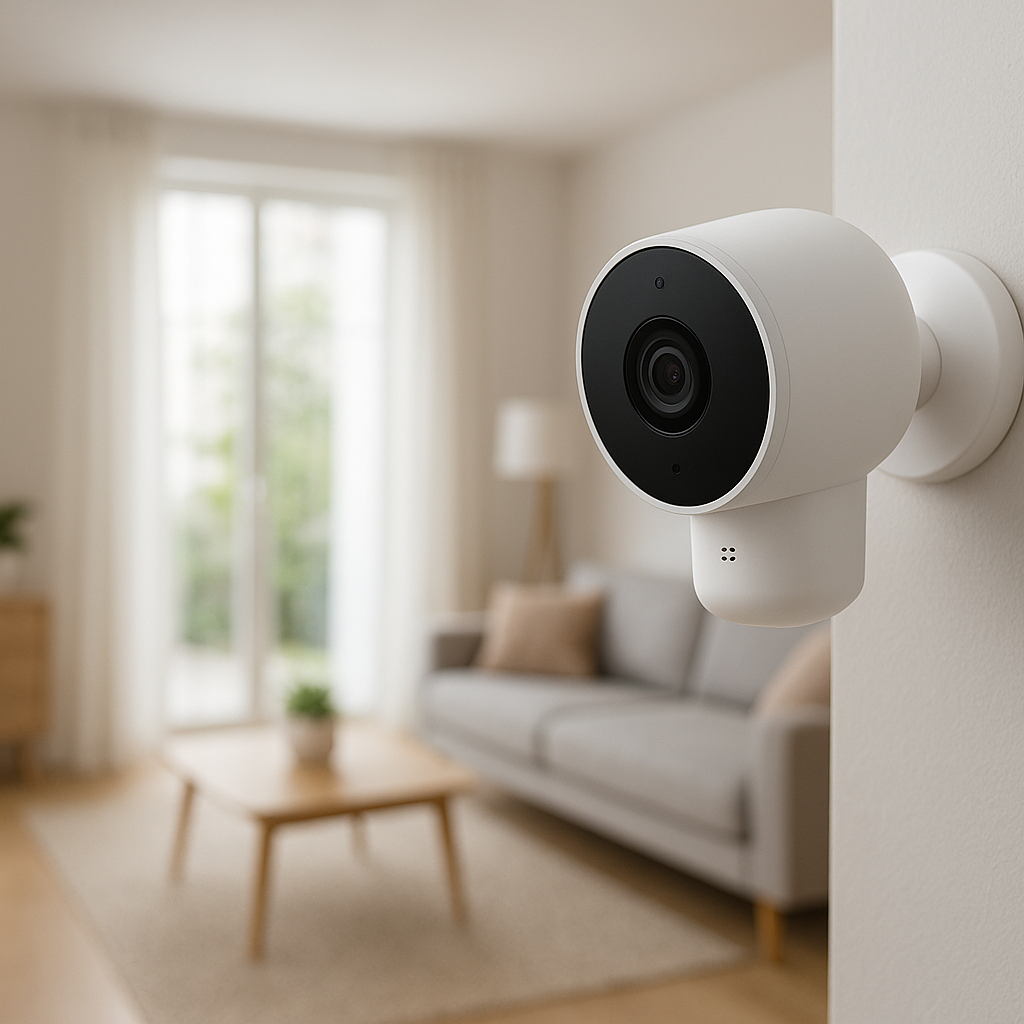
Dark driveways, side yards, and back corners of the yard are some of the most vulnerable spots around a home. A battery-powered floodlight security camera lets you light them up and record what happens without hiring an electrician or running new cables.
This guide walks through how these cameras work, what specs actually matter, and how to choose the best battery powered floodlight security camera for your driveway, backyard, or rental property. We’ll also cover smart automation ideas, privacy tips, and troubleshooting common issues like fast battery drain or weak Wi‑Fi.
Why Choose a Battery-Powered Floodlight Security Camera?
Key benefits vs. wired floodlight cameras
Battery-powered floodlight cameras combine motion-activated lighting, video recording, and two-way audio into a single, wire-free package. Compared to wired models, they offer several advantages:
- No electrician required: Mount the camera and connect it to Wi‑Fi. You don’t need an existing junction box or hardwiring skills.
- Flexible placement: Put the floodlight where it actually helps—on a fence post, shed, or detached garage—rather than being limited to existing wiring points.
- Safer installs: No working with mains voltage, which is a major plus for DIYers.
- Rental-friendly: Many models can be installed with screws into wood or siding, or even non-drill mounts, then removed without leaving major damage.
- Backup during power outages: Because they run on batteries, they keep recording and lighting up motion even if your house power goes out (as long as your Wi‑Fi/router stay online or the camera supports local recording).
Ideal use cases: driveways, backyards, side yards, and sheds
Battery floodlight cameras shine in places that are awkward or expensive to wire:
- Driveways and parking areas: Mount above the garage or on a pole to light up vehicles, deliveries, and visitors. Great for homes where the existing porch light doesn’t cover the whole driveway.
- Backyards and patios: Cover doors, windows, and play areas with bright light and recording without disturbing your existing outdoor lighting circuits.
- Side yards and gates: Narrow pathways or side gates are common break‑in points and rarely have good lighting. A wireless floodlight camera can cover them easily.
- Detached garages and sheds: Running power to outbuildings can be costly. A battery floodlight with optional solar panel provides light and security with minimal infrastructure.
When a battery-powered model is NOT the right choice
Battery-powered isn’t always the best answer. Consider alternatives if:
- Extremely high traffic area: A busy street-facing camera that records all day will drain batteries quickly. A wired floodlight camera or PoE (Power over Ethernet) camera may be more practical.
- You want 24/7 continuous recording: Most battery models use motion-based recording to conserve power. If you need around-the-clock recording, look at wired systems with NVRs.
- Very cold climate with long winters: Batteries lose capacity in low temperatures. Some models are rated for cold, but a wired option can be more reliable if you’re below freezing for months.
- You don’t want to think about charging: If you know you won’t stay on top of recharging or swapping batteries, choose a wired model or a battery camera with a well-placed solar panel.
What to Look For in the Best Battery-Powered Floodlight Security Camera
Brightness and beam spread (lumens, color temperature, and coverage)
Floodlight brightness is usually measured in lumens, which is the total amount of visible light. For reference, a typical porch light might be 800–1,000 lumens. Many floodlight cameras range from 1,000 to 3,000 lumens per fixture.
For most homes:
- Driveways & front yards: Aim for 1,500–2,000 lumens or more to clearly light vehicles and paths.
- Back patios & decks: 1,000–1,500 lumens is usually comfortable without being harsh.
- Large yards or detached structures: 2,000+ lumens with a wide beam spread helps avoid dark corners.
Color temperature matters too. A 3,000–4,000K “soft white” is friendlier for patios, while 4,000–5,000K “cool white” looks crisper and can help with camera clarity. For a deeper explanation of lumens and how they relate to brightness, see the lumen overview on Wikipedia.
Battery life, removable packs, and solar charging options
Battery life is heavily influenced by motion activity and settings, so treat manufacturer claims as rough guides. Typical real-world ranges:
- Busy areas (driveway on a main road): 1–2 months per charge.
- Moderate traffic (suburban driveway, backyard gate): 2–4 months per charge.
- Low traffic (shed in a quiet area): 4–6 months per charge.
Look for:
- Removable battery packs: Lets you swap in a charged battery instead of taking the camera down.
- Common battery formats: Some brands share the same battery across multiple cameras, making spares more useful.
- Compatible solar panels: A small panel can top off the battery and drastically reduce manual charging—ideal for hard-to-reach mounts.
Video quality, night vision, and field of view
Most good battery floodlight cameras offer at least 1080p resolution, with premium models offering 2K or 4K. Higher resolution can help capture faces and license plates, but also uses more storage and bandwidth.
- Resolution: 1080p is the minimum; 2K is a nice upgrade for driveways and larger yards.
- Night vision: Choose models with color night vision using the floodlight, plus infrared (IR) for situations where you don’t want the light always turning on.
- Field of view (FOV): Around 120–160° works well. Wider FOV covers more area but can distort edges; narrower FOV is better for focusing on a driveway lane.
Motion detection accuracy and smart alerts
Good motion detection is what keeps battery life reasonable and notifications useful. Prioritize:
- PIR + video analysis: Many cameras mix passive infrared (PIR) sensors with on-device analysis to distinguish people, animals, and vehicles.
- Smart alerts: Person/vehicle detection, package alerts, and the ability to ignore small animals or tree movement.
- Activity zones: Draw zones in the app so the camera watches the driveway but ignores the sidewalk or road.
- Adjustable sensitivity: Essential for tuning different environments like quiet cul‑de‑sacs vs. busy streets.
Wi‑Fi connectivity, range, and reliability outdoors
Your camera is only as reliable as the Wi‑Fi it connects to:
- 2.4 GHz support: Most battery cameras use 2.4 GHz for longer range. Some also support 5 GHz for less interference.
- Signal strength: Use your phone’s Wi‑Fi indicator where you plan to mount the camera; if it’s weak, you may need a mesh node or extender.
- Distance to router: Exterior walls and metal garage doors reduce signal. Try to keep a camera within 30–50 feet and a couple of walls from an access point.
For practical tips on improving coverage, Google’s Nest Wi‑Fi team has a useful guide on optimizing Wi‑Fi coverage in your home.
Weather resistance, durability, and operating temperature
Outdoor cameras should list an IP rating (e.g., IP65) and a temperature range.
- IP65 / IP66: Common ratings that protect against dust and water jets or heavy rain.
- Operating temperature: Check your local extremes; if you hit −10°C/14°F or lower, verify the battery is rated for it.
- Build quality: Metal or high-quality polycarbonate housings, stainless steel screws, and gasketed seams help with long-term durability.
Smart home integration (Alexa, Google Assistant, HomeKit, routines)
Integration lets your floodlight camera work with the rest of your smart home:
- Alexa / Google Assistant: View the camera feed on smart displays, arm/disarm modes with voice, or trigger routines.
- HomeKit (where supported): Add motion events to Apple Home automations and use secure local video when available.
- IFTTT / routines: Use motion to turn on other smart lights, trigger sirens, or log events.
Storage options, subscriptions, and data privacy
Most cameras offer a mix of cloud and local storage:
- Cloud storage: Easier remote access, but usually requires a monthly fee per camera or per account.
- Local storage: Some models support microSD cards or a base station/NVR on your network.
- Hybrid: Local recording plus cloud snapshots or alerts can balance privacy and convenience.
Check the privacy policy and whether the brand offers features like two-factor authentication (2FA), end-to-end encryption for video, and clear options to delete recordings.
Budget ranges and what you realistically get at each price point
Battery floodlight cameras fall into a few price tiers:
- Under $150: Basic 1080p video, decent brightness, and app control. You may lose out on smart detection, broader integrations, and refined apps.
- $150–$250: The sweet spot. Expect better build quality, smarter motion detection, and brighter, more adjustable lights. Some include limited free cloud storage.
- $250+: Higher resolution (2K/4K), better optics, more powerful and tunable floodlights, and stronger app ecosystems. Ideal for key locations like the main driveway.
Best Battery-Powered Floodlight Security Cameras for Driveways
Top pick for wide driveways: maximum brightness and coverage
For a wide or multi-car driveway, prioritize a camera with:
- At least 2,000 lumens: Enough to cover multiple parking spots.
- Adjustable dual floodlight heads: So you can angle one toward the driveway and one toward the walkway or yard.
- 2K video and 130–150° FOV: To capture both the approach and the parked vehicles.
- Vehicle detection: To alert you when cars enter or leave, while ignoring passing traffic.
Brands like Arlo and Eufy often have models aimed at these wide-coverage scenarios. Look for their higher-brightness floodlight cameras paired with smart detection.
Best for narrow or single-car driveways: compact yet powerful
For a single-car or short driveway, a more compact unit can be enough:
- 1,000–1,500 lumens: Concentrated on the driveway for clear video.
- 120–130° FOV: Reduces distortion and focuses on the lane.
- Zone-based detection: So you can ignore the sidewalk or street.
Compact units are easier to mount above a garage door or on a porch corner and are less visually dominant on the front of your house.
Best for rental homes and no-drill installations
Renters should look for:
- Mounting flexibility: Cameras that can attach to existing light fixtures, gutters, or siding clips minimize damage.
- Removable mounts: So you can take the camera with you when you move.
- Cloud-focused storage: Avoids leaving local drives or base stations behind.
Some brands sell accessory mounts designed for gutters or fascia boards. These are ideal when you’re not allowed to drill into masonry.
Best budget-friendly option under $150
If cost is your main concern, a budget model can still provide solid driveway coverage:
- 1080p video with IR night vision: Often good enough to see who’s at your car or garage.
- Manual brightness controls: Even if brightness is fixed, try to choose higher lumens over extra features.
- Basic motion zones: Even simple exclusion zones can cut down on false alerts and extend battery life.
Be realistic: at this price, you might give up advanced person/vehicle detection and deep smart home integrations, but you can still get strong basic security and lighting.
Best Battery-Powered Floodlight Security Cameras for Backyards
Best for large backyards and detached areas (garages, sheds)
Large backyards and detached buildings usually need more reach and smarter coverage:
- 2,000+ lumens: To cover larger open areas or multiple doors.
- 2K resolution and wide FOV: Helps capture activity further from the camera.
- Optional solar panel: Especially valuable on sheds or garages without easy access.
- Strong weatherproofing: Since these cameras may be more exposed to wind and rain.
Best floodlight camera for back patios and decks
For social spaces like patios and decks, the priority shifts slightly:
- Softer color temperature (around 3,000–4,000K): Less harsh on the eyes.
- Dimming control: So the same floodlight can be bright for security, but lower for evening hangouts.
- Two-way audio: Handy for talking to visitors at a back gate or calling kids in from the yard.
- Quiet operation: Some cameras have loud relays; look for models with smoother on/off behavior.
Best model with integrated solar panel for low-maintenance use
If you want to install once and rarely touch it, an integrated or add-on solar panel is ideal:
- All-day sun exposure: Mount panels on a south-facing surface (in the northern hemisphere) with minimal shade.
- Low to medium traffic placement: Solar is great, but if your camera records frequently, you may still need occasional manual charges.
- Battery health features: Some ecosystems manage charge levels to extend battery life over years.
Quiet neighborhoods vs. high-traffic areas: tuning sensitivity and zones
Backyards vary dramatically. A quiet suburban yard behaves differently than a yard facing a busy alley:
- Quiet areas: You can set higher sensitivity to catch smaller movements, like someone cutting through the yard.
- Busy areas: Lower sensitivity and tighter zones reduce alerts from distant cars or pedestrians.
- Pets and wildlife: Enable person-only alerts if available to avoid constant pings from raccoons or neighborhood cats.
Head-to-Head Comparison: Specs That Actually Matter
Side-by-side table: brightness, battery life, resolution, and FOV
Here’s a simplified example of how different styles of battery floodlight cameras might compare. Use it as a framework when you compare real products:
| Type | Brightness (lumens) | Estimated Battery Life* | Resolution | Field of View |
|---|---|---|---|---|
| Wide Driveway Model | 2,000–3,000 | 1–3 months | 2K | 140–150° |
| Compact Driveway Model | 1,000–1,500 | 2–4 months | 1080p | 120–130° |
| Backyard / Shed Model | 1,500–2,500 | 2–4 months | 2K | 130–160° |
| Solar-Enhanced Model | 1,000–2,000 | Effectively long-term with sun | 1080p–2K | 120–140° |
*Battery life highly depends on motion frequency, Wi‑Fi strength, and settings.
Motion detection performance in real-world driveway and backyard tests
When comparing options, focus on reviews and tests that mention:
- Consistency: Does the camera reliably trigger when people walk up or cars pull in, day and night?
- Distance: How far from the camera can motion be detected in an open driveway?
- False positives: Are you hearing about constant alerts from trees, bugs, or shadows?
Often, mid-range and premium cameras do better here because they combine PIR sensors with smarter video analysis.
App experience, notification speed, and ease of reviewing footage
You’ll interact with the app more than the hardware, so a good app is critical:
- Fast notifications: Alerts should arrive within a few seconds of motion, not 20–30 seconds later.
- Clear timelines: A scrollable timeline with thumbnails makes it easy to skim a night’s activity.
- Filter by event type: Filter to only people, packages, or vehicles when you’re trying to track down something specific.
- Multi-user support: Make sure it’s easy to share access with other household members.
Cloud vs. local storage costs over 3 years
Think long term:
- Cloud-only systems: A $3–$10/month fee per camera or household adds up to $108–$360 over three years.
- Local storage: Higher upfront cost for an NVR, base station, or microSD cards, but minimal ongoing fees.
- Hybrid options: Let you keep critical footage locally and use cloud for backup or easy sharing.
Compare not just subscription price, but also how many days of history you get and whether advanced detection features are paywalled.
Installation Guide: No Wiring Needed Outdoor Setup
Planning placement for driveways vs. backyards
Before drilling any holes, walk around at night and see where light and coverage are needed most:
- Driveways: Aim to see faces as people approach, not just the tops of heads. Mount slightly off-center so the camera isn’t blinded by headlights.
- Backyards: Focus on entry points—back doors, gates, and windows that aren’t covered by other cameras.
- Outbuildings: Place cameras high enough to avoid tampering, but angle them down to catch door handles and approaches.
Recommended mounting height, angles, and avoiding glare
For most homes:
- Height: 8–10 feet is a sweet spot—high enough to deter tampering, low enough for good facial detail.
- Angle: Tilt the camera so the top of the frame shows some sky or upper wall, but the focus is on the driveway or yard surface.
- Avoiding glare: Don’t aim the camera directly at shiny surfaces, white garage doors, or windows. Use the adjustable floodlight heads to reduce light bouncing directly back into the lens.
Step-by-step mounting and pairing with your Wi‑Fi and app
Most battery floodlight cameras follow similar steps:
- Charge the battery fully before installation.
- Install the manufacturer’s app and create an account.
- Follow the app’s pairing instructions (usually scanning a QR code on the camera).
- Test the camera indoors near your router to confirm Wi‑Fi and updates are working.
- Mark drill points at your chosen location, using the mounting template if provided.
- Drill pilot holes and insert wall anchors if needed.
- Attach the mounting plate, then secure the camera and battery.
- Fine-tune angle and light direction, then test motion and lighting at night.
Tips to maximize battery life and reduce unnecessary triggers
Good settings can dramatically extend battery life:
- Shorten clip length: 15–20 seconds is often enough for most events.
- Adjust motion zones: Exclude roads, sidewalks, or trees that cause constant motion.
- Use person/vehicle-only alerts: When supported, this cuts down recordings from animals and moving branches.
- Dim lights slightly: Some cameras allow lower brightness, which can reduce power draw.
- Schedule lights: Keep floodlights in motion-only mode during late-night hours.
Smart Automation Ideas for Outdoor Floodlight Cameras
Linking floodlights with other smart outdoor lights for full-yard coverage
Pair your floodlight camera with other smart lights for smoother coverage:
- Have motion from the driveway camera turn on path lights, porch lights, and side-yard fixtures.
- Use scenes to set different brightness levels for “Evening,” “Security,” and “Late Night.”
- Group all outdoor lights so one tap turns everything on during suspicious activity.
Using motion events to trigger announcements on smart speakers
If your camera integrates with Alexa or Google Assistant, you can use motion to trigger voice announcements:
- “Motion detected at the driveway” announced on a kitchen or bedroom smart speaker.
- Doorbell and driveway cameras announcing visitors on speakers in the back of the house.
- Quiet overnight alerts limited to your bedroom speaker instead of all devices.
Creating routines for away mode, vacation mode, and quiet hours
Routines help your system adjust to your schedule:
- Away mode: Increase sensitivity and enable all notifications when nobody’s home.
- Vacation mode: Randomize outdoor lights in the evening and keep cameras fully armed.
- Quiet hours: Allow recording but mute non-critical notifications (like animal detections) while you sleep.
Privacy and Security Considerations
Positioning cameras to avoid neighbor privacy issues
Outdoor cameras can raise privacy questions. To avoid problems:
- Aim cameras at your own property—driveways, yards, doors—not directly into neighbors’ windows or private spaces.
- Use privacy zones to block out areas you don’t need to see, like a neighbor’s yard.
- Consider mentioning your cameras to close neighbors so there are no surprises.
Securing your Wi‑Fi, app accounts, and firmware updates
Security starts with your network and accounts:
- Strong Wi‑Fi password and WPA2/WPA3 encryption: Avoid using default router credentials.
- Unique, strong passwords for camera accounts: Use a password manager to keep them secure.
- Enable 2FA: Turn on two-factor authentication so a stolen password alone can’t access your cameras.
- Automatic firmware updates: Enable them so security fixes are applied quickly.
Managing shared access for family members and guests
Most camera apps let you share access with others:
- Give household members their own logins rather than sharing your main account.
- Limit guest access to certain cameras (e.g., just the driveway camera for a house sitter).
- Review access lists periodically and remove anyone who no longer needs it.
Troubleshooting Common Problems
Battery draining too fast: key settings to adjust first
If you’re recharging every few weeks, try:
- Reducing motion sensitivity or tightening zones.
- Shortening clip length and adding a cooldown period between recordings.
- Lowering floodlight brightness or reducing how long the light stays on after motion.
- Checking for weak Wi‑Fi; constant reconnection attempts can use extra power.
Fixing weak Wi‑Fi signal at the driveway or backyard
For borderline Wi‑Fi:
- Move your router or mesh node closer to the outside wall facing the camera.
- Add a mesh Wi‑Fi node or outdoor-rated extender near the driveway or yard.
- Avoid placing the camera directly behind metal structures (like garage doors) that block signal.
Dealing with false alerts from cars, trees, and animals
False alerts are annoying and drain batteries:
- Draw narrower motion zones that exclude busy streets or sidewalks.
- Lower sensitivity slightly and test over a few nights.
- Enable smart detection (people/vehicles only) if your camera supports it.
- Trim branches or move plants that cause constant motion near the lens.
When to add a solar panel or a Wi‑Fi extender
Consider add-ons if:
- Solar panel: You’re climbing a ladder more than a few times a year, and the camera has good sun exposure.
- Wi‑Fi extender/mesh node: You see frequent disconnects, delayed notifications, or missing clips due to poor signal.
Are Battery-Powered Floodlight Cameras Right for You?
Quick checklist to confirm they fit your home and habits
Battery floodlight cameras are a strong fit if:
- You want better lighting and recording in dark outdoor areas without new wiring.
- You’re comfortable charging or swapping batteries every few months (or adding solar).
- Your Wi‑Fi reaches the driveway, backyard, and any detached structures.
- You’re okay with motion-based recording instead of continuous 24/7 video.
When to consider wired floodlight cameras or standard smart cameras instead
Look at wired options or standard smart cameras if:
- You already have junction boxes and outdoor wiring where you want cameras.
- You need continuous recording for security or compliance reasons.
- The area is extremely busy and would drain batteries too quickly.
- You don’t want to deal with charging or solar placement at all.
Final recommendations by scenario: driveway-only, backyard-only, or full perimeter coverage
To wrap up, here’s how to think about your setup:
- Driveway-only: Choose a bright, driveway-focused camera (compact or wide, depending on your layout) with strong vehicle detection.
- Backyard-only: Look for a model with balanced brightness, good night vision, and smart zones aimed at gates, patios, and play areas.
- Full perimeter coverage: Mix and match—perhaps a high-brightness unit for the main driveway, a softer model for the patio, and a solar-enhanced camera for a shed or side yard.
With the right placement and settings, the best battery powered floodlight security camera for your home will give you bright, reliable coverage without the hassle of wiring—and make those dark corners far less inviting to intruders.
FAQ
Do battery-powered floodlight cameras work during power outages?
Yes, the camera and light will usually keep working on battery power, but you may lose remote access if your Wi‑Fi router and modem don’t have backup power. A small UPS (battery backup) for your router helps keep everything online.
How often do I need to recharge the batteries?
Most homeowners see 2–4 months of battery life in moderate-traffic areas with well-tuned settings. Busy driveways might need charging every 1–2 months, while quiet corners of the yard can stretch to 4–6 months, especially with a solar panel.
Can I install a battery floodlight camera where there’s already a wired light?
Yes. You can either leave the existing wired light in place and mount the camera nearby, or remove the old fixture, cap the wiring safely (or hire an electrician to do it), and use the existing location for your battery camera.
Will a battery-powered floodlight camera bother my neighbors at night?
It depends how you configure it. Choosing reasonable brightness levels, aiming the lights downward, and tightening motion zones so they don’t trigger from the sidewalk or street will greatly reduce nuisance lighting.
Do I need a subscription for my floodlight camera to work?
The basic live view and motion alerts typically work without a subscription, but you may need a plan to store video clips in the cloud or unlock advanced features like person/vehicle detection. Check what each brand includes for free versus paid before buying.