Adding an electric vehicle to your home can double your electricity use overnight. That first full month of charging often brings a shockingly high bill, and many homeowners start asking the same question: do you really need a smart EV charger, or can a basic Level 2 charger plus an energy monitor get you the same savings for less money?
This guide walks through how each setup actually affects your bill, where the real savings come from, and how to choose the best option for your home, utility rate, and budget. We’ll also look at practical device examples and simple automations you can use to make sure your EV is charging at the cheapest times.
Smart EV Charger vs Regular: What This Comparison Really Means
Defining a smart EV charger (Wi‑Fi, app control, automations, load management)
A smart EV charger (often called a smart EVSE) is more than just a faster outlet. It’s a networked charging station with features designed to control when and how your car pulls power from the grid. Typical capabilities include:
- Wi‑Fi or Ethernet connectivity for cloud control and firmware updates.
- Mobile app control to start/stop charging, set schedules, and view energy usage.
- Charging schedules so you can automatically charge during off‑peak or super off‑peak hours.
- Load management to limit the current draw or share capacity between multiple chargers or big appliances.
- Energy tracking per charging session, often with cost estimates based on your electricity rate.
- Smart home integrations with Alexa, Google Home, Home Assistant, and automation platforms.
Popular examples include the ChargePoint Home Flex, Emporia EV Charger, Wallbox Pulsar Plus, and Tesla Wall Connector (when used with the Tesla app and supported vehicles).
What counts as a “regular” or “dumb” Level 2 charger
A regular or “dumb” Level 2 charger is essentially a safe, high‑power switch. It provides 240V power at a fixed current (for example, 32A or 40A) but has little or no connectivity or app intelligence. Typical characteristics:
- No Wi‑Fi or Bluetooth connection.
- No built‑in scheduling or energy tracking.
- Basic indicator lights but no detailed data.
- Often cheaper than smart chargers, and sometimes plug‑in instead of hardwired.
Your car may still let you set a basic charge schedule, but that logic lives in the vehicle, not the charger. Many portable Level 2 chargers that plug into a NEMA 14‑50 outlet fall into this category.
Where an energy monitor fits into the picture (smart plug, CT clamp, panel monitor)
An energy monitor measures how much electricity your EV charger uses, when it uses it, and sometimes what it costs. You can pair a regular charger with one or more monitors to get the data and visibility you’d otherwise get from a smart charger.
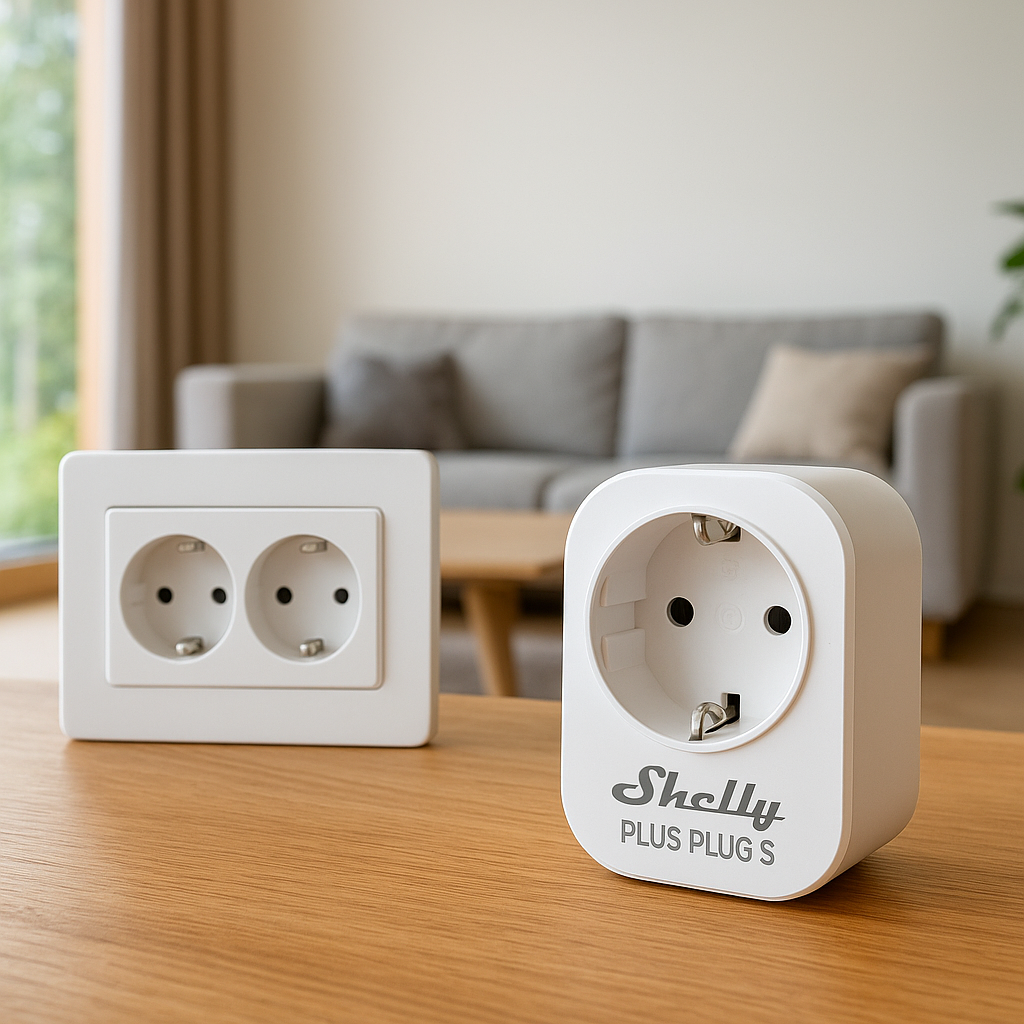
- Smart plug (for low‑power Level 1 or very low‑amp Level 2 only): Plugs like Kasa or Shelly can track usage but usually can’t handle a full‑power EV charger safely.
- Circuit‑level monitor with CT clamps: Devices like Shelly EM, Emporia Vue Utility Connect, or Sense Flex can measure the specific 240V circuit feeding your EV charger.
- Whole‑home energy monitor: Systems like Sense or Emporia Vue monitor your entire panel and can either automatically detect your EV or use dedicated CT clamps to track it.
This setup gives you the data and alerts of a smart charger, but scheduling and control usually have to be done manually or through custom automations.
The core question: which setup actually reduces what you pay per kWh?
Both setups can lower your electric bill, but they do it in different ways:
- A smart EV charger automates off‑peak charging and, in some cases, integrates with your utility’s time‑of‑use (TOU) rates so it can always chase the lowest price per kWh.
- A regular charger + energy monitor gives you visibility into your usage so you can manually move charging to cheaper hours.
The real savings come from when you charge, not just which hardware you buy. Smart chargers make “charging at the right time” nearly automatic, while the regular+monitor combo shifts more of that work to you or to your smart home automations.
How EV Charging Affects Your Electric Bill
EV charging vs the rest of your home load: why it dominates your usage
A typical EV adds 200–400 kWh of use per month, depending on how much you drive and your car’s efficiency. For many homes, that’s like adding another air conditioner that runs several hours every night.
Because EVs pull a lot of power over many hours, small changes in schedule can move hundreds of kWh from peak to off‑peak each month. That’s why charging strategy quickly becomes one of the biggest levers you have for lowering your electric bill.
How utilities bill you: flat rate, time-of-use (TOU), and demand charges
Understanding your rate plan is essential before you pick your hardware:
- Flat rate: You pay the same price per kWh all day. Savings are more about efficiency and avoiding unnecessary charging.
- Time‑of‑use (TOU): Prices change based on the time of day. Peak hours might be double (or more) the cost of off‑peak. Many utilities offer special EV TOU rates, such as PG&E’s EV‑specific plans described at PG&E’s EV rate plan page.
- Demand charges (common for some commercial or multifamily setups): A portion of your bill depends on the highest 15‑minute or hourly peak you hit during the billing period.
If you have TOU or demand‑based billing, controlling your EV’s schedule and maximum power draw has an outsized impact on your total cost.
Why charging schedule matters more than charger speed for saving money
Many homeowners focus on kW (charger speed) because it feels good to know your car can charge quickly. But from a bill perspective:
- Speed mostly affects convenience—how quickly you can refuel between trips.
- Schedule directly affects cost—what you pay per kWh for that energy.
A 40A (9.6 kW) charger that runs mostly during peak evening rates can be more expensive long‑term than a slower 30A charger that runs only during cheap overnight rates. Smart control of timing beats raw speed for saving money.
Hidden costs: peak usage, demand spikes, and breaker upgrades
EV charging doesn’t just add energy; it adds load. That can trigger hidden costs:
- Panel upgrades if your main electrical service can’t safely support a high‑amp charger.
- Demand charges if you’re on a rate where your highest peak drives your bill.
- Tripped breakers or nuisance shutdowns if your EV, HVAC, oven, and dryer all run at once.
Load‑management features in smart chargers can help avoid expensive panel work and limit those peaks, which is one of the big advantages over a purely dumb charger.
What a Smart EV Charger Actually Does for Energy Savings
Core features that impact your bill: scheduling, TOU integration, and automation
Smart EV chargers support several features that directly influence how much you pay:
- Time‑based schedules: Automatically start and stop charging during off‑peak windows (for example, 11 p.m.–6 a.m.).
- TOU rate integration: Some models let you enter your specific utility tariff or even link your account so the charger knows exactly when rates change.
- Adaptive schedules: Apps can ensure your car reaches a target charge level by a set departure time while still prioritizing cheaper hours.
- Remote control and alerts: If your charger starts running at an unexpected time, you can stop it from your phone.
For many families, simply enabling a fixed overnight schedule captures 70–90% of the potential savings without ongoing micromanagement.
Load balancing to avoid panel overload and costly electrical upgrades
Some smart chargers (and ecosystems like Emporia or Wallbox) offer dynamic load management:
- Current limiting: You can cap the charger at, say, 32A instead of 40A to stay within your panel’s capacity.
- Panel‑aware load sharing: Paired with a compatible panel monitor, the system can automatically reduce EV charging when your home load is high.
- Multi‑charger load sharing: If you have two EVs, the chargers can coordinate so they never exceed the available capacity.
This can prevent the need for costly service upgrades and avoids tripping breakers during high‑load periods, which indirectly protects your budget.
Built-in energy tracking vs separate monitoring tools
Smart chargers typically log:
- kWh per session
- Charging duration and average power
- Estimated cost per session or per month (if you enter your rate)
This is usually enough detail to understand how much of your bill is EV charging and whether your schedule is working. For deeper whole‑home insights, a separate monitor is still helpful, but the built‑in data often covers day‑to‑day decisions.
Real-world examples: off-peak charging savings in common TOU plans
On many TOU plans, peak pricing can be 1.5–3x higher than off‑peak. Imagine this simple example:
- Peak rate: $0.35/kWh (4 p.m.–9 p.m.)
- Off‑peak rate: $0.15/kWh (11 p.m.–6 a.m.)
- EV usage: 300 kWh/month
If you charge mostly during peak, your EV energy costs about $105/month. Shift that same energy to off‑peak and it drops to $45/month—a $60 monthly savings, or $720/year, just by changing when the charger runs.
A smart charger makes that shift automatic and reliable, even if your daily routine changes.
When smart charging apps can automatically chase the lowest rate
Some smart chargers and third‑party apps can integrate with real‑time price feeds or advanced tariffs. Combined with dynamic pricing (for example, hourly rates in some European markets), your EV can:
- Pause charging when prices spike unexpectedly.
- Resume when rates drop back to normal.
- Fill to your required level before your set departure window.
In these environments, automation can squeeze out additional savings you’d never capture by manually tweaking schedules every day.
Regular Charger + Energy Monitor: A Cheaper Path to Smarter Charging?
What you can see with a basic EVSE plus a smart energy monitor
Pairing a regular charger with a monitor gives you visibility without replacing your existing hardware. With a circuit‑level monitor on your EV circuit you can:
- See how many kWh each charging session uses.
- Track when charging actually runs vs. when you think it runs.
- Estimate monthly EV costs with more accuracy.
- Spot wasteful habits, like topping up to 100% every day.
Many monitors also send alerts if your usage exceeds certain thresholds, helping you notice when you accidentally charged during peak hours.
Using smart plugs vs circuit-level vs whole-home energy monitors
For EV charging, the type of monitor matters for both safety and accuracy:
- Smart plugs: Only appropriate for Level 1 (120V) or very low‑amp portable Level 2 chargers under the plug’s rated load. Great for tracking occasional trickle charging, not for a 40A wall‑mount.
- Circuit‑level monitors: Devices with CT clamps around your EV breaker give you accurate kWh and often integrate well with automations. This is the sweet spot for most homeowners with regular chargers.
- Whole‑home monitors: Provide insight into your entire panel. Some can auto‑detect EV charging as a unique load, but dedicated CT clamps for the EV circuit are still best for precision.
Manually shifting your charging to off-peak using monitor data
Once you see the impact of peak vs off‑peak charging in your monitoring app, you can adjust habits manually:
- Plug in when you get home, but use your car’s built‑in scheduling to start charging after your off‑peak window opens.
- Check your monitor’s daily graph to confirm the charging block moved to the cheaper hours.
- Adjust your routine if you notice drift into peak periods.
This approach works surprisingly well for disciplined users but does rely on your continued attention.
Pros and cons: more effort, lower upfront cost
Pros:
- Lower upfront hardware cost if you already own a basic Level 2 charger.
- Energy monitor also helps you optimize the rest of your home’s usage.
- Flexible: you can keep the monitor even if you eventually upgrade the charger.
Cons:
- More manual work to set and adjust schedules.
- Fewer built‑in safety and load‑management features.
- Less convenient if your driving schedule is unpredictable.
When this combo makes sense (renters, existing charger, tight budget)
A regular charger plus monitor is often the best fit when:
- You’re renting and use a portable Level 2 charger on an existing outlet.
- You already have a recently installed dumb charger and don’t want to pay again for a smart unit.
- Your budget is tight, but you still want data to guide your habits.
- You’re comfortable tinkering with smart home platforms like Home Assistant to build your own automations.
Smart EV Charger vs Regular + Monitor: Side-by-Side Cost Comparison
Upfront costs: hardware, installation, and possible panel work
Approximate ranges (mid‑market US pricing):
- Smart Level 2 charger: $500–$800.
- Regular Level 2 charger: $250–$500.
- Circuit‑level energy monitor: $80–$200.
- Professional installation: $300–$1,000+ depending on wiring length and complexity.
- Panel or service upgrade (if required): $1,500–$4,000+.
Smart chargers with built‑in load management sometimes avoid the need for a full service upgrade by capping their current, which can more than pay for the price difference vs a dumb charger.
Ongoing savings: rate optimization, demand management, and usage awareness
With TOU rates, a well-configured smart charger can save $200–$700+ per year compared to uncontrolled peak charging. A regular charger plus monitor can reach similar savings, but only if you consistently adjust schedules and habits based on what you see in the monitor.
In demand‑charge environments (common for small businesses or some multifamily buildings), automated load limiting from a smart charger can prevent expensive peaks that a simple monitor can only warn you about after the fact.
Payback period estimates at different electricity prices and driving habits
Consider a driver using 300 kWh/month for EV charging:
- Flat rate $0.15/kWh: Smart features may only save $5–$10/month through modest off‑peak differences or avoiding unnecessary top‑ups. Payback could be 4–8+ years.
- TOU with 2x price difference (peak vs off‑peak): Moving most charging to off‑peak can easily save $30–$60/month, bringing payback for the smart features into the 1–3 year range.
- Very high prices ($0.30–$0.40/kWh peak): Savings scale with price; automation becomes more valuable.
A monitor‑only approach has a shorter payback on hardware but can slip over time if habits drift and charging creeps back into peak hours.
Example scenarios: light commuter vs heavy driver vs solar owner
Light commuter (50–100 miles/week): Total EV energy use is modest, so the difference between smart and regular is smaller. A regular charger plus a simple monitor is often enough.
Heavy driver (200+ miles/week or rideshare): EV charging dominates the bill. Here, a smart charger with rock‑solid scheduling and TOU alignment is almost always worth it, especially if you charge daily.
Solar owner: If you have excess daytime solar, the best “rate” is often your own generation. Smart chargers that can follow solar production or receive signals from an energy monitor help you prioritize free or low‑cost solar power over grid energy.
When the energy monitor alone can’t unlock all the savings
Energy monitors show you what happened; they don’t directly control the charger. If your life is busy or unpredictable, relying on manual changes can leave a lot of money on the table. You may look back at your monitor and realize half your charging happened during peak windows simply because you forgot to adjust schedules.
In those cases, an integrated smart charger that can enforce rules automatically tends to perform better over the long run.
Key Features to Compare Before You Buy
Scheduling and TOU rate support (utility integrations, tariffs, custom schedules)
When evaluating chargers, look at:
- How many different schedules you can set (weekdays vs weekends, multiple windows).
- Whether you can plug in your exact TOU tariff or if the app only offers simple time windows.
- Support for utility account linking or rate downloads (where available).
- Ease of changing schedules if your rate plan or routine changes.
Load management and panel protection (current limiting, dynamic load sharing)
Key questions:
- Can you easily set a maximum current in the app?
- Does the charger support dynamic load sharing with a second charger?
- Is there an option to integrate with a panel monitor to auto‑adjust based on whole‑home load?
These features are especially helpful in older homes with 100A service or where multiple large appliances run together.
Data visibility: per-session kWh, cost estimates, historical charts
Look for:
- Session‑level history with start/end times and kWh.
- Monthly summaries and estimated costs.
- Export options (CSV) for deeper analysis if you’re data‑driven.
More granular data makes it easier to confirm that your schedule is working and to explain your bill to other household members.
Smart home integration: Home Assistant, Alexa, Google Home, and IFTTT
If you already use smart home platforms, integrations open the door to powerful automations:
- Home Assistant: Fine‑grained control and custom automations based on sensors, tariffs, and occupancy.
- Alexa/Google Home: Voice control and simple routines like “stop charging at midnight.”
- IFTTT and webhooks: Tie into price feeds, solar monitoring, or other cloud services.
Firmware updates, reliability, and support for future EVs
Because standards evolve, pick a charger from a brand that:
- Regularly ships firmware updates to fix bugs and add features.
- Has a track record of reliable apps and uptime.
- Supports both current connectors (J1772, NACS/Tesla in North America) and offers adapters where needed.
These factors matter both for long‑term savings and for avoiding frustrating downtime.
Smart Home Automation Ideas to Maximize EV Charging Savings
Automations based on electricity price (dynamic tariffs, APIs, or IFTTT triggers)
With compatible utilities and tariffs, you can pull real‑time or next‑day price data into your smart home system and:
- Start charging only when the price drops below a threshold.
- Pause or slow charging automatically during price spikes.
- Combine price data with departure time to ensure your car is still ready when you need it.
The concept of TOU and dynamic pricing is explained in more detail at this overview of time‑of‑use pricing, which can be useful when designing your automations.
Linking EV charging to solar production and battery storage
If you have solar panels and possibly a home battery, smart automations can:
- Prioritize EV charging when your solar production exceeds home usage.
- Pause charging when the house draws from the grid instead of solar.
- Coordinate with your home battery so you don’t deplete storage reserved for overnight or outages.
Some ecosystems, like Tesla or Emporia, can do this within a single app; others require cross‑platform automations via Home Assistant or similar tools.
Using occupancy and departure time to fine-tune charge windows
You can keep your EV at a lower state of charge (for battery health and cost) and only top up right before you leave:
- Use occupancy sensors or phone presence to detect when you’ve arrived home.
- Schedule the charger to reach your target level just before your usual departure time.
- Adjust automatically for different weekday/weekend routines.
Coordinating EV charging with other big loads (HVAC, dryers, water heaters)
Whole‑home automation can avoid stacking multiple big loads at the same time:
- Pause or slow EV charging if the oven, dryer, and heat pump are all running.
- Schedule water‑heater boosts and laundry during times when the EV is idle.
- Use panel monitors to trigger these automations based on total current draw.
Safety automations: cut charging when the panel is near its limit
Using a panel monitor with CT clamps, you can build a safety net:
- Monitor total amperage in real time.
- Automatically pause EV charging if total draw exceeds a safe threshold for more than a few minutes.
- Resume charging once the load drops.
This approach helps protect older electrical systems and can reduce the risk of nuisance breaker trips.
Which Setup Is Best for You? Decision Guide by Home Type and Budget
Homeowners with TOU rates: when a smart EV charger is a no-brainer
If your utility charges significantly more during peak hours and you drive regularly, a smart EV charger is usually the better long‑term value. Automated TOU scheduling means you don’t have to think about it, and any small loss in flexibility is offset by consistent savings month after month.
Renters or people with a portable Level 2 charger: where monitors shine
Renters often can’t install a hardwired charger or upgrade panels. A portable Level 2 charger plus:
- A suitable 240V outlet (installed by the property owner or electrician), and
- A plug‑in energy monitor or smart plug (for lower‑amp setups)
can give you good visibility with minimal permanent changes. You can take the hardware with you when you move while keeping your costs down.
Households nearing panel limits: choosing devices with load management
If your main panel is close to capacity, prioritize:
- A smart charger with configurable current limits and/or dynamic load sharing.
- Optional integration with a panel monitor for real‑time load‑aware control.
This route may avoid costly service upgrades and offers better protection for your existing electrical system.
Solar homes: prioritizing solar surplus charging vs grid off-peak
For solar owners, the decision isn’t just about TOU; it’s also about using your own generation:
- If you often export solar to the grid at low credit rates, a smart charger that can follow solar surplus is extremely valuable.
- If your utility offers generous net metering, simple off‑peak scheduling might be enough.
Either way, a smart charger that integrates with solar monitoring or a compatible energy monitor gives you more control than a regular EVSE alone.
Simple decision tree: smart charger, monitor, or both?
As a quick guide:
- You have TOU + drive a lot + own your home: Get a smart EV charger; consider adding a panel monitor later.
- You rent or already have a dumb charger: Start with an energy monitor and use your car’s scheduling features.
- Your panel is near its limit: Prioritize a smart charger with robust load management; pair with a monitor if budget allows.
- You have solar + battery: Aim for a smart charger that can integrate with your solar monitoring or inverter system.
Installing and Configuring Your Chosen Setup
Electrical considerations: amperage, wiring, and breaker sizing
Before installing any Level 2 charger:
- Confirm your panel’s main service rating (100A, 150A, 200A, etc.).
- Size the breaker and wire gauge according to the charger’s continuous current (for example, 40A charger typically on a 50A breaker).
- Decide between a hardwired connection vs a plug‑in NEMA outlet, considering local code and future flexibility.
Safety and permitting: when you must involve a licensed electrician
In most jurisdictions, installing a new 240V circuit for EV charging requires:
- A permit from your local authority having jurisdiction (AHJ).
- Work by a licensed electrician, especially for panel upgrades or service changes.
- Inspection to confirm code compliance and proper grounding.
Even for smaller DIY‑friendly tasks (like installing CT clamps for a monitor), turning off power and following manufacturer instructions is critical.
Best practices for placing CT clamps and energy monitors near your EV circuit
For accurate data and safer wiring:
- Install CT clamps on the individual EV breaker conductors or on the main feeds for whole‑home data.
- Ensure clamps face the correct direction, as indicated by the manufacturer.
- Keep low‑voltage monitor wiring tidy and away from sharp edges inside the panel.
- Label circuits in your app so you can easily identify the EV load.
Initial configuration checklist for smart chargers and monitoring apps
After physical installation, run through this checklist:
- Connect the charger/monitor to Wi‑Fi or Ethernet.
- Update firmware to the latest version.
- Enter your utility rate structure (flat or TOU) and prices.
- Set default charging schedules aligned with off‑peak and your typical departure time.
- Enable notifications for unexpected charging or high usage.
Testing your setup: confirming off-peak charging and tracking early savings
During the first few weeks:
- Compare your charger’s session logs or monitor graphs against your utility’s peak times.
- Verify that charging starts and stops when you expect.
- Estimate your monthly EV cost and compare against pre‑EV or earlier bills.
This early tuning phase is where you catch configuration mistakes, like schedules set in the wrong time zone or on the wrong days.
How to Track Whether You’re Actually Lowering Your Bill
Setting a baseline: your pre-EV or pre-upgrade electricity usage
To measure real savings, you need a point of comparison. Gather:
- 3–6 months of utility bills from before you started EV charging, or
- At least 1–2 months of data from before you added smart scheduling or a monitor.
Note your average kWh and dollar cost per month, adjusted for any major seasonal heating/cooling differences.
Comparing smart charger app data vs energy monitor vs utility bill
Once you’re charging with your new setup:
- Use the smart charger or monitor app to tally EV kWh per month.
- Cross‑check that against your utility bill’s total kWh and cost.
- Estimate what the EV portion of the bill would cost if it occurred entirely in peak hours vs your current off‑peak strategy.
This comparison shows how much your schedule is saving relative to a worst‑case uncontrolled scenario.
Adjusting schedules and automations after the first month
After a month of real‑world data:
- Shift your schedule if you notice any overlap into peak windows.
- Shorten charging windows if your car consistently finishes much earlier than needed.
- Refine automations based on typical arrival and departure times, not theoretical ones.
Common reasons savings fall short (and how to fix them)
If your bill isn’t dropping as much as expected, common culprits include:
- Schedules not aligned with actual TOU windows (for example, peak ends at 9 p.m. but your schedule starts at 8 p.m.).
- Unexpected mid‑day top‑ups when you come home briefly and plug in.
- Other loads increasing (new appliances or more AC use) masking your EV savings.
- Firmware or app glitches causing the charger to ignore schedules.
Address these by tightening schedules, reviewing app logs, and in some cases contacting the manufacturer for support.
When to consider upgrading from regular + monitor to a full smart EV charger
You might start with a regular charger plus monitor and later decide a smart unit makes sense if:
- Your driving increases and EV charging becomes a big share of your bill.
- You struggle to consistently charge during off‑peak hours.
- You’re planning a second EV and need coordinated load management.
- You want deeper integration with solar, batteries, or smart home platforms.
Summary: Smart EV Charger vs Regular + Monitor — What Lowers Your Bill Most?
Quick recap of pros, cons, and ideal use cases for each setup
Smart EV charger: Higher upfront cost, but automated TOU scheduling, built‑in analytics, and load management make it the best fit for heavy drivers, TOU customers, and homeowners planning long‑term EV use.
Regular charger + energy monitor: Lower cost if you already own a charger and great for renters or data‑driven users who don’t mind more manual effort. Works best when you’re disciplined about schedules and use the monitor insights regularly.
Recommended configurations by budget and utility rate type
- Tight budget, flat rate: Keep your regular charger; add a basic circuit‑level monitor and use your car’s built‑in delay/schedule to avoid unnecessary overnight charging.
- Moderate budget, TOU: Install a smart charger with robust scheduling. Consider a basic monitor later if you want whole‑home insights.
- High usage, TOU + solar: Pair a smart charger that supports solar or external control with a good panel‑level energy monitor for maximum flexibility.
Next steps: how to choose, install, and optimize your EV charging for lower bills
Start by checking your actual utility rate, how much you drive, and your panel capacity. From there, choose either a smart EV charger that can automate TOU charging or a regular charger plus monitor combo if you’re watching costs and willing to be hands‑on.
Whichever route you take, the real win comes from shifting as much charging as possible to cheap, low‑demand hours and tracking the results over time. With a little setup work and the right tools, your EV can charge reliably without sending your electric bill through the roof.
FAQ
Do I need a smart EV charger if my car already has a scheduling feature?
Not necessarily. If your car supports reliable charge scheduling and you’re on a simple TOU plan, you can often get good savings using the car’s built‑in schedule plus an energy monitor for visibility. A smart charger adds easier control, better data, and load management features that become more valuable as your usage and system complexity grow.
Can a smart EV charger lower my bill on a flat-rate plan?
On a true flat‑rate plan, the savings from scheduling are limited. However, a smart charger can still help by preventing unnecessary top‑ups, tracking how much energy your EV uses, and coordinating with other loads or solar. The financial benefit is smaller than on TOU, but the convenience and visibility may still be worth it.
Is it safe to monitor EV charging with a smart plug?
Most off‑the‑shelf smart plugs are not rated for the continuous high current of a Level 2 EV charger. Only use a smart plug if it’s specifically rated for the voltage and amperage of your charger and follow the manufacturer’s guidelines. For most Level 2 setups, a circuit‑level or panel‑level monitor with CT clamps is safer and more accurate.
Will a smart EV charger work if my Wi‑Fi goes down?
Yes, the basic charging function will still work without Wi‑Fi. However, remote control, cloud‑based automations, and detailed logging may be interrupted until connectivity returns. Many chargers keep local schedules, so off‑peak charging should continue as configured even during internet outages.
How often should I review my charging data and schedules?
Plan to review your data more closely during the first month, then check in monthly or when your driving pattern or utility rate changes. A quick look at your charger or monitor app, combined with each new bill, is usually enough to confirm that your setup is still delivering the savings you expect.