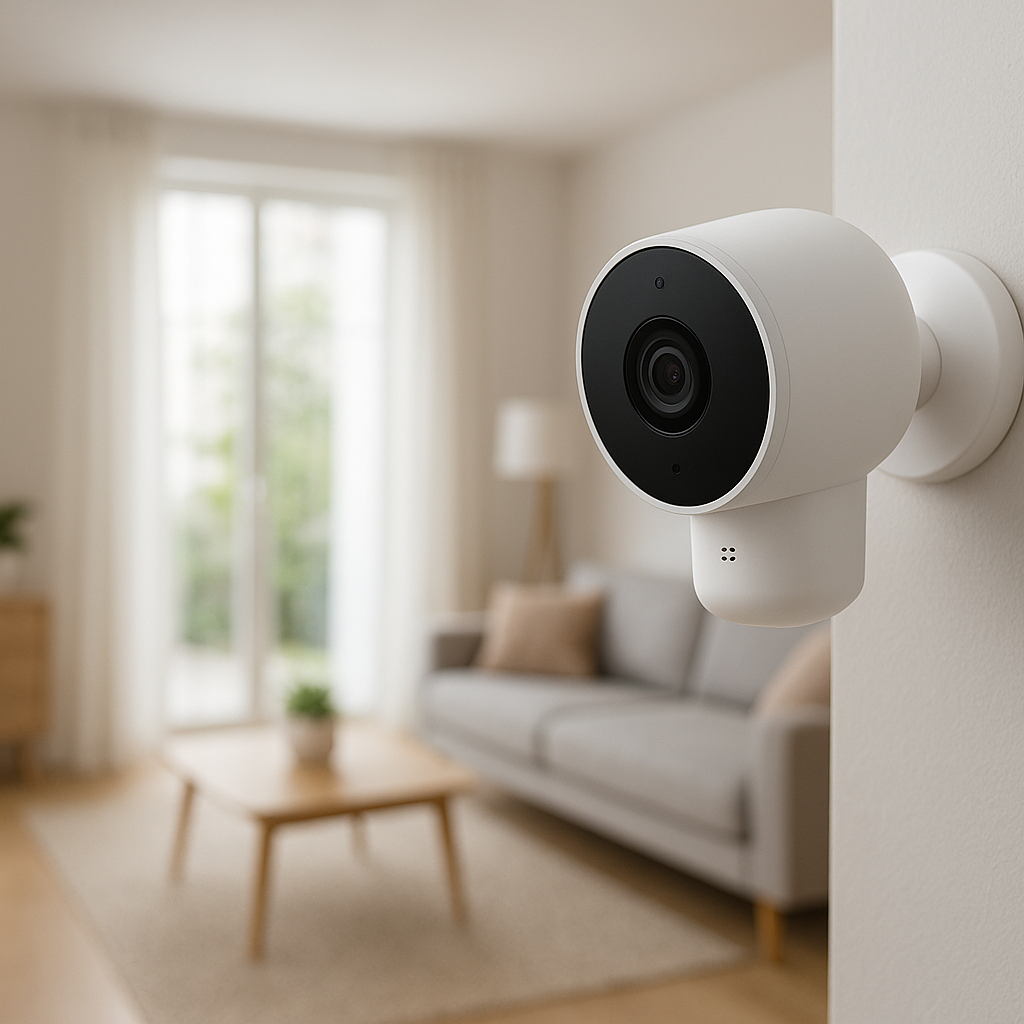
Cloud-connected cameras are convenient, but they also send video of your home to someone else’s servers. If you care about privacy, that trade-off can feel uncomfortable. That’s why many homeowners are moving toward local-storage smart camera systems where footage is recorded and kept on devices you control.
Eufy, Reolink, and Lorex are three of the most popular brands for this kind of setup. All three let you record locally with no mandatory cloud subscription, but they go about it in very different ways. This guide breaks down Eufy vs Reolink vs Lorex so you can choose the system that fits your privacy expectations, technical comfort level, and budget.
Overview: Why Privacy-Focused Homeowners Prefer Local-Storage Smart Cameras
The problem with cloud-only security cameras and continuous video uploads
Many mainstream smart cameras (from brands like Ring, Nest, and some Arlo models) rely heavily on the cloud. Video is uploaded to remote servers, analyzed, and stored there for days or weeks. That creates several issues for privacy-focused homeowners:
- More copies of your footage: Every clip that leaves your home network is another copy that could be accessed by employees, hacked, or shared with third parties.
- Law enforcement access: Some cloud providers may share footage with police under certain conditions or in response to warrants, often without your direct involvement.
- Breach risk: A data breach at the provider could expose stored video, even if your home network is secure.
- Dependence on the internet: If your internet or the vendor’s servers go down, you may lose recording or remote access right when you need it most.
Cloud features can be useful, but they shift control and custody of your footage away from your home and into someone else’s infrastructure.
Benefits of local storage: control, privacy, and ongoing cost savings
Local-storage camera systems try to invert that model. Video is recorded to SD cards, NVR/DVR hard drives, or a hub in your home. That offers several benefits:
- More direct control: Footage physically resides on devices you own. You decide whether anything is ever uploaded or shared.
- Reduced exposure: Less video leaves your home network, so there’s a smaller attack surface for hackers and third parties.
- No required monthly fee: Eufy, Reolink, and Lorex all allow recording without mandatory subscriptions, which can save substantial money over 3–5 years.
- Works during internet outages: As long as power and local storage are available, cameras can keep recording even if your internet provider has an issue.
You can still enable selective cloud features if you want them, but you’re not forced to upload everything.
Key decision factors for privacy-first buyers (encryption, remote access, data ownership)
When comparing Eufy vs Reolink vs Lorex, privacy-focused buyers should pay close attention to:
- Encryption: How footage is encrypted at rest (on SD cards, NVRs, or hubs) and in transit (between camera, app, and any cloud service).
- Remote access options: Do you need vendor cloud accounts or port forwarding, or can you use secure tunnels/VPNs you control?
- Data ownership: Whether you can fully operate the system without cloud, and how much data (thumbnails, logs, metadata) is still sent to the vendor.
- On-device intelligence: Systems that perform person or object detection on the camera or hub leak fewer raw video frames to the cloud.
- Vulnerability history and updates: How the company has handled past issues and how regularly firmware is updated.
All three brands can be used in privacy-conscious ways, but they differ in defaults, capabilities, and how much configuration they expect from you.
Quick Comparison: Eufy vs Reolink vs Lorex at a Glance
Feature comparison table: storage types, resolution, power options, and price range
The table below describes typical capabilities for each brand’s mainstream lines (offerings vary by specific model).
| Brand | Primary Local Storage | Typical Resolution | Power Options | Typical Use | Approx. Price Range (USD) |
|---|---|---|---|---|---|
| Eufy | HomeBase hub, microSD in some cams | 1080p–4K | Battery, wired, solar (select models) | Easy app-based home setups | $40–$300 per device/kit |
| Reolink | MicroSD, NVR, optional NAS | 2K–4K | PoE, wired, Wi‑Fi, solar/battery | DIY and power-user systems | $60–$700 per system |
| Lorex | DVR/NVR with hard drives | 2K–4K | Wired (coaxial or PoE) | Full-property, traditional security | $250–$1,000+ per kit |
Which brand fits which user: renters, homeowners, large properties, and DIY users
- Renters: Eufy’s battery-powered cameras (like the EufyCam series) are easy to mount with minimal drilling, and you can take the HomeBase and cameras with you when you move.
- Typical homeowners: Eufy or Reolink Wi‑Fi cameras work well for 3–8 camera setups without complex wiring.
- Large properties: Reolink PoE systems and Lorex NVR/DVR kits scale better to 8–32 cameras with centralized recording.
- DIY and power users: Reolink stands out with PoE, RTSP, and NAS support, ideal if you already run a home server or advanced network gear.
Summary verdict for privacy, ease of use, and long-term costs
- Privacy potential: All three can be run mostly locally, but Reolink and Lorex lean more toward “your network, your rules” when set up without cloud, while Eufy is more app-centric.
- Ease of use: Eufy is the most beginner-friendly. Reolink is moderate, and Lorex feels closer to a traditional CCTV system.
- Long-term costs: All avoid required subscriptions. Reolink and Lorex NVR kits can be cost-effective per camera if you need many views. Eufy is great for smaller systems with 2–6 cameras.
Eufy Local-Storage Smart Cameras: Strengths, Weaknesses, and Ideal Use Cases
How Eufy handles local storage (HomeBase, SD cards, encrypted local recording)
Most Eufy outdoor kits use a HomeBase hub (e.g., Eufy HomeBase 2 or 3) that stores encrypted footage on internal or expandable storage. Cameras wirelessly connect to the HomeBase, which acts as both a bridge and recorder.
Many indoor models, like the Eufy Solo IndoorCam C24, use a microSD card in the camera itself for local recording. Some support NAS recording via RTSP, depending on firmware.
The key idea: recordings can stay on your HomeBase or SD card. Cloud storage is optional, not required.
Privacy and security: on-device AI, encryption, and internet-off usage limits
Eufy leans heavily on on-device AI. For example, supported cameras can run person and face detection locally so fewer frames ever need to be sent to Eufy servers. Storage on HomeBase is encrypted and tied to your account.
However, in the past there have been concerns about how Eufy handled thumbnails and streams. Research and reporting around Eufy’s ecosystem highlighted cases where unencrypted streams could be accessed under narrow conditions. These issues pushed the company to make changes and communicate more clearly about encryption, but they’re worth knowing as part of the brand’s history.
If you disconnect Eufy from the internet, local recording still works, but you lose remote access outside your home, push notifications, and some AI and integration features. For a locked-down home LAN, that trade-off might be acceptable.
Smart home integration: Alexa, Google Assistant, HomeKit (where available)
Many Eufy cams support:
- Amazon Alexa: View live streams on Echo Show or Fire TV devices.
- Google Assistant: Cast streams to Nest Hub or Chromecast-enabled TVs.
- Apple HomeKit: Select indoor models support HomeKit and in some cases HomeKit Secure Video, which moves encrypted video analysis into Apple’s ecosystem.
Integrations usually require some cloud connectivity for account linking, even though the main storage remains local.
Best Eufy models for local storage (indoor, outdoor, battery vs wired)
- Outdoor battery: EufyCam 3 (S330) or EufyCam 2C for wire-free installs with HomeBase storage.
- Outdoor wired: Eufy Floodlight Cam (with onboard storage) for driveways and backyards.
- Indoor: Solo IndoorCam C24 (microSD, optional NAS) for nurseries, hallways, or home offices.
These give you straightforward app control with local storage by default.
Pros and cons of Eufy for privacy-focused homeowners
- Pros: Very easy to set up, no required subscription, on-device AI, strong support for renters and non-invasive installs.
- Cons: Less transparent historically about security details; some advanced local-only networking options are limited compared with Reolink or Lorex.
Reolink Local-Storage Smart Cameras: NVR Powerhouse for DIY Enthusiasts
Storage architecture: microSD, NVR, and optional NAS recording
Reolink offers a flexible storage stack:
- MicroSD cards in individual cameras for simple one-off installs.
- NVRs (Network Video Recorders) that aggregate many PoE or Wi‑Fi cameras into one box with large hard drives.
- Optional NAS/RTSP support for many models, letting you record to a Synology, QNAP, or other NAS using ONVIF/RTSP or dedicated apps.
This flexibility appeals to tinkerers who already run home servers or want complete control of their storage architecture. For background on how NVRs work generally, see the Network video recorder article.
Privacy controls: local-only setups, port forwarding alternatives, and app security
Reolink systems can be run almost entirely locally. You can:
- Access cameras only from inside your LAN via local IP or NVR.
- Disable or avoid any cloud P2P features and instead use a VPN (for example, via your router) for secure remote access.
- Lock down camera logins with strong passwords and change default ports.
Reolink’s mobile and desktop apps can connect directly to the NVR or camera over the local network, avoiding the need for cloud routing. That makes it attractive if you’re comfortable with basic network configuration.
Supported ecosystems: smart home platforms, RTSP, and compatibility for power users
Reolink is especially popular with home automation enthusiasts because many models support:
- RTSP/ONVIF streams for use with Blue Iris, Home Assistant, or other NVR software.
- Basic voice integrations with Alexa and Google Assistant for live view on smart displays.
- Integration via community plug-ins into more advanced ecosystems.
If you want cameras that fit into a broader DIY smart home, Reolink is usually easier to integrate than Lorex, and more open than Eufy in terms of streams and protocols.
Best Reolink models for local storage (PoE, Wi‑Fi, and dual-band options)
- PoE (for wired reliability): Reolink 810A or 510A connected to a Reolink NVR.
- Wi‑Fi: Reolink 510WA or similar dual-band models for easier placement without running Ethernet everywhere.
- Battery/solar: Reolink Argus 3 Pro for off-grid corners of your property.
Pros and cons of Reolink for privacy-first, tech-savvy homeowners
- Pros: Highly flexible local storage, solid PoE options, good for large systems, strong compatibility with third-party software.
- Cons: Setup is more technical, app UX can feel less polished than Eufy, and getting the most private configuration often requires tweaking network settings.
Lorex Local-Storage Smart Cameras: Traditional Security System Approach
How Lorex uses DVR/NVR systems for always-on local recording
Lorex focuses on bundled kits: a DVR or NVR and a set of wired cameras. This feels very much like a traditional CCTV system upgraded with HD/4K and remote viewing.
The DVR or NVR includes one or more hard drives, often with options for expansion. Cameras are connected either over coaxial cable (DVR) or Ethernet (NVR/PoE). The recorder continuously stores footage on-site until the drive fills and overwrites the oldest recordings.
Privacy implications: on-premise recording vs remote access features
The core Lorex model is inherently local. Every frame is written to disks in your home. Remote access via app or PC software is layered on top.
For privacy-conscious users, you can:
- Disable or limit cloud and P2P remote access.
- Allow only local network access to the NVR/DVR.
- Use VPN-based access when you’re away from home.
That said, Lorex interfaces and manuals are more targeted at traditional security installers, so dialing in a privacy-hardened configuration can involve some menu-diving.
Integration with smart home platforms and mobile apps
Lorex offers its own mobile app for live view, playback, and notifications. Integration with mainstream smart home platforms is improving, but it’s still weaker than Eufy’s consumer-first approach and Reolink’s open protocols.
Expect basic casting of streams and push alerts rather than deep automation or HomeKit-style integration.
Best Lorex kits for whole-home coverage with local storage
Look for 4K NVR kits with 8–16 PoE cameras and at least 2–4 TB of storage if you’re covering a large property or want long retention. Lorex’s wired 4K Color Night Vision kits are popular choices for front yards, driveways, backyards, and perimeter coverage.
Pros and cons of Lorex for homeowners who want a more traditional system
- Pros: Strong for whole-property coverage, continuous recording by default, solid value on per-camera cost in bundles.
- Cons: Installation is more involved, the interface is more “security installer” than “smart home app,” and smart home integrations are limited.
Privacy and Security Deep Dive: Eufy vs Reolink vs Lorex
Local-only vs cloud-hybrid options and what they mean for your data
All three brands can operate locally, but with slightly different models:
- Eufy: Primarily app/cloud managed with local storage. Easy to use, but you’ll usually have an account and some data flowing through Eufy servers, even if video stays local.
- Reolink: Easy to keep completely LAN-bound, especially with PoE and NVR. Cloud and P2P are optional layers.
- Lorex: Designed around on-premise recorders. Remote access is added on top and can be disabled if you want purely local use.
Encryption standards, account security, and vulnerability history
From a privacy-first perspective, focus on:
- Transport encryption: Check for TLS/HTTPS between apps and devices.
- Storage encryption: Eufy encrypts HomeBase storage; Reolink and Lorex may rely more on physical security and password protection for NVRs (model dependent).
- Account controls: Strong, unique passwords and, where offered, multi-factor authentication.
Each brand has had firmware bugs or security advisories over time. What matters is how quickly updates are issued and how easy they are to apply. Understanding general concepts like end-to-end encryption can help you evaluate vendor claims.
Using cameras without internet: what still works and what breaks
- Eufy: Local recording continues, but push notifications, remote access, and some integrations stop without internet.
- Reolink: NVR and local app/PC access continue to work. If your phone is on the same Wi‑Fi, you can still view and manage recordings.
- Lorex: DVR/NVR recording and direct monitor output keep working. Apps work on LAN; no remote access from outside.
If you plan to run without internet for extended periods, Reolink and Lorex NVR/DVR setups tend to degrade more gracefully.
Best practices: securing your local-storage camera system on your home network
- Change default passwords on cameras, NVRs, and hubs immediately.
- Disable unused remote access and P2P features.
- Keep firmware updated on cameras, recorders, and your router.
- Consider isolating cameras on a separate “IoT” VLAN or Wi‑Fi network.
- Use a reputable VPN for remote access rather than port forwarding.
Storage Options Compared: SD Card, NVR/DVR, and NAS Support
Maximum capacity, video retention, and reliability for each brand
- SD cards: Common with Eufy indoor cams and Reolink stand-alone units. Affordable but less reliable long term; best for a few days or a week of history.
- NVR/DVR hard drives: Core to Reolink kits and Lorex systems. Support terabytes of storage and weeks of retention across many cameras.
- NAS: Mostly relevant for Reolink (and some Eufy with RTSP) if you want centralized storage controlled by you, with RAID and snapshots.
How Eufy, Reolink, and Lorex handle storage failure and redundancy
In general:
- Eufy: If the HomeBase fails, you can lose all stored footage unless you have exports. There’s typically no built-in RAID.
- Reolink NVR: Many NVRs support multiple drive bays so you can configure larger capacity, but true RAID redundancy is often limited or model-dependent.
- Lorex DVR/NVR: Higher-end kits may support multiple drives; some support RAID-like redundancy. For most homeowners, the best protection is periodic backup or exporting critical clips.
Cost of ownership over 3–5 years with local storage vs cloud subscriptions
Cloud subscriptions can run $3–$15 per month per camera. Over 3–5 years, a 4-camera cloud system might cost as much in subscriptions as the hardware itself.
With Eufy, Reolink, or Lorex, you typically pay more up front for hardware and drives but very little over time, aside from potential drive or SD replacements. For a 6–8 camera home, NVR/DVR systems from Reolink or Lorex often end up cheaper than multiple stand-alone Wi‑Fi cameras with cloud plans.
Smart Home Integration and Automation Capabilities
Voice assistant support (Alexa, Google, HomeKit) for Eufy, Reolink, and Lorex
- Eufy: Broad Alexa and Google Assistant support for live view; limited but valuable HomeKit support on select models.
- Reolink: Works with Alexa and Google for live viewing. No official HomeKit, but RTSP makes it popular for advanced setups.
- Lorex: Focuses primarily on its own app; some models offer Alexa/Google casting but generally lighter integrations.
Using cameras in automation routines (lights, alarms, and smart locks)
You can integrate cameras into routines such as:
- Turning on porch or driveway lights when a camera detects motion.
- Triggering sirens or alarms when a person is detected late at night.
- Locking smart locks automatically if a camera detects an unknown person at a certain time.
Eufy and Reolink usually rely on the broader ecosystem (Alexa routines, Home Assistant, etc.) for this logic. Lorex is more stand-alone, with basic alerts rather than deep automation, unless you pair it with external systems.
Limitations for fully offline or privacy-hardened smart home setups
The more you lock down internet access, the fewer cloud-integrated features you can use. For example:
- Voice assistants may not be able to discover or control cameras if they can’t reach vendor servers.
- Some push notification systems rely on cloud relays.
- App setup and firmware updates might require temporary internet access.
A practical compromise is to allow brief, controlled internet access for setup and updates, then restrict routine camera traffic to your LAN and VPN.
Ease of Installation and Everyday Use
DIY difficulty: Wi‑Fi cams vs PoE vs DVR/NVR kits
- Eufy Wi‑Fi/battery cams: Easiest. Stick or screw into place, plug in HomeBase, follow app prompts.
- Reolink Wi‑Fi/PoE: Moderate. You’ll run Ethernet for PoE but gain reliable power and data; Wi‑Fi cams are simpler but still more technical than Eufy.
- Lorex DVR/NVR kits: Most involved. Running cables to every camera and mounting them properly is a weekend project or an installer job.
App experience comparison: live view, playback, alerts, and privacy controls
- Eufy: Polished consumer app with easy timeline scrubbing, clip downloads, and privacy zones. Great for non-technical users.
- Reolink: Functional apps with plenty of controls, but more utilitarian. Good for power users who like detailed settings.
- Lorex: Apps feel more like professional security software; capable but not as intuitive for casual users.
Ongoing maintenance: firmware updates, storage management, and backups
Plan for:
- Checking firmware updates a few times a year and applying them during low-traffic hours.
- Replacing SD cards every couple of years if you use continuous recording.
- Monitoring NVR/DVR disk health and planning for drive upgrades as needed.
- Exporting critical clips (e.g., incidents) to external drives or secure cloud storage you control.
Best Picks by Scenario: Which Brand Should You Choose?
Best for renters who want privacy and easy removal
Pick: Eufy. Battery-powered EufyCam kits with a HomeBase give you local storage, minimal wall damage, and easy removal when your lease ends. You can keep most data inside your home while still getting phone alerts and smart-display views.
Best for large homes and properties needing many cameras
Pick: Reolink or Lorex NVR kits. For 8–16 cameras, PoE wiring back to a central NVR is much more manageable than juggling separate Wi‑Fi units. Reolink leans DIY-friendly; Lorex feels closer to a pro system.
Best for power users who want NVR/NAS and advanced networking control
Pick: Reolink. If you’re comfortable with VLANs, VPNs, and NAS storage, Reolink’s RTSP/ONVIF support and NVR options give you the most flexibility to design a locked-down, fully local system.
Best for homeowners who want simple, privacy-conscious smart cameras
Pick: Eufy. For a few strategic cameras around doors, driveways, and common areas, Eufy balances user-friendly apps with solid local storage. You can dial back cloud features while keeping the setup approachable for everyone in the household.
How to Configure Any of These Systems for Maximum Privacy
Network setup tips: VLANs, separate IoT networks, and strong passwords
To keep cameras from becoming a weak point:
- Place cameras on a separate “IoT” Wi‑Fi network or VLAN isolated from your main devices.
- Use strong, unique passwords for all camera and NVR accounts; store them in a password manager.
- Turn off remote management on your router if you don’t need it.
- Enable WPA3 or at least WPA2 on Wi‑Fi; avoid open or WEP networks.
Turning off unnecessary cloud features and remote access
In each app or recorder interface:
- Disable P2P or cloud relay options if you plan to use VPN-based remote access.
- Turn off automatic clip uploads to vendor cloud services.
- Review sharing and account-invite features so only trusted people have access.
Setting up local-only recording and verifying footage stays in your home
After setup:
- Confirm that recording continues if you briefly disconnect your internet connection (but keep local power and network running).
- Check router logs or use basic network monitoring to see where cameras are connecting; ideally, most traffic should stay inside your LAN.
- Test access from outside your home using a VPN rather than the vendor’s cloud app, if your router or server supports it.
Final Verdict: Eufy vs Reolink vs Lorex for Privacy-Focused Homeowners
Brand-by-brand summary and who each is best for
- Eufy: Best for renters and homeowners who want easy, app-driven cameras with local storage and minimal subscriptions. Great for small to medium systems.
- Reolink: Best for DIY builders and power users who want PoE, NVRs, NAS support, and fine-grained control over how and where footage is stored.
- Lorex: Best for traditional, installer-style systems that cover larger properties with a central DVR/NVR and wired cameras.
Recommended setups for different budgets and privacy preferences
- Budget, privacy-conscious starter: 2–3 Eufy indoor/outdoor cams with a HomeBase, local recording only, basic Alexa/Google view.
- Mid-range whole-home: Reolink 8-channel PoE NVR kit with 2–4 TB drive, local-only access plus VPN for remote viewing.
- High-end perimeter coverage: Lorex 4K NVR kit with 8–16 cameras and dedicated monitor, configured for on-premise viewing and strictly controlled remote access.
When a hybrid (local + selective cloud) approach makes sense
Purely local setups minimize exposure, but selective cloud use can be practical. For example, you might:
- Enable limited cloud clip backup for just front-door events in case your NVR is stolen.
- Use vendor push notifications while still keeping continuous recording local.
- Back up only the most important incidents to a secure cloud storage account you manage.
By starting with a local-first design and adding cloud features carefully, you can tailor Eufy, Reolink, or Lorex to match your own comfort level with privacy and convenience.
FAQ
Do I need an internet connection for Eufy, Reolink, or Lorex to record locally?
No. All three can record to SD cards, NVRs, or HomeBase devices without an active internet connection. However, you typically need internet for initial setup, firmware updates, and remote viewing when you’re away from home.
Which is more secure: SD card recording or an NVR/DVR?
From a privacy standpoint, both can be secure if you control physical access and use strong passwords. NVR/DVR systems usually offer better capacity, central management, and the option to keep the recorder in a locked location, which can be safer than SD cards inside easily stolen cameras.
Can I use these systems with Home Assistant or other local smart home hubs?
Reolink is the most flexible thanks to RTSP/ONVIF support. Some Eufy and Lorex models can be integrated through community plug-ins or by pulling RTSP streams where available. Always check the specific model’s compatibility before buying if deep integration is important to you.
Is it safer to block cameras from accessing the internet completely?
Blocking internet access reduces external attack surfaces but also removes remote viewing, notifications, and easy updates. A balanced approach is to allow limited, monitored access and use a VPN for remote viewing rather than exposing cameras directly to the internet.
How often should I replace hard drives or SD cards in my local-storage system?
For typical home use, plan to replace SD cards every 1–3 years and surveillance-grade NVR/DVR drives every 3–5 years, depending on manufacturer guidance and actual hours of use. Watch for signs of failure like unusual noise, app warnings, or missing recordings.