Motorizing your existing curtains or blinds no longer means calling an installer, drilling into your walls, or rewiring your windows. Retrofit smart curtain and blind kits clip onto what you already have and add app control, automation, and voice control in under an hour.
This guide walks through how these kits work, what to look for before you buy, and which models suit different homes and window types. You’ll also find a simple installation walkthrough, smart automation ideas, and tips to keep everything running smoothly over the long term.
Why Choose a Retrofit Smart Curtain Kit (No Drilling, No Rewiring)
The problem with traditional motorized curtain tracks
Traditional motorized curtain systems replace your entire track or rod with a powered rail. They’re reliable, but they come with trade-offs:
- Complex installation: You often need to remove the old track, drill new holes, and sometimes adjust the wall or ceiling anchors.
- Electrical work: Many systems expect a nearby power outlet or even hardwiring into mains, which can mean hiring an electrician.
- Higher cost: You’re paying for a full track system plus professional installation in many cases.
- Harder to move: If you rent or plan to move, taking a full track system with you is awkward.
For a lot of homes, that’s more hassle and expense than the benefits justify—especially if the existing curtains already look and work fine.
Benefits of retrofit kits for renters and homeowners
Retrofit smart curtain kits, such as clip-on motors that ride along your curtain rod or pull a chain, are designed to avoid those problems:
- No drilling: They usually clamp onto the rod, rail, or beaded chain, leaving walls and window frames untouched.
- No rewiring: Most are battery-powered with USB-C charging, optional solar panels, or a simple plug-in adapter.
- Moveable: Moving out? Just unclip the device and take it with you.
- Affordable upgrade: You keep your existing curtains or blinds, so most of your budget goes into the motor and smart features.
- Fast install: Many kits are realistic weekend or even after-dinner projects, not full renovation jobs.
For renters, the “no drilling” part is particularly valuable because you avoid damaging the property or risking deposit issues.
When a retrofit kit is better than a full smart curtain system
A retrofit kit is usually the better choice when:
- Your current curtains or blinds are in good condition and you like how they look.
- You’re in a rental, or you expect to move and want something you can re-use.
- You want to test smart window coverings in one or two rooms before committing to whole-home tracks.
- Power outlets are limited near windows and you prefer rechargeable batteries or solar.
A full smart track system can still be worthwhile for very wide windows, curved tracks, or complex bay windows. But for most standard rods, rails, and chain-operated blinds, retrofit kits give you 80–90% of the benefits with a fraction of the work.
Key Buying Criteria for the Best Retrofit Smart Curtain Kit
Compatibility with existing curtain rods, rails, and blinds
Before looking at brands, check what you already have:
- Rod type: Is your curtain hung on a round rod with grommets or ring clips, or on a U-rail/I-rail track with sliders?
- Mounting space: Is there enough straight rod on either side of the window for the motor to sit and move?
- Blind mechanism: If you’re automating blinds, do they use a beaded chain, wand tilt, or cordless spring?
Most retrofit curtain motors come in different versions: one for rods, one for U-rails, and sometimes one for I-rails. Blind retrofit motors often clamp to a plastic or metal beaded chain on roller, Venetian, or Roman blinds.
Weight limits and curtain fabric types (sheer vs blackout)
Every kit lists a maximum curtain weight and recommended width. Ignoring those numbers is the fastest way to burn out a motor.
- Sheer curtains: Light fabrics (voile, linen blends) are usually well within the limits of budget kits.
- Blackout curtains: Thermal or blackout drapes, especially lined ones, can be heavy and require more powerful motors.
- Double curtains: If you have both sheers and blackouts on the same rod, you may need either two motors or one stronger kit designed for higher loads.
Measure your curtain width and estimate weight using manufacturer info if you still have it. When unsure, choose a kit with a higher weight rating rather than pushing the minimum.
Power options: battery, USB-C, solar, and plug-in
How the kit gets power affects convenience and maintenance:
- Built-in rechargeable battery: Common on curtain motors. You recharge every few months using USB-C. Easy to install, but you’ll need a step stool occasionally.
- Replaceable batteries: Less common now, but handy if you don’t want to worry about charging cables.
- Solar panel add-ons: A small panel sticks to the window and trickle-charges the motor, reducing manual charging. Works best on sunny windows that get several hours of light.
- Plug-in adapters: Great for windows near outlets where you don’t want to think about batteries at all.
Consider how many windows you’ll motorize. Recharging ten devices every three months may be fine in a small apartment but annoying in a larger home without solar panels or plug-in power.
Smart home integrations (Alexa, Google, HomeKit, SmartThings)
Most readers of SmartHomeMuse want these kits to work with the rest of their smart home. Look for:
- Native integrations: Many popular kits support Amazon Alexa and Google Assistant out of the box.
- HomeKit support: Some models work directly with Apple Home, while others require a separate hub or a Matter bridge.
- SmartThings & others: If you use Samsung SmartThings, Home Assistant, or Hubitat, check if the kit offers an open API, Zigbee, or Matter support.
Reading the official compatibility list or user manual (not just marketing bullet points) helps avoid surprises later. For background on how these platforms connect, the home automation article gives a good overview of typical smart home ecosystems.
Noise level, speed, and reliability
Not all motors sound or move the same:
- Noise: Look for decibel ratings when available. Anything around 35–45 dB is generally acceptable for living rooms; for bedrooms, quieter is better.
- Speed: Some kits open in 10–15 seconds, others are more leisurely. Speed matters less than smooth, consistent movement.
- Reliability: User reviews can reveal issues like motors slipping, stalling, or failing after a few months. Consistent feedback is more reliable than a single complaint.
If you plan early-morning automations in a bedroom, prioritize quieter models even if they’re slightly slower.
App quality, scheduling, and automation features
The app is where you’ll set schedules and calibrate the system, so it needs to be usable:
- Schedules: Look for daily and weekly scheduling, plus sunrise/sunset options.
- Groups and scenes: Being able to open all living room curtains together or group blinds by side of the house is very useful.
- Position control: Good apps let you set partial positions (e.g., 40% open) rather than just open/close.
- Remote access: Cloud or hub support lets you control shades when you’re away.
A cluttered or unreliable app can make even the best hardware frustrating, so it’s worth checking recent app store reviews.
Best Retrofit Smart Curtain Kits (No Drilling or Rewiring Required)
Top pick: Best all-round retrofit smart curtain kit
For most homes with standard curtain rods or U-rails, a clip-on curtain robot that supports multiple smart home platforms is the best starting point. Look for a model that:
- Comes in versions for both rods and rails.
- Offers strong battery life (2–6 months per charge under normal use).
- Supports Alexa, Google Assistant, and optionally Matter or HomeKit via a hub.
- Includes a decent in-app calibration wizard so setup is straightforward.
These all-rounders handle everything from bedroom sheers to average-weight living room curtains and are a good foundation for future expansion.
Best budget retrofit smart curtain kit for simple setups
If you’re testing the waters or only automating one window, a budget-friendly kit can make sense. They usually work best when:
- Your curtains are light and not extra-wide.
- You’re happy using the manufacturer’s app with basic on/off schedules.
- You don’t need advanced scenes across multiple rooms.
These kits often skip premium features like ultra-quiet motors or solar charging, but they still add app control and simple automation to everyday curtains.
Best premium kit for whole-room automation and scenes
For more advanced setups, such as home theaters or open-plan living spaces, a premium kit focused on scenes and multi-device control is worth considering. Look for:
- Support for grouping many curtains and blinds into scenes (e.g., “Movie Night” dims lights and closes all shades).
- Native integration with your main smart home hub or platform.
- Optional remotes or wall switches so family members don’t need the app.
- Quiet motors suitable for bedrooms and media rooms.
Spending a bit more here simplifies control in rooms where lots of devices need to act in sync.
Best retrofit kit for rental apartments and temporary setups
Renters should prioritize kits that leave no marks and are easy to remove:
- Clamp-on or clip-on designs that don’t require tools.
- Battery or solar power so you don’t run visible cables.
- Minimal hubs or extra hardware, to keep moving-out day simple.
- Compatibility with your phone platform and at least one major voice assistant.
Look for motors that don’t rely on proprietary wall brackets or glued mounts, so you can detach everything cleanly when your lease ends.
Best option for heavy blackout curtains and wide windows
For large sliders, patio doors, or heavy thermal drapes, not every retrofit kit has enough torque. In this case, you need:
- A motor with a clearly stated high weight limit that matches or exceeds your curtains.
- Support for double-sided installations (two motors working together) on especially wide rods.
- Good traction wheels or tracks to prevent slipping on smooth metal rods.
For long-term reliability, err on the side of more powerful hardware rather than pushing a small motor to its limit twice a day.
Best Retrofit Smart Blind Kits for Roller, Venetian, and Roman Blinds
Retrofit kits that work with chain-operated blinds
Most retrofit blind motors are designed around a beaded chain. If your roller, Venetian, or Roman blind has a looped plastic or metal chain, you’re in good shape:
- The motor clamps over or replaces the chain loop.
- The kit turns the chain to raise, lower, or tilt the blind.
- Installation typically takes 10–20 minutes per blind with no drilling.
Check the chain bead size (usually measured in millimeters). Good kits include multiple sprockets or adapters to fit common chain sizes.
Options for cordless and spring-loaded blinds
Cordless or spring-loaded blinds are trickier because there’s no chain to pull. Your options are:
- Swap to a chain-operated mechanism: Many blind systems let you change the top mechanism without replacing the fabric.
- Dedicated retrofit tube motors: These slide inside the roller tube and are still mostly no-drill, but installation is a bit more involved.
- Hybrid approach: In some cases, adding a small external chain kit gives you something for the motor to pull.
If your blinds are new and cordless by design (especially in rentals), replacing them might not be an option, so a tube motor kit or full smart blind system may be the only route.
Handling tall windows, skylights, and bay windows
Tall or awkwardly positioned windows add some challenges:
- Tall windows: Choose a motor with enough torque and a long-enough chain length. Consider plug-in or solar power so you’re not climbing a ladder for charging.
- Skylights: Look for blind-specific kits rated for angled or overhead installations, as gravity works differently there.
- Bay windows: Multiple narrow blinds with individual motors can be grouped into one scene so they move together.
For very high or hard-to-reach windows, quiet operation matters less than reliability and long battery life, since you won’t interact directly with the motor.
Step-by-Step Installation Guide (No Drilling, Minimal Tools)
How to measure your curtain rod and track for compatibility
Before ordering anything, do three quick checks:
- Measure the rod diameter: Use a ruler or caliper. Most retrofit kits list a minimum and maximum rod size.
- Check the track shape: If you have a rail, note whether it’s a U-rail or I-rail and measure its width.
- Measure curtain width and drop: This helps confirm that weight and travel distance are within spec.
Take photos of your setup from a few angles. Many manufacturers include diagrams in their manuals that you can compare to your photos before buying.
Attaching the retrofit motor to rods, rails, or blind chains
Exact steps vary, but the general process is similar:
- Charge the motor first so it’s ready for pairing and calibration.
- Clip or clamp the motor onto the rod or rail according to the instructions, usually near one end of the curtain stack.
- For blinds, open the motor housing, wrap the chain over the sprocket, and close the housing so the chain sits securely.
- Test manual movement: Gently slide the curtain or move the blind with the motor engaged to confirm nothing is binding.
Most kits include adapters and spacers to get a snug fit. Don’t overtighten any screws on thin metal rods to avoid bending them.
Powering your kit: battery setup, charging, and solar placement
Once the motor is attached, decide how you’ll power it long term:
- Rechargeable battery: Mount the motor where you can reach its charging port. Plan a charging routine—many users top up all window motors every 3–6 months.
- Solar panel: Clean the glass and stick the panel where it gets maximum daylight without being blocked by curtains or frames.
- Plug-in adapter: Run the cable neatly along the frame or wall using cable clips, keeping it out of curtain paths.
Avoid running power cables where they can get pinched by the window or tangled in moving fabric.
First-time setup in the app: calibration and open/close limits
With the motor mounted and powered:
- Download the manufacturer’s app and create an account if needed.
- Put the motor into pairing mode (usually by holding a button) and add it via Bluetooth or Wi‑Fi.
- Follow the on-screen calibration wizard to set open and close endpoints. You’ll usually move the curtain or blind to fully open, tap a button, then to fully closed and tap again.
- Test a few cycles from the app and from any physical buttons to confirm smooth movement.
Calibration ensures the motor doesn’t overrun and strain the mechanism when opening or closing.
Smart Home Automation Ideas for Retrofit Curtains and Blinds
Creating sunrise and sunset automations
Once the basics work, add convenience:
- Wake-up routine: Open bedroom curtains to 30–50% at sunrise on weekdays for a gentler wake-up than an alarm.
- Sunset close: Close living room blinds automatically at sunset to reduce glare and increase privacy.
- Seasonal tweaks: Adjust offsets (e.g., 20 minutes before sunset) between summer and winter for comfort.
Many apps include built-in sunrise/sunset triggers; others can be controlled via Alexa Routines, Google Home, or HomeKit automations.
Linking curtains to smart thermostats for energy savings
Smart window coverings can support climate control:
- Summer: Close sun-facing blinds during the hottest hours to reduce cooling loads.
- Winter: Open curtains on sunny cold days to let warmth in, then close them before temperatures drop at night.
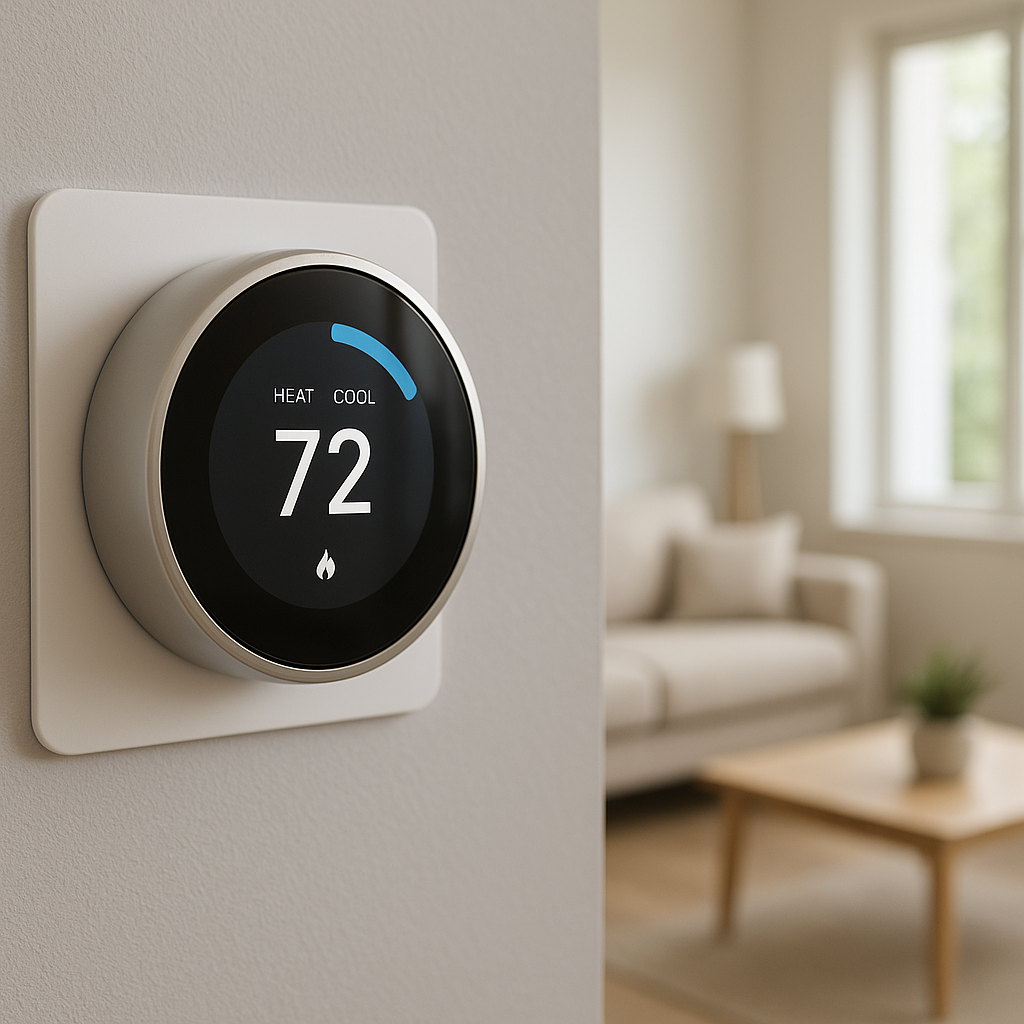
- Thermostat triggers: Use a smart thermostat or temperature sensor to close shades when a room exceeds a set temperature.
This “passive” control reduces how hard your HVAC system has to work, especially in rooms with lots of glass.
Privacy modes: tying curtains to occupancy and nighttime routines
Automated privacy helps your home feel more secure and comfortable:
- Night mode: Close all street-facing blinds at a fixed time every evening.
- Occupancy-based: If you have motion sensors, keep blinds slightly open when a room is empty, and close more when people are present and lights are on.
- Away mode: Randomize curtain movements a bit while you’re on holiday to simulate occupancy.
Use your existing smart home routines to coordinate windows with lights and door locks.
Voice control examples with Alexa, Google Assistant, and Siri
After integrating with your preferred voice assistant, try commands like:
- “Alexa, close the living room curtains.”
- “Hey Google, open the kitchen blinds to 40%.”
- “Hey Siri, set bedroom curtains to night mode.” (if using Apple Home scenes)
Group multiple motors under one name (e.g., “Downstairs blinds”) to simplify commands for the whole family.
Energy Efficiency and Comfort Benefits
Reducing heat gain and loss through automated shading
Windows are one of the main paths for heat to enter or escape your home. Automating curtains and blinds gives you better control:
- Reduce heat gain: Lower blinds during mid-day heat to block direct sun and keep rooms cooler.
- Reduce heat loss: Close thick curtains in the evening to add an extra layer of insulation.
- Fine-tune room by room: South- or west-facing windows may need different schedules from north-facing ones.
Over time, this can make a noticeable difference to both comfort and energy bills.
Pairing smart curtains with temperature and light sensors
Sensors make your system reactive instead of purely scheduled:
- Temperature sensors: Close blinds when the room exceeds a threshold, regardless of time of day.
- Light sensors: Adjust curtain positions based on actual brightness, not just sunrise/sunset times.
- Weather data: Some platforms can use weather forecasts to pre-emptively adjust shading before heatwaves or cold snaps.
This sensor-driven control complements your heating and cooling system, especially in rooms with large windows.
Using schedules to protect furniture from UV damage
UV light can fade furniture, flooring, and artwork over time. Simple automations help prevent that:
- Close or partially close blinds during peak sunlight hours on windows that hit your sofa or dining table.
- Create a “Protect” scene that closes blinds in rooms with delicate fabrics when nobody is home.
- Use tilt-only adjustments for Venetian blinds to block direct rays while maintaining some daylight.
For more context on how blinds and shading affect light and privacy, see the overview of different designs in the window blind article.
Common Issues and Troubleshooting Retrofit Kits
Motor slipping on rods or not moving smoothly
If the motor doesn’t grip properly or stalls:
- Ensure the rod diameter matches the supported range.
- Use included rubber inserts or spacers to improve grip on thin or slippery rods.
- Check that curtain rings or grommets move freely and aren’t catching on brackets.
- Reduce the load temporarily by testing with fewer curtain panels.
If things improve after reducing weight, consider using two motors (one on each side) or upgrading to a more powerful kit.
Dealing with noisy operation and vibration
Some noise is normal, but loud grinding or vibration isn’t:
- Verify that the motor is mounted straight and not twisted on the rod or rail.
- Tighten any loose clamps or screws that might be rattling.
- Check that curtains are not dragging on furniture or the floor.
- Update the firmware if the app offers a quieter “soft start” or speed setting.
In bedrooms, using thicker curtain headers or adding a small rubber pad between the motor and rod bracket can help dampen noise.
Fixing Wi‑Fi or Bluetooth connection problems
Connectivity issues usually fall into a few categories:
- Range: Move your router or hub closer, or add a mesh Wi‑Fi node or repeater.
- Interference: Avoid placing motors directly behind metal blinds or thick walls where signals struggle.
- Power saving: Some motors sleep aggressively to save battery; check app settings for connection options.
- Re-pairing: As a last resort, remove the device from the app, reset it, and pair again.
If your smart home relies heavily on Wi‑Fi, consider choosing a kit with a dedicated hub that uses Zigbee or another low-power protocol between hub and motors.
What to do if your curtains don’t fully open or close
Partial movement usually signals a calibration or obstruction issue:
- Re-run the calibration wizard and carefully set both endpoints.
- Check for snags: tiebacks, hooks, or furniture may be blocking full travel.
- Ensure the motor is installed on the correct side and orientation (left vs right).
- If the app allows, slightly reduce the maximum travel distance to avoid tight end stops.
After adjustments, test several open/close cycles from the app and any physical controls.
Maintenance, Battery Life, and Long-Term Reliability
How often you’ll need to recharge or replace batteries
Battery life depends on curtain weight, frequency of use, and temperature, but general expectations are:
- Light curtains, 2 cycles per day: several months per charge.
- Heavy drapes or tall blinds, 4+ cycles per day: possibly every 1–3 months.
- Solar-assisted setups: may run for many months or longer without manual charging, under good light.
Create a recurring reminder to check battery levels in the app so you can recharge before devices stop mid-motion.
Cleaning tips and avoiding dust build-up on tracks and motors
Dust and debris can increase friction and noise:
- Wipe rods and rails with a dry or slightly damp cloth every few months.
- Use a soft brush attachment on a vacuum to clean around the motor and curtain headers.
- Avoid harsh cleaners that could damage plastic parts or rubber wheels.
- For blinds, dust slats regularly so they don’t drag extra dirt into the mechanism.
Keeping the mechanical path clean helps the motor work less hard and extends its life.
Firmware updates, app support, and future-proofing
Like other smart home devices, retrofit kits receive updates:
- Check the app occasionally for firmware updates that can improve reliability or add features.
- Confirm that the manufacturer has a track record of maintaining their app—old reviews with no recent updates may be a red flag.
- If possible, choose devices that support open standards (like Matter) or have strong third-party integrations, so they don’t become isolated in a future upgrade.
Spending a bit more on a brand with active development can pay off over several years of use.
Retrofit vs. Full Smart Curtain Track: Which Is Right for You?
Cost comparison and installation complexity
In broad terms:
- Retrofit kits: Lower upfront cost, DIY-friendly, and you keep existing curtains and rods.
- Full tracks: Higher hardware cost plus possible professional installation, but optimized for smoothness and long-term durability.
For a typical living room, a pair of retrofit motors may cost less than a fully installed smart track system while still giving you app control and automation. For large renovations or new builds, full tracks may be easier to integrate from the start.
When you should upgrade to a dedicated smart track system
Consider a full track instead of retrofits when:
- You’re already doing major work in the room and can run power neatly to the windows.
- You need perfectly smooth, nearly silent operation for home theaters or master suites.
- Your windows require curved tracks or unusual angles that clip-on motors can’t handle.
- You’re standardizing an entire home and want identical hardware in every room.
In these cases, the extra upfront effort can deliver a cleaner, more integrated look and feel.
Mixing retrofit kits with other smart window coverings
You don’t need to choose one approach for every window:
- Use retrofits on existing curtains in bedrooms and home offices.
- Install full smart tracks on feature windows, like a main living room or media room.
- Add retrofit blind motors on small side windows or bathrooms where a simple roller blind is sufficient.
As long as everything connects to the same smart home platform—or can be bridged—you can still control them together using scenes and routines.
Final Recommendations: Choosing the Best Retrofit Smart Curtain Kit for Your Home
Quick picks by budget and use case
As you compare products, here’s a simple way to narrow your options:
- Starter/budget: One or two light curtains in a rental or small apartment; prioritize low cost and easy, drill-free installation.
- Mid-range all-rounder: Several standard windows across living spaces; look for strong app support, Alexa/Google integration, and decent battery life.
- Premium/whole-home: Multiple rooms, scenes, and integrations with thermostats and sensors; prioritize quiet motors, hubs, and broad ecosystem support.
- Heavy-duty: Large patio doors or blackout curtains; focus on higher weight ratings and dual-motor options.
Checklist before you buy: measurements, weight, and ecosystem
Run through this quick checklist before ordering:
- Measure rod diameter or track type and confirm the kit supports it.
- Estimate curtain weight and width; compare with the kit’s rated limits.
- Note power options near the window (outlet vs battery vs solar suitability).
- Decide which smart home platform you rely on (Alexa, Google, HomeKit, SmartThings, etc.) and confirm compatibility.
- Read recent user reviews for noise, reliability, and app quality.
Spending a few minutes on these checks greatly increases the chances that your first kit will work smoothly.
Where retrofit kits fit in your overall smart home plan
Retrofit smart curtain and blind kits are an easy way to add automation to an often-overlooked part of the home. They slot nicely alongside smart lights, thermostats, and sensors, giving you:
- More comfortable, consistent lighting throughout the day.
- Better privacy without manual nightly routines.
- Small but real gains in energy efficiency and comfort.
Start with one or two high-impact windows—perhaps the bedroom and main living room—then expand as you see how much value automated shading adds to your daily routine.
FAQ
Do retrofit smart curtain kits work with all types of curtain rods?
No. Most retrofit kits support common round rods and specific rail types (U-rail or I-rail), but unusual decorative rods, very thick poles, or ceiling tracks may not be compatible. Always compare your rod shape and size with the manufacturer’s diagrams before buying.
Can I still open and close curtains by hand after installing a retrofit kit?
Usually yes, within reason. Many kits are designed so you can gently pull the curtains by hand without damaging the motor, and some even include “touch to open” features. However, avoid yanking or forcing the curtains against the motor’s resistance.
Will these kits keep working if my Wi‑Fi goes down?
Most curtain and blind motors can still be controlled via Bluetooth or on-device buttons if Wi‑Fi is unavailable. Cloud-based voice control and remote access won’t work while the network is offline, but basic open/close functions should remain.
Are retrofit blind motors safe for homes with children and pets?
They can be safer than traditional corded blinds, because the motor usually encloses or shortens the chain. However, you should still follow safety guidance about keeping cords and chains out of reach and ensuring that motors and cables are mounted securely.
How difficult is it to remove a retrofit kit if I move house?
Removal is typically straightforward: unclip the motor from the rod or chain, detach any non-permanent mounts or solar panels, and pack the hardware. Because you’re not drilling or rewiring, you can usually return the window to its original condition in a few minutes.