
The SwitchBot Bot is one of those smart home gadgets that looks almost too simple to be useful: a tiny box that sticks next to a button or switch and physically pushes it for you. But for renters, people in older homes, or anyone who can’t (or doesn’t want to) touch wiring, it can unlock automations that would otherwise be impossible.
This SwitchBot Bot review walks through what it does well, where it falls short, and how it fits into a real apartment or rental setup. We’ll look at design, installation, performance, smart home integrations, and whether it delivers enough value to justify putting several of these little robots around your home.
Overview: What Is the SwitchBot Bot and Who Is It For?
How the stick-on smart button pusher works
The SwitchBot Bot is a battery-powered, Bluetooth smart gadget with a small mechanical arm inside. You stick it next to a button or rocker switch. When you trigger it via the app, a schedule, or a smart home platform, the arm extends or retracts to press or toggle the switch for you.
Instead of replacing a light switch or rewiring a thermostat, you keep the original device and let the Bot do the physical work. It can:
- Press a simple on/off button on a coffee maker or kettle.
- Flip a rocker light switch up and down using its “switch mode.”
- Buzz your apartment intercom door release button.
- Turn on/off a desktop fan, air purifier, or audio receiver that uses push buttons.
Under the hood, the Bot uses Bluetooth Low Energy (BLE) to talk to your phone or a SwitchBot Hub. Commands can be sent directly from your phone when you’re nearby, or via the cloud if you add a hub to your setup.
Why renters and non-DIYers are the ideal audience
The SwitchBot Bot is essentially made for people who can’t modify electrical wiring. That includes:
- Renters who aren’t allowed to swap light switches or thermostats.
- Condo owners who don’t want to risk voiding warranties or upsetting an HOA.
- Non-DIYers who feel uncomfortable turning off breakers and dealing with wires.
Because the Bot uses adhesive and doesn’t require tools, drilling, or rewiring, it’s a low-risk way to automate legacy devices. If you move out, you can remove the Bot and the switch or button looks the same as before.
Key differences from traditional smart switches and relays
Compared with in-wall smart switches or smart relays, the SwitchBot Bot has some unique trade-offs:
- No wiring vs. permanent installs: Smart switches require opening the wall box, connecting wires, and sometimes a neutral line. The Bot just sticks on the surface.
- Physical control vs. internal electronics: A smart relay electronically controls power inside the device. The Bot simply presses the existing button, so it works with many legacy devices that have no smart option.
- Single-button focus vs. whole circuit: A smart switch controls an entire lighting circuit. The Bot only controls the specific button or switch it is attached to.
- More universal, but more visible: The Bot can work on appliances, intercoms, and more, but it’s visible on the wall or device rather than hidden in an electrical box.
If you own your home and are comfortable with electrical work, smart switches might be neater. If you’re in a rental or dealing with complicated or shared wiring, the SwitchBot Bot is often the more practical choice.
Design, Build Quality, and Installation Experience
Size, look, and how it fits on typical switches and buttons
The SwitchBot Bot is small, roughly the size of a stack of a few coins: a compact square module that’s easy to hide near most switches. It’s available in neutral colors (typically white or black), so it doesn’t stand out too much on a wall or appliance.
On the front underside, a plastic arm extends and retracts. The arm’s travel distance and positioning are designed to hit:
- Standard rectangular or Decora-style rocker switches.
- Round mechanical buttons on coffee makers, rice cookers, and kettles.
- Flat intercom or gate release buttons.
You do need a flat, clean surface around the button or switch to mount the Bot, and a bit of clearance around the button so the arm can move freely.
Adhesive strength, repositioning, and renter-friendly removal
The Bot uses pre-applied double-sided adhesive pads. In everyday use, the adhesive is strong enough to handle the repeated mechanical motion without the Bot falling off. On smooth plastic or painted drywall, it holds well.
If you need to reposition it, you can gently pry it off with a thin plastic tool or fingernail. The pad may not always be reusable, but replacement adhesive strips are inexpensive and easy to find. On most surfaces, removal won’t damage paint or leave noticeable marks, which keeps landlords happy.
On rough or textured surfaces, like some plaster walls or grainy plastic, the adhesive may struggle. In those cases, mounting the Bot to a small, smooth plate or adapter that you then stick to the surface can help.
Installation steps: from unboxing to first press (no wiring required)
Getting the SwitchBot Bot running is straightforward:
- Download the SwitchBot app (iOS or Android).
- Insert or check the pre-installed battery in the Bot.
- Open the app and add a new device. The app will discover the Bot over Bluetooth.
- Give it a name like “Hall Light Bot” or “Coffee Maker Bot.”
- Dry-fit the Bot next to your button or switch to find the right position for the arm.
- Peel the adhesive backing and stick the Bot firmly in place.
- Use the app to test a press and adjust if needed.
No breaker flipping, no wiring diagrams, no wall plates removed. For many renters, that’s the main selling point.
Features and Smart Home Capabilities
App control, timers, and schedules
From the SwitchBot app, you can tap a button to trigger the Bot instantly when you’re within Bluetooth range. More usefully, you can set:
- Schedules: Turn on the bedroom fan every night at 10 pm, or buzz the building gate at a set time.
- Countdown timers: Turn off a space heater after 30 minutes.
- Repeat timers: Run a button press several times a day, helpful for devices that need periodic activations.
These automations usually run locally via the app or hub, so they don’t require you to remember to open the app each time.
Smart scenes and multi-device automation
Within the SwitchBot ecosystem, you can create scenes that coordinate multiple devices. For example:
- When a SwitchBot motion sensor detects movement at night, a Bot toggles on a hallway light and a SwitchBot Curtain opens slightly.
- A SwitchBot contact sensor on the front door closing can trigger a Bot to arm an older alarm system using its physical “Arm” button.
Scenes are where the Bot becomes more than a remote-control finger. It becomes a way to integrate legacy gear into a broader smart home routine.
Integrations with Alexa, Google Assistant, Siri, IFTTT, and SmartThings (via Hub/Mini Hub)
To use voice assistants and cloud platforms, you’ll need a SwitchBot Hub or Hub Mini. Once that’s set up, you can integrate with:
- Amazon Alexa
- Google Assistant
- Siri Shortcuts (via the SwitchBot app on iOS)
- IFTTT
- SmartThings (through the hub’s cloud integration)
With these, you can say things like “Alexa, turn on coffee maker” and the Bot will press the coffee maker’s physical button. The manufacturer maintains a compatibility and setup guide on the official product page: SwitchBot Bot product and support details.
Using SwitchBot Bot with existing non-smart devices (coffee makers, intercoms, AC, etc.)
The real appeal of the Bot is that it works with many non-smart devices, for example:
- Coffee makers and kettles: As long as the physical power button is a toggle and the device resumes the last state after power loss, the Bot can automate your morning brew.
- Apartment intercoms: Mount a Bot over the “door release” button so you can buzz guests in from your phone or via voice assistant.
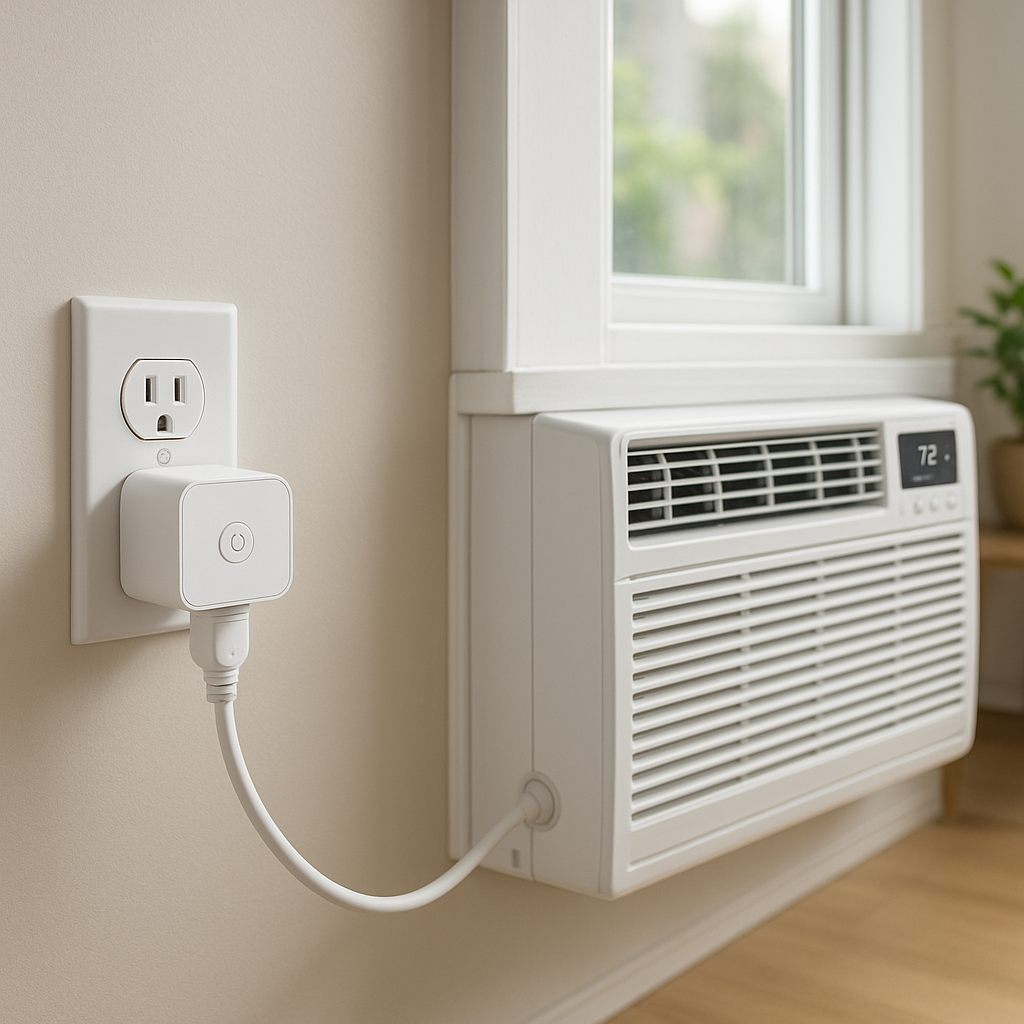
- Older air conditioners or space heaters: Some units have a simple physical power button that the Bot can press, avoiding expensive smart upgrades.
- Garage doors or gates: If there’s a wall-mounted open/close button, a Bot can control it, though you should always consider safety and access implications.
You still need to understand how your device behaves. For example, if a device always boots into standby and needs multiple presses to start, automation may be unreliable.
Performance and Reliability in Daily Use
Button pushing strength and compatibility with different switch types
The Bot’s arm is surprisingly strong for its size. It handles most standard light switches and appliance buttons without issue. Where it can struggle:
- Very stiff industrial-style buttons.
- Deeply recessed buttons that require extra travel.
- Unstable surfaces where the Bot flexes instead of pushing straight.
For traditional rocker switches, SwitchBot provides a “switch mode” attachment and configuration so the arm can pull the switch back after pushing it, effectively turning a single press Bot into an up/down toggle.
Response time, connectivity range, and Bluetooth vs cloud control
Direct Bluetooth control from your phone is generally fast, with a small delay (often under a second) between tapping in the app and the physical press. The typical Bluetooth Low Energy range is roughly a room or two away in most apartments; walls and appliances can reduce this.
With a hub, you gain cloud control. Commands go from your phone to the SwitchBot cloud, then to your hub, then via Bluetooth to the Bot. That adds a bit of latency, but for most button presses (lights, coffee maker, fans) the delay is still acceptable.
To understand the underlying wireless tech, the Bluetooth Low Energy overview on Wikipedia explains how BLE is optimized for low-power, intermittent communication, which matches how the Bot operates.
Noise level and privacy considerations
The Bot makes a noticeable but brief mechanical click or whir when it activates. In a quiet bedroom at night you’ll hear it, but it’s not loud enough to be disruptive in most living spaces.
From a privacy angle, the Bot itself doesn’t have a microphone or camera. It’s essentially a motorized switch. Any cloud privacy concerns mostly come from using the SwitchBot app and hub, not the Bot hardware directly.
Battery life and real-world maintenance needs
The SwitchBot Bot runs on a replaceable coin-cell battery. Battery life depends heavily on how often it’s triggered, but for typical use (a few presses per day), users commonly report many months of operation before needing a swap.
The app can show battery status, so you’ll get warning before it dies. Replacing the battery is quick: open the casing, insert a new cell, and you’re back in action. In a multi-Bot setup, it’s worth keeping a few spare batteries around.
Pros and Cons of the SwitchBot Bot for Renters
What makes it renter-safe (no wiring, no drilling, reversible install)
For renters, the Bot’s main advantages are:
- No permanent changes: No holes, no wiring changes, and usually no visible damage after removal.
- Landlord-friendly: If you remove the Bot and adhesive carefully, the switch or button looks unchanged.
- Portable: You can pack the Bots and take them to your next apartment, then reconfigure your automations there.
This approach lets renters enjoy smart home benefits without asking for permission to replace switches or risking security deposit issues.
Limitations: where the Bot doesn’t work well
There are scenarios where the Bot is not a great fit:
- Touch-sensitive capacitive buttons that don’t physically depress.
- Toggle switches with very narrow rockers or unusual shapes.
- Devices that require complex sequences of button presses or rotary knobs.
- Outdoor or very humid environments unless well protected.
Also, if you have dozens of switches you want to automate, using Bots everywhere can get visually cluttered and more expensive than a permanent smart switch upgrade.
How many Bots you realistically need for an apartment
In a typical rental, it’s rare to need a Bot on every switch. Focus on the few that truly add convenience:
- Entryway or hallway lights you often forget to turn off.
- Bedroom fan or bedside lamp that’s awkward to reach.
- A kitchen appliance you use daily (coffee maker, kettle).
- The building intercom door release, if applicable.
For many renters, 2–4 Bots cover the most impactful automations. That keeps upfront cost and maintenance manageable.
Setup Guide: Getting the Most Out of Your SwitchBot Bot
Ideal placement and orientation tips for reliable presses
Placement is crucial for reliability:
- Align the arm with the center of the button or rocker for maximum force.
- Make sure the arm has full, unobstructed travel and doesn’t scrape against edges.
- Stick the Bot to a solid, non-flexing surface so the force goes into the button, not into wobbling the Bot.
- Clean the surface with alcohol before sticking to improve adhesion.
Take a few test presses before fully committing the position. Slight adjustments often make a big difference.
Calibrating press vs switch mode for different devices
The SwitchBot app lets you configure how the arm moves:
- Press mode: The arm extends and then retracts once per command. Good for buttons like a coffee maker power switch or intercom.
- Switch mode: The arm can be set to “on” and “off” positions, often using a small adhesive add-on hook, so it pushes or pulls a rocker switch up and down.
Spend a few minutes experimenting with duration and travel distance. For stubborn buttons, a slightly longer press or adjusted angle can solve missed activations.
Creating helpful automations for renters (lights, fans, entry systems)
Some renter-friendly automations that work well with the Bot:
- Bedroom comfort: Use a Bot on a standing fan’s power button, tied to a bedtime scene that also adjusts smart bulbs and closes smart curtains.
- Kitchen routine: Schedule a Bot to start the coffee maker each morning after your alarm goes off, using a hub and calendar/IFTTT integration.
- Entry convenience: Mount a Bot on your intercom’s door release and trigger it via your phone when guests arrive, rather than walking to the panel.
- Forgotten lights: Combine a Bot on a hallway light switch with a motion sensor to automatically turn off the light after no activity.
SwitchBot Ecosystem and Hub Requirements
When you need the SwitchBot Hub/Mini vs when Bluetooth is enough
You can use a single Bot without a hub if you’re fine controlling it only when your phone is nearby over Bluetooth. That’s enough for basic use, like pressing a coffee maker while you’re in the kitchen.
Add a SwitchBot Hub or Hub Mini when you want:
- Remote control from outside your home.
- Voice assistant integration (Alexa, Google Assistant, Siri Shortcuts).
- Cloud-based scenes and integrations with services like IFTTT or SmartThings.
- Multiple SwitchBot devices working together across rooms.
For a multi-room apartment with several Bots, a single hub placed centrally usually covers the whole space.
Using SwitchBot Bot alongside curtain openers, sensors, and meters
SwitchBot also sells devices like SwitchBot Curtain, contact and motion sensors, and temperature/humidity meters. These add context to Bot actions:
- When a temperature meter goes above a threshold, a Bot can turn on a fan or portable AC.
- When a contact sensor shows your front door opened, a Bot in the hallway can turn on a light for a few minutes.
- In the morning, a scene can open the curtains, turn on a bedside lamp with a Bot, and start the coffee maker.
The more SwitchBot components you add, the more the Bot feels like part of a cohesive automation system rather than a one-off gadget.
Example whole-apartment automation built around SwitchBot devices
Imagine a renter in a one-bedroom apartment:
- SwitchBot Curtain on the bedroom window.
- A Bot on the bedroom fan, and another on the living room light switch.
- A motion sensor in the hallway.
- A Hub Mini in the living room for cloud control and voice assistants.
They create a “Good Morning” scene: at 7:00 am on weekdays, the curtains open, the bedroom fan turns off, and the living room light toggles on. A motion-triggered scene at night turns on the hallway light Bot at low brightness (via a compatible dimmer or lamp) when motion is detected, then turns it off after a few minutes.
None of this required opening a wall box or asking the landlord to install smart switches.
Privacy, Security, and App Experience
Account, permissions, and data considerations
Using the SwitchBot Bot with the app and hub requires a SwitchBot account. Your devices and automations are associated with that account, and cloud control relies on SwitchBot’s servers.
On your phone, the app may request Bluetooth, location (for BLE scanning on some platforms), and notification permissions. As with any smart home ecosystem, it’s wise to use a strong, unique password and enable any available security features like two-factor authentication.
Reliability of remote access and cloud control
With a properly placed hub and stable home internet connection, remote access is generally reliable. Commands sometimes take a second or two to propagate, but outright failures are uncommon in typical home setups.
If your internet goes down, direct Bluetooth control from your phone to nearby Bots still works. Scheduled actions that are stored locally on the hub may also continue to run even without cloud access.
App usability, firmware updates, and long-term support
The SwitchBot app is fairly straightforward, with a device list, per-device settings, and a section for scenes and schedules. It’s not the most polished app in the smart home world, but it’s easy enough for most users to navigate after a short learning curve.
Firmware updates for Bots and hubs are delivered through the app. Running these keeps compatibility and reliability up to date. SwitchBot has been in the market for several years and continues to release new products, which is a positive sign for ongoing support.
Alternatives to the SwitchBot Bot
Comparing to smart light switches and dimmers (and why renters may avoid them)
Smart light switches and dimmers from brands like Lutron, TP-Link, or Leviton can offer a cleaner, more integrated solution for lighting. They replace the existing switch entirely, so you get:
- Native support in many smart home ecosystems.
- No physical Bot on the wall.
- Better dimming control and scene integration for lights.
However, they usually require:
- Access to the wiring and breaker panel.
- Landlord approval in rentals.
- A neutral wire in the switch box, which older buildings may lack.
That’s why many renters lean toward the Bot: convenience without negotiating electrical upgrades.
Other button pushers and DIY solutions
There are other stick-on button pushers from smaller brands, and some hobbyists build their own using small servos and Wi-Fi microcontrollers. DIY solutions can be cheaper or more flexible, but they often require 3D printing, soldering, and programming skills.
The SwitchBot Bot stands out primarily for its mature app, ecosystem, and hub integrations. If you want something that “just works” without custom code, the commercial ecosystem is a big advantage.
When it’s better to upgrade the device instead of adding a Bot
Sometimes it’s smarter to replace the device rather than attach a Bot:
- If a light is controlled by a lamp, a smart bulb or smart plug is usually simpler.
- If your AC already has an IR remote, a smart IR blaster can control it without physically pressing buttons.
- If your coffee maker is very old and inefficient, buying a modern model with built-in scheduling may be more reliable than automating a flaky button.
Use Bots where replacement is expensive, impossible, or restricted by your rental agreement.
Pricing, Value for Money, and Who Should Buy It
Single Bot vs multi-pack pricing
SwitchBot Bots are typically sold individually, with occasional discounts on multi-packs. For a single light or appliance, one Bot is all you need. If you know you’ll automate several switches, multi-pack pricing can bring down the cost per Bot.
Check the current pricing and any bundles that include a Hub Mini, as those can be a better deal if you plan to use voice assistants or remote control.
Hidden costs: hubs, batteries, and extra accessories
Beyond the Bot itself, consider:
- Hub or Hub Mini: Required for remote and voice control. This adds to initial cost but covers multiple Bots.
- Batteries: Replacement coin-cell batteries are inexpensive, yet you’ll want a small stock if you deploy many Bots.
- Adhesive pads or mounting plates: Helpful if you need to move Bots or deal with tricky surfaces.
For a small apartment with 3–4 Bots and a hub, you’re typically looking at an investment comparable to a modest set of smart switches, but with far less installation work.
Is the SwitchBot Bot worth it for renters, homeowners, and office setups?
Renters: This is where the Bot shines. It solves the “I can’t change the wiring” problem better than almost any other device, especially for intercoms and awkward switches.
Homeowners: If you own your place and are comfortable with electrical work, you may prefer smart switches for primary lighting. Bots still make sense for niche devices like an alarm panel, gate opener, or specialty appliances.
Offices and shared spaces: The Bot can automate shared coffee machines, meeting room lights, or lobby doors without altering building infrastructure, though you’ll want to coordinate with building management for safety and access control.
Final Verdict: Is the SwitchBot Bot Worth It for Renters?
Summary of key benefits and deal-breakers
The SwitchBot Bot offers:
- Wire-free, drill-free installation that keeps landlords satisfied.
- Compatibility with a wide range of legacy devices.
- Strong ecosystem and voice assistant integration via a hub.
- Respectable battery life and simple maintenance.
Potential deal-breakers include visible hardware on walls or appliances, limits with certain button types, and the extra cost of a hub for full smart home integration.
Best use cases and who will love it
The Bot is ideal if you:
- Live in a rental with strict rules about electrical work.
- Want to automate an intercom, older coffee maker, fan, or other non-smart device.
- Prefer no-tools installations and reversible setups.
- Already own or plan to own other SwitchBot devices.
It’s less compelling if most of your lights are already smart, you’re comfortable installing smart switches, or your devices use touch panels instead of physical buttons.
Our recommendation and buying tips (what to check before you order)
Before buying, check:
- The shape and stiffness of the button or switch you want to control.
- Whether there’s enough flat surface around it for mounting.
- If you’ll want voice and remote control (if yes, plan for a hub).
- How many devices truly benefit from automation, so you don’t overbuy.
For most renters who have at least one annoying or hard-to-reach switch, the SwitchBot Bot is a smart, low-risk purchase that can meaningfully upgrade daily life without a single screw turned.
FAQ
Does the SwitchBot Bot work without Wi-Fi?
Yes. You can control the Bot over Bluetooth directly from your phone using the SwitchBot app, even if you don’t have Wi-Fi. Wi-Fi (via a hub) is only needed for remote access, cloud scenes, and voice assistants.
Can the SwitchBot Bot control dimmer switches?
The Bot can press a dimmer switch if it has a physical button or rocker. It can’t smoothly adjust brightness like a native smart dimmer; it simply presses whatever button you place it on. For true dimming control, a smart bulb or dedicated smart dimmer is usually better.
Will the adhesive damage my walls or switches when I remove it?
On most painted walls and plastic switch plates, the adhesive removes cleanly if you pull slowly and carefully. If you’re worried, test on an inconspicuous spot first or use a removable mounting plate between the wall and the Bot.
Do I need a separate hub for every Bot?
No. One SwitchBot Hub or Hub Mini can handle multiple Bots and other SwitchBot devices within Bluetooth range. Place the hub in a central location to cover your entire apartment.
How often will I need to replace the battery?
Battery life depends on how often the Bot is activated, but under typical use, many users see several months or more from a single coin-cell battery. The app provides battery status so you can replace it before it runs out.