
The Aqara FP2 is one of the most talked‑about smart sensors because it promises what every smart home owner wants: reliable presence detection without constant false triggers. Instead of simple motion sensing, it uses mmWave radar to understand where people actually are in a room — even if they’re sitting still.
This review walks through what makes the Aqara FP2 different, how it performs in real homes, where it still falls short, and whether it can finally solve your false‑trigger headaches. We’ll also cover setup tips and practical automations so you can decide if it deserves a place in your smart home.
Aqara FP2 Presence Sensor Review: Overview and Verdict
Who the Aqara FP2 is for (and who it isn’t)
The Aqara FP2 is ideal if:
- You’re frustrated by lights turning off while you’re working, reading, or watching TV.
- You want more precise automations than “any motion in this room = turn lights on.”
- You use Apple Home, Alexa, Google Home, or Home Assistant and want better presence signals.
- You’re comfortable spending more on a sensor that can control multiple zones in one room.
It’s probably not for you if:
- You just need basic hallway or stair lights that turn on briefly as you walk by.
- You don’t want to deal with Wi‑Fi devices or app‑based room mapping.
- Your budget is tight and you need many sensors across the house; cheap PIR motion sensors may be enough.
- You expect 100% perfect detection in every corner without any tuning or placement work.
Key pros and cons at a glance
Pros
- mmWave presence sensing can detect people even when sitting still or lying in bed.
- Zone‑based detection (desk, sofa, bed, doorway) from a single sensor.
- Multi‑person detection with separate zones triggering different automations.
- Works locally on your network; presence logic doesn’t rely on the cloud.
- Good integrations with Apple Home, Alexa, Google Home, and third‑party platforms via Aqara.
Cons
- More expensive than typical motion sensors.
- Requires USB‑C power and careful placement; no battery option.
- Initial room mapping and zone setup can be confusing.
- Still possible to get false triggers from fans, curtains, or awkward room layouts.
- Advanced features depend heavily on the Aqara app; third‑party platforms see a simplified view.
Does it really fix false motion triggers? Quick answer
For many households, yes — the FP2 dramatically reduces classic false triggers like lights turning off while you sit still, or lights turning on in the middle of the night due to stray PIR motion. It doesn’t make your smart home perfect, but it’s a big step up from basic motion sensors, especially in living rooms, offices, and bedrooms where people stay mostly still.
You’ll still need to pay attention to placement and adjust sensitivity and zones. If you simply stick it on a wall and never tune it, you may run into new types of false triggers (e.g., picking up movement through thin walls or from fluttering curtains). With a little setup effort, though, it’s one of the best tools currently available for presence‑based automations.
What Makes the Aqara FP2 Different From Standard Motion Sensors?
mmWave vs PIR: Why presence sensing matters
Most affordable motion sensors use PIR (Passive Infrared) technology. They detect changes in heat, not actual human presence. That’s why:
- Sitting at your desk can look like “no one is here” after a few minutes.
- A passing draft of warm air or a pet can sometimes be misread as motion.
The FP2 uses mmWave radar, which emits very low‑power radio waves and analyzes reflections to sense micro‑movements and presence. It can pick up:
- Small body shifts while you read or type.
- Breathing and subtle movements while you’re sleeping.
- Very slow motion that PIR often misses.
If you’re interested in the underlying concept, the mmWave approach is similar to what’s described in short‑range radar technologies. For smart homes, the practical outcome is simple: far fewer “I’m still here — why did the light turn off?” moments.
Multi-person detection and zone-based presence
Unlike basic motion sensors that just say “motion yes/no,” the FP2 can identify presence in different areas (zones) of the same room and distinguish multiple people. In the Aqara app you can:
- Draw separate zones like desk, sofa, bed, or doorway.
- Trigger different automations when someone enters or leaves each zone.
- Get a sense of how many people are present overall (without identifying who).
This means one sensor can replace several motion sensors in a medium‑sized room, and automations can be much more specific — such as keeping a desk lamp on only while someone is actually seated at the desk.
Compatibility with Apple Home, Alexa, Google Home, and Matter roadmap
The FP2 connects via 2.4 GHz Wi‑Fi and uses the Aqara app as the main configuration hub. From there, it can be exposed to:
- Apple Home (HomeKit) via native support.
- Amazon Alexa for routines based on occupancy or motion states.
- Google Home to trigger lights, plugs, and other actions.
- Home Assistant and other advanced platforms via community integrations or Aqara bridges.
Aqara has also talked about Matter support as part of its broader roadmap, but the level of feature parity (especially zones and multi‑person details) may be more limited compared with what the Aqara app can do locally. Expect core presence/occupancy signals to be exposed first, with more complex capabilities potentially following over time.
Design, Build Quality, and Installation Experience
Unboxing and what’s in the box
In the box you typically get:
- The Aqara FP2 presence sensor.
- A USB‑C power cable and power adapter (varies by region/retailer).
- A mounting plate or bracket (depending on kit version).
- Quick start guide with QR code for the Aqara Home app.
The unit itself is compact and minimal, designed to blend into a wall or ceiling. There’s a small status LED, but in daily use you’ll barely notice it.
Power, mounting options, and optimal placement tips
The FP2 is mains‑powered only via USB‑C — there’s no battery option. That’s a trade‑off for constant mmWave scanning, which would drain batteries quickly.
Mounting options include:
- Wall‑mount near a corner for wide coverage of the room.
- Ceiling‑mount above the main living area or bed.
- Placing it on a shelf at roughly chest height, angled slightly downward.
Placement tips to reduce false triggers:
- Avoid pointing directly at windows; moving curtains can look like presence.
- Keep some distance from air vents or oscillating fans.
- Ensure it can “see” the areas you want to map; mmWave can be blocked by walls and some furniture.
- For bedrooms, a ceiling or high wall angle aimed at the bed works well.
Setup in the Aqara Home app (and pairing quirks)
Setup usually follows these steps:
- Plug in the FP2 and wait for the LED to enter pairing mode.
- Open the Aqara Home app, add a new device, and scan the QR code.
- Connect it to your 2.4 GHz Wi‑Fi network.
- Run the room calibration and mapping process.
Common quirks during pairing:
- The FP2 may not like hidden SSIDs or certain mesh Wi‑Fi band steering setups; if pairing fails, temporarily separate your 2.4 GHz network.
- Firmware updates often appear immediately after onboarding; let these complete before you start configuring zones.
- Be patient during the first mapping pass; early movements help the sensor understand room boundaries.
Presence Detection Performance and False Trigger Testing
Latency and responsiveness in real-world use
In day‑to‑day use, the FP2 is generally fast. Entering a room typically triggers “presence detected” within a second or two, which is fine for lighting and basic automation. Exiting a room can be tuned via delay timers, so you can choose whether lights snap off quickly or linger for a bit.
Compared with traditional PIR sensors, startup latency is similar or slightly better, but the FP2 shines in consistency — it doesn’t randomly “forget” you as long as you remain within its coverage area.
Detecting presence when you’re sitting still or sleeping
This is where mmWave really pays off. The FP2 is surprisingly good at understanding that someone is still present when they’re:
- Typing or using a laptop at a desk.
- Reading on a sofa with minimal movement.
- Sleeping in bed with only breathing and tiny shifts.
With sensible sensitivity settings and zone placement, you can keep task lighting, bedside lamps, or media setups active for as long as you’re actually there, with no need for “keep alive” button presses or manual overrides.
Handling pets, small movements, and very slow motion
Pets are a common source of false triggers. The FP2 can often be tuned to ignore small animals, but behavior will vary depending on:
- Pet size and how close they get to the sensor.
- Mounting height and angle.
- Configured sensitivity levels and ignore zones.
In many homes, ceiling‑mounted or high‑wall placement reduces pet‑based triggers, because the sensor focuses more on human‑height movement. You can also shrink zones to exclude areas where pets frequently roam while still covering seating and work areas.
Night-time reliability and dark-room performance
Because it’s radar‑based, the FP2 doesn’t care about light levels. It works the same in full daylight and pitch darkness. That makes it great for:
- Night bathroom lights that activate only when someone enters.
- Bedroom night lights that turn on gently if someone gets up.
- Media rooms where you might be watching in the dark but still want responsive control.
You can use time‑based conditions in your automation platform (e.g., after 11 p.m. use dimmer scenes) while relying on the FP2 for the underlying presence signal.
Room Mapping, Zones, and Multi-Person Detection
How to create zones (desk, sofa, bed, doorway) in the app
After the initial mapping, the Aqara app shows a top‑down view of the sensor’s coverage. You can then:
- Draw rectangles or polygons corresponding to physical areas (desk, sofa, dining table, bed, doorway, etc.).
- Drag and resize zones to align with the real‑world layout.
- Assign names so they’re easy to reference in automations.
For best results, physically walk or sit in each area while adjusting the zone so you can see when the sensor reports presence in the app. This feedback loop helps you fine‑tune boundaries.
Practical automations using zones (lights, HVAC, media, alarms)
Some useful real‑world automations include:
- Desk zone: Turn on a desk lamp and computer plug when presence is detected, then turn them off 10–15 minutes after the desk becomes empty.
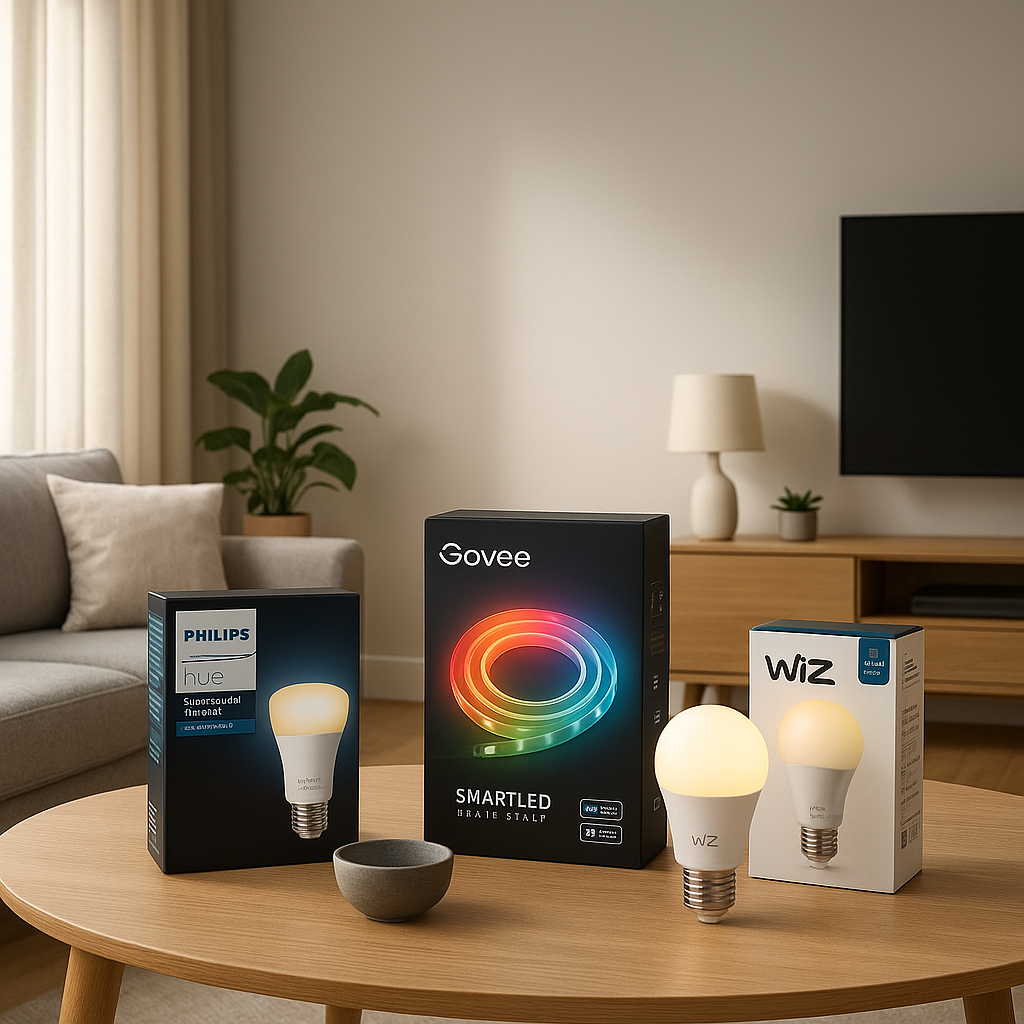
- Sofa zone: Dim living room lights and turn on a TV backlight strip (e.g., Philips Hue or Govee) when someone sits on the sofa after sunset.
- Bed zone: Trigger a bedtime scene (lamps to warm low brightness, close smart blinds) when presence is detected in the bed zone after a certain hour.
- Doorway zone: Act as an occupancy “gateway” — when the doorway zone is crossed, update a room occupancy flag in Home Assistant to control HVAC or security automations.
Accuracy with multiple people in the same room
The FP2 can detect multiple occupants and which zones are occupied, but it doesn’t identify specific individuals. In practice:
- It handles two or three people in distinct zones fairly well (e.g., one at the desk, one on the sofa).
- If multiple people crowd into the same small zone, you’ll usually just see that the zone is occupied, not how many.
- For complex family rooms, you may still want a combination of FP2 + door sensors or additional presence sensors for “whole home” logic.
Common mapping mistakes and how to fix them
Typical mapping issues include:
- Zones crossing walls: If a zone overlaps a neighboring room, you might get triggers when someone walks next door. Shrink the zone or move the sensor.
- Overlapping zones: Try to minimize overlap; otherwise, multiple automations may fire simultaneously.
- Ignoring furniture: Large cabinets, bookcases, or metal objects can block radar. If a zone seems dead, the line of sight may be obstructed.
- Too‑large zones: Start small and expand; smaller zones give clearer automation triggers.
Integration With Smart Home Platforms
Using Aqara FP2 with Apple HomeKit
Within Apple Home, the FP2 typically appears as one or more occupancy or motion sensors, depending on how the integration exposes zones. You can:
- Use occupancy states to control HomeKit‑enabled lights (e.g., Nanoleaf, Philips Hue via bridge).
- Trigger scenes when specific zones detect presence or become empty.
- Combine presence with time or other conditions via HomeKit automations.
Fine‑grained zone setup still happens in the Aqara app, but once configured, HomeKit sees the resulting sensors as if they were separate devices.
Connecting to Amazon Alexa and Google Home
In Alexa and Google Home, the FP2 is exposed as occupancy or motion entities you can use in routines. For example:
- In Alexa, use “When occupancy detected” to trigger smart plugs, lights, or announcements.
- In Google Home, set up automations so specific lights turn on when presence is detected in a linked zone.
The experience is simpler than in the Aqara app, but that’s often enough for everyday routines like lighting and basic security alerts.
Using FP2 with Home Assistant and advanced automation engines
Many smart home enthusiasts connect the FP2 to Home Assistant through integrations that surface:
- Presence sensors for the whole device and sometimes per‑zone entities.
- Attributes such as number of detected occupants or last motion time.
- Possibly raw coordinates or more advanced data (depending on integration evolution).
This allows you to build sophisticated logic, such as occupancy‑based HVAC control, per‑room energy management, or combining Wi‑Fi presence with mmWave sensing to reduce false positives.
How presence events look inside different platforms
Across platforms, presence typically appears as:
- Binary occupancy: Occupied / Not occupied (per sensor or per zone).
- Motion events: Motion detected / Clear.
- Optional attributes: Number of occupants, last detected time, etc., mostly visible in advanced platforms.
Remember that each ecosystem presents its own view. The most detailed data lives in the Aqara app; other platforms usually get a simplified, but still very useful, presence feed.
Real-World Use Cases to Reduce False Triggers
Reliable lighting in living rooms, hallways, and bathrooms
With conventional PIR sensors, people sitting quietly in living rooms often trigger light timeouts. With the FP2:
- Living room lights can remain on while someone is on the sofa zone, then turn off shortly after everyone leaves.
- Hallway sensors can better track direction of movement via corridor or doorway zones.
- Bathroom lights can stay on while someone is in the shower or at the sink, even with minimal movement.
Preventing lights turning off while you’re working or watching TV
Home offices and media rooms benefit the most:
- Set a desk zone to keep overhead and task lights on while the desk is occupied.
- Use a media zone in front of the TV to maintain dimmed lighting, even if you barely move during a movie.
- Combine presence with screen activity from a smart TV or streaming device for even more reliable automations.
Smarter climate control and occupancy-based heating/cooling
Pair the FP2 with smart thermostats like Ecobee or Tado (via Home Assistant or other middleware) to:
- Heat or cool rooms only when they’re actually in use.
- Lower HVAC output when a living room or office has been empty for a set time.
- Pre‑condition bedrooms when presence is first detected near bedtime.
Security use cases: silent presence detection and intrusion alerts
The FP2 is silent and works in the dark, which makes it useful for discreet security:
- Arm an internal alarm if presence is detected in certain rooms while the house is set to “away.”
- Trigger camera recordings or snapshots only when presence is detected, reducing false clips from sunlight or shadows.
- Use corridor or doorway zones as virtual tripwires.
Privacy, Data Handling, and Local vs Cloud Concerns
What data the Aqara FP2 collects and where it’s processed
The FP2 uses radar reflections to infer presence, not cameras or microphones. According to Aqara’s documentation on the Aqara Presence Sensor FP2 product page, core presence detection runs locally on the device, and the sensor shares occupancy states and related data with your hub/app over your local network.
Cloud access is mainly for remote control, firmware updates, and syncing with external platforms. If you block internet access for the device on your router, local automations may still function, but you’ll lose remote‑only features.
Using the sensor in bedrooms and private spaces
Because it isn’t a camera, many users are more comfortable placing FP2 units in bedrooms than they would be with video‑based devices. Still, you should:
- Review what entities are exposed to cloud services (Alexa, Google) and disable anything you don’t need.
- Limit access to the Aqara account and app with strong passwords and two‑factor authentication.
- Consider local‑only integrations for highly private rooms if you’re privacy‑sensitive.
Tips to balance privacy with presence automation
To strike a balance:
- Keep the FP2 on a separate IoT Wi‑Fi network or VLAN if your router supports it.
- Leverage local smart home platforms (Home Assistant, HomeKit) for sensitive automations.
- Turn off any logging you don’t need, and avoid sharing detailed presence history unless necessary.
Performance Issues, Limitations, and Known Quirks
Situations where false triggers can still happen
Even with mmWave, you may encounter:
- Ghost presence if zones extend through thin walls into neighboring spaces.
- Mis‑detections in very cluttered rooms where reflections confuse the sensor.
- Unwanted triggers from people passing in nearby corridors if the sensor “sees” through open doorways.
These are usually fixable with better placement, refined zones, and adjusted sensitivity, but they are worth keeping in mind.
Interference from fans, curtains, and HVAC airflow
Moving objects like ceiling fans or blowing curtains can resemble slow motion. To minimize this:
- Avoid aiming directly at ceiling fans or hanging plants that sway.
- Use ignore zones around areas with constant mechanical motion.
- Test HVAC modes; strong airflow can move lightweight objects into and out of view.
Firmware updates, stability, and long-term reliability
Aqara regularly publishes firmware updates to improve detection, fix bugs, and add minor features. Over time, users have reported improvements in stability and mapping behavior. As with any Wi‑Fi device:
- Use a stable 2.4 GHz network; avoid frequent SSID or password changes.
- Update firmware when convenient, but don’t rush to install a brand‑new release on day one in critical rooms.
- Rebooting the sensor or router can clear odd behavior if detection suddenly becomes unreliable.
Aqara FP2 vs Competitors and Previous Aqara Sensors
Aqara FP2 vs Aqara FP1: Is it worth upgrading?
The FP1 was Aqara’s earlier mmWave presence sensor. Key FP2 advantages include:
- Zone‑based presence instead of only whole‑room detection.
- Better multi‑person handling.
- Improved integration options and mapping features in the app.
If you already own FP1 units and they work well in simple rooms, you don’t need to rush to upgrade. But for complex spaces where zones matter (living room + dining + office corner), the FP2’s mapping and zone system make a strong case for replacing or complementing FP1s.
Aqara FP2 vs traditional PIR motion sensors
Compared with common PIR sensors from brands like Aqara, Philips Hue, or Sonoff:
- Detection quality: FP2 wins by a wide margin for seated, sleeping, or low‑movement presence.
- Coverage: One FP2 can often replace multiple PIRs in a large room.
- Cost: A single FP2 costs as much as several basic PIR sensors.
- Complexity: PIR is plug‑and‑play; FP2 requires mapping and tuning.
If you just need a motion‑activated closet or stair light, PIR is plenty. If you’re building room‑level presence logic, FP2 is the better choice.
Aqara FP2 vs other mmWave presence sensors (generic comparison)
The FP2 competes with other mmWave devices from various brands and DIY modules that connect to Home Assistant. The FP2’s strengths are:
- Refined app experience and visual mapping.
- Good out‑of‑the‑box integrations with mainstream ecosystems.
- Vendor‑supported firmware updates instead of manual tuning.
DIY or more open mmWave sensors may offer deeper raw control, but they demand more tinkering. The FP2 strikes a middle ground between power and convenience.
Pricing, Value for Money, and Who Should Buy It
Cost vs benefits in a real smart home
The FP2 sits at a premium price point compared with PIR sensors. The value shows up if it lets you:
- Use fewer sensors overall by covering multiple zones in one room.
- Cut down on energy waste from lights and HVAC running in empty spaces.
- Stop fighting with unreliable motion‑based automations.
If you rely heavily on presence‑based control, the time and frustration saved can easily justify the price of one or two FP2 units in key rooms.
When one sensor is enough and when to add more FP2 units
One FP2 is usually enough for:
- Medium‑sized bedrooms.
- Home offices.
- Standard living rooms without many walls or partitions.
You may want multiple units if:
- You have an open‑plan space with separate living, dining, and kitchen areas.
- There are L‑shaped zones or columns that block coverage.
- You want separate presence logic for a hallway plus an adjacent room.
Who should skip the Aqara FP2 and use cheaper motion sensors
Skip the FP2 and stick with PIR if:
- Your main goal is basic motion‑based lighting in small spaces.
- You rarely have issues with lights turning off while you’re still in a room.
- You prefer ultra‑simple, mostly offline Z‑Wave/Zigbee setups with long battery life.
Setup Tips to Minimize False Triggers From Day One
Best placement strategies for accurate presence detection
For reliable results:
- Mount at 1.8–2.2 m (6–7 ft) high, angled slightly downward toward seating and work areas.
- Avoid direct view of windows, mirrors, and fans.
- Keep it away from big metal objects that could reflect or block radar in odd ways.
- Test walking patterns: enter and leave the room several times while watching the app’s live view.
Recommended zone layouts for typical rooms
Some starting points:
- Bedroom: One large bed zone, one small doorway zone, and optionally a wardrobe or desk zone.
- Living room: Separate sofa, TV/media, and doorway zones. Optionally a reading corner or dining table zone.
- Home office: A focused desk zone, plus a general room zone for pacing around during calls.
- Bathroom: Sink area, toilet area, and shower/bath zone if coverage allows.
Automation examples that work reliably in most homes
Example automations to copy and adapt:
- Office: Turn on main light and smart plug when desk zone becomes occupied; turn off after 10 minutes of vacancy.
- Living room evening scene: If sofa zone becomes occupied after sunset, dim lights to 40% and turn on TV backlight.
- Bathroom night light: Between midnight and 6 a.m., if bathroom presence is detected, turn on a low‑level night light; turn off 5 minutes after no presence.
- HVAC control: If living room presence is not detected for 20 minutes, set thermostat to eco mode; restore comfort mode when presence returns.
Final Verdict: Can the Aqara FP2 Finally Fix False Triggers?
Key takeaways from long-term testing
The FP2 doesn’t make your smart home magically perfect, but it does tackle one of the most stubborn problems: unreliable presence detection. With proper placement and tuning, it:
- Keeps lights and devices on while people are actually in a room.
- Provides zone‑aware triggers that basic motion sensors can’t match.
- Integrates well enough with mainstream platforms for everyday use.
Our rating for accuracy, reliability, and ease of use
On a practical scale for most smart home owners:
- Accuracy: 9/10 — Excellent at detecting real presence, especially when seated or sleeping.
- Reliability: 8/10 — Generally stable, with occasional quirks that firmware and tuning can address.
- Ease of use: 7/10 — Initial mapping is more complex than PIR, but the app walks you through most steps.
Should you make Aqara FP2 the backbone of your presence-based automations?
If you’re serious about presence‑driven lighting, comfort, and security, the Aqara FP2 is one of the strongest options on the market right now. It’s especially valuable in rooms where people sit still for long periods or where you want multiple zones controlled independently.
Use cheaper motion sensors for simple areas, and reserve the FP2 for critical rooms like living spaces, bedrooms, and home offices. Treated as the backbone of presence in those key zones, it can dramatically cut down on false triggers and make your smart home feel far more responsive and “aware.”
FAQ
Does the Aqara FP2 work without an Aqara hub?
Yes. The FP2 connects directly to your 2.4 GHz Wi‑Fi and uses the Aqara Home app for setup and configuration. You do not need a separate Zigbee hub for it to function, although you may still want an Aqara hub for other devices.
Can the Aqara FP2 see through walls?
It can sometimes detect motion through very thin walls or open doorways, but it’s not designed to be a “see through walls” device. In practice, you should treat walls as boundaries and adjust your zones so they don’t extend into neighboring rooms.
Will the FP2 replace all my motion sensors?
Not necessarily. It’s best used in key rooms where accurate presence matters most. For closets, stairways, garages, and other simple spaces, inexpensive PIR motion sensors are still perfectly fine.
Is the Aqara FP2 safe to use near beds or for long periods?
The FP2 uses low‑power radar similar to many consumer devices and complies with regulatory standards. If you have concerns, you can mount it further away or on the ceiling so it covers the bed indirectly while still detecting presence.
Does the FP2 support Matter?
Aqara has discussed Matter support as part of its roadmap, but support and feature depth can vary by region and firmware. For the most advanced features like zone mapping, you should plan to use the Aqara app and the existing integrations with Apple Home, Alexa, Google Home, or Home Assistant.