Building a home gym is a big investment. Between treadmills, smart bikes, TVs, speakers, and fans, you end up with a lot of gear plugged into a few outlets. Smart plugs and power automations can make that setup safer, easier to use, and more energy efficient—if you use them correctly.
This guide walks through practical smart plug automations for treadmills, bikes, fans, entertainment gear, and more. We’ll also cover where smart plugs are not a good idea, how to avoid overloading circuits, and how to turn your workout space into a reliable, automated zone that’s ready whenever you are.
Why Your Home Gym Needs Smart Plug Automations
Common power problems in home gyms (standby drain, tripped breakers, overheating)
Home gyms often pack multiple high-draw devices into a small space, which can create a few common issues:
- Standby power drain: Treadmills, bikes, TVs, streaming boxes, and chargers can all pull power even when “off,” adding quietly to your monthly bill.
- Tripped breakers: Running a treadmill while a space heater, dehumidifier, or air conditioner is on the same circuit can push it past its limit.
- Overheating outlets and strips: Cheap power strips, daisy-chained extension cords, and dusty corners around heavy equipment can raise fire risk.
- Cluttered controls: You might have to flip multiple switches and buttons around the room before each workout, then again afterwards.
Smart plugs help you centralize and automate this, as long as you match the right plug to the right device.
Benefits of smart plugs for fitness spaces: safety, convenience, and energy savings
Used correctly, smart plugs can significantly improve how your gym feels and functions:
- Safety: Automatically cutting power to non-essential devices after workouts reduces the chance of overheated equipment or forgotten space heaters.
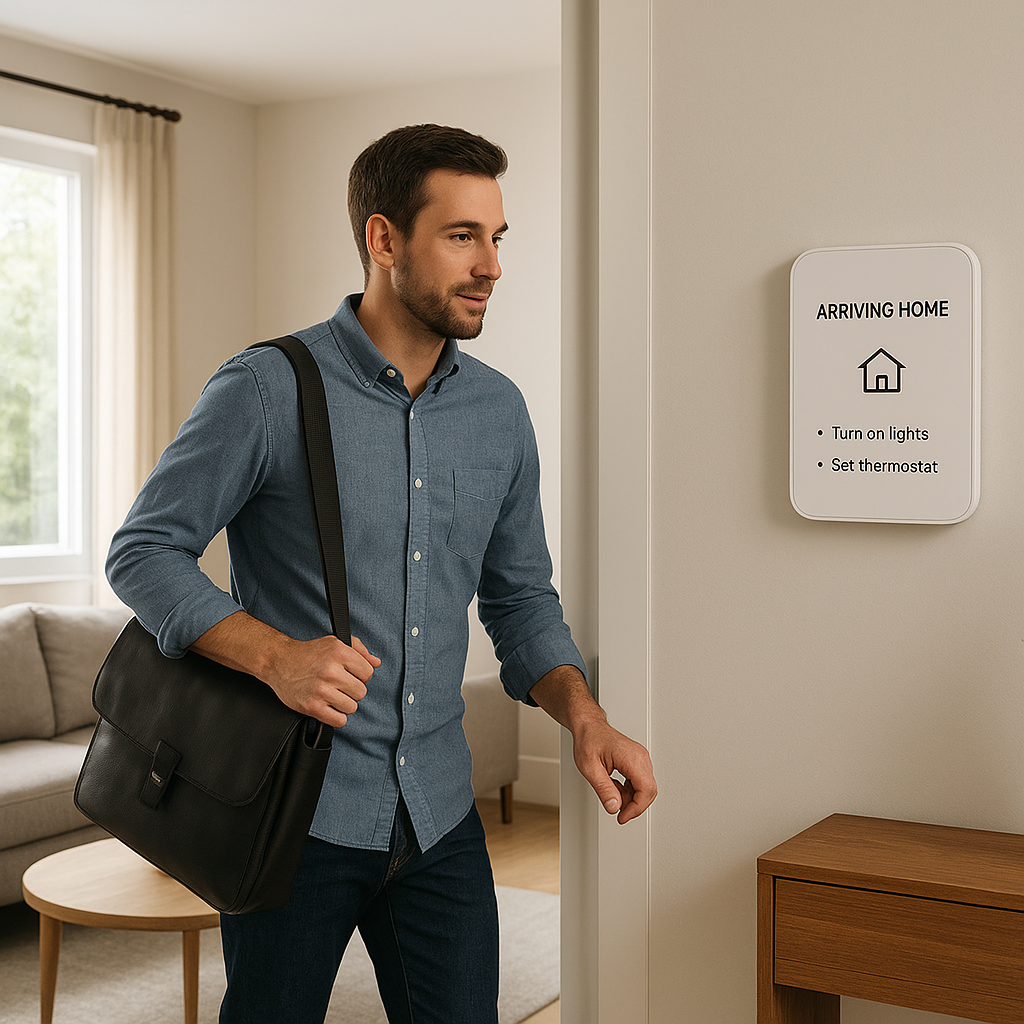
- Convenience: A single scene can turn on your treadmill, fan, TV, and LED strip lights when you say a voice command or tap your phone.
- Energy savings: Schedules and auto-off timers limit how long gear can sit in standby, which adds up for streaming boxes, consoles, and always-on displays.
- Consistency: Routines that always start with the same lighting, temperature, and entertainment make it easier to build workout habits.
What smart plugs can and cannot do for heavy gym equipment
Smart plugs are excellent for controlling power, but they are not magic fixes for every device:
- They can: cut power completely, run timers, follow schedules, and respond to sensors or routines.
- They can’t: change speed, incline, or resistance on a treadmill or bike (that requires direct integration with the equipment’s app or ecosystem).
For heavy gym equipment like treadmills, rowers, and strength machines, the main use of a smart plug is to ensure they’re fully off when not in use and to add safety lockouts. You must respect the smart plug’s maximum load rating and the manufacturer’s instructions for both the plug and the equipment.
Safety First: Can You Use Smart Plugs With Treadmills and Exercise Bikes?
Understanding amperage, wattage, and load limits for smart plugs
Every smart plug has a maximum current (amps) and power (watts) rating. Common ratings are 10A or 15A at 120V in North America (about 1,200–1,800W). Many treadmills can draw close to or above that at startup or under heavy load.
Before pairing a treadmill or bike with a smart plug:
- Check the treadmill label for amps or wattage (often near the power cord).
- Compare it with your smart plug’s printed rating and the specs in its app or manual.
- Remember that startup and peak loads can be higher than the listed continuous load.
If the numbers are close, err on the side of safety and do not use a smart plug. Instead, plug the treadmill directly into a properly rated wall outlet or consult an electrician.
Devices you should and shouldn’t control via smart plugs (treadmills, rowers, bikes, fans, lights, entertainment gear)
As a general guide:
- Usually safe with smart plugs (within rating):
- Fans and air circulators
- Lamps and LED strips powered by wall warts
- TVs, projectors, soundbars, speakers, and receivers
- Streaming boxes and game consoles (for full power off)
- Dehumidifiers and portable air purifiers
- Use caution and check specs carefully:
- Treadmills and ellipticals
- Rowers and smart bikes
- Space heaters and portable AC units
- Connected strength systems (e.g., cable machines with motors)
- Generally avoid on smart plugs:
- Anything the manufacturer specifically says should be plugged directly into the wall
- Devices with very high startup currents or dedicated 20A circuits
- Equipment where cutting power abruptly could cause data loss or damage
How to check compatibility between your gym equipment and a smart plug
To check compatibility:
- Find the nameplate on your equipment (near the cord or under the frame) and note voltage and amperage.
- Find the same numbers on your smart plug’s casing, packaging, or product page.
- Only pair the two if your equipment’s maximum draw is well below the plug’s rated limit.
- Search the equipment manual for any warnings about using extension cords, surge protectors, or smart plugs.
- If in doubt, contact the manufacturer of the treadmill or bike and ask specifically about smart plugs.
Surge protection, GFCI outlets, and when to consult an electrician
In many garages and basements, gym outlets should be protected by GFCI (ground-fault circuit interrupter) devices to reduce shock risk around concrete floors and moisture. You can learn more about how these work and where they’re recommended in this overview of GFCI and residual-current devices.
Smart plugs do not replace surge protectors or GFCI protection. Use:
- GFCI outlets or breakers near sinks, laundry areas, and garage doors.
- Surge-protected power strips for sensitive electronics like TVs and receivers.
- Direct wall outlets (no smart plug) for very high-draw equipment where required.
Consult an electrician if:
- Breakers trip frequently during workouts.
- You’re unsure whether a circuit can handle both a treadmill and a heater.
- You want a dedicated circuit for your largest cardio machine.
Best Types of Smart Plugs for Home Gym Setups
Indoor vs. outdoor smart plugs for garages and patios
Choose plugs rated for where you’ll actually use them:
- Indoor plugs: Fine for most bedrooms, basements, and interior rooms where there’s minimal moisture and dust.
- Outdoor-rated plugs: Better for garage gyms, sheds, and covered patios where humidity, temperature swings, or sawdust are factors.
Look for an IP rating (e.g., IP44) and confirm the plug is labeled for outdoor or damp locations if you’re installing it in a less-protected space.
Single-outlet vs. power strip smart plugs for multi-device racks
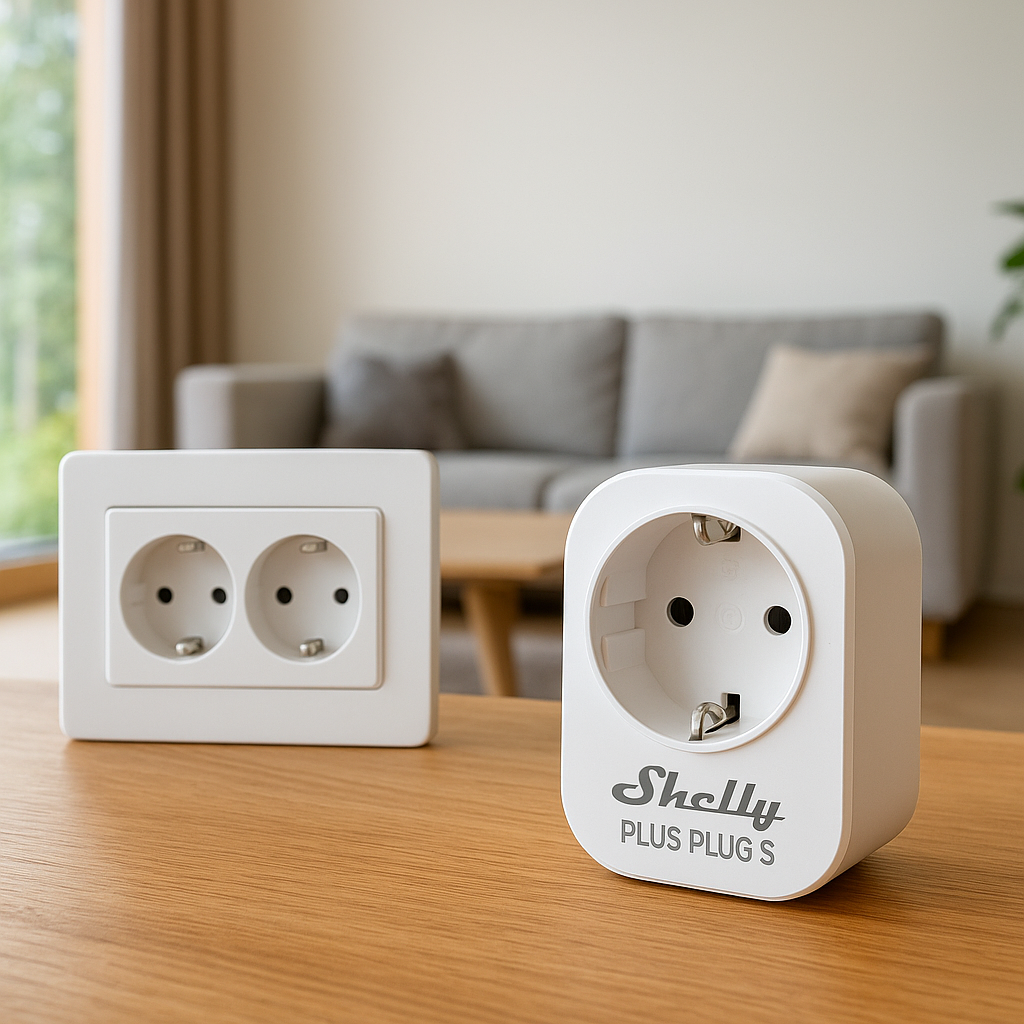
For a media rack with a TV, soundbar, streaming box, and LED lights, using one smart power strip can simplify your setup. Many smart strips offer individual control per outlet plus a master switch. This lets you, for example, keep the TV and receiver on a schedule, while controlling the LED lights separately.
Single-outlet smart plugs are better for:
- Individual fans or heaters
- Dehumidifiers or air purifiers
- Single lamps or neon signs
Choose whichever makes cable management and automation simpler while staying within total load limits.
Smart plugs with energy monitoring to track workout power usage
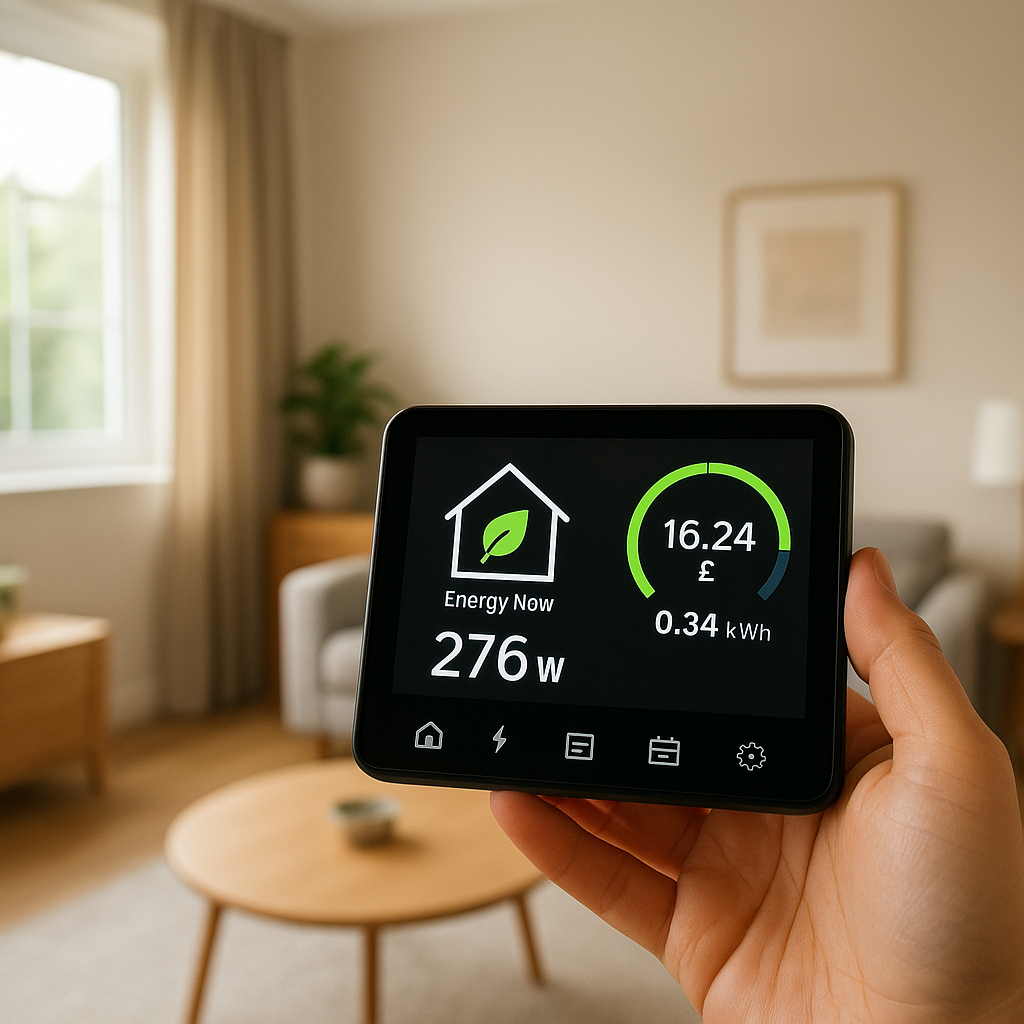
Energy-monitoring smart plugs show you how much power a device uses in real time and over time. These are especially useful for:
- Understanding the real cost of your treadmill or bike sessions.
- Spotting equipment that keeps pulling power while “off.”
- Comparing different fans, dehumidifiers, or air purifiers.
Some plugs export data to CSV or integrate with platforms like Home Assistant, giving you fine-grained history for optimization.
Ecosystem choices: Alexa, Google Home, Apple Home, and Matter-compatible plugs
Pick smart plugs that natively support the platform you already use:
- Alexa / Echo: Wide device support and easy voice routines.
- Google Home: Simple voice controls and routines for lights, fans, and media.
- Apple Home: Good for privacy and local control, especially with Thread/Matter plugs.
- Matter-compatible plugs: Better long-term flexibility, since they can work across platforms with local control.
Sticking with one or two ecosystems keeps routines simpler and avoids app overload.
Core Smart Plug Automations for Treadmills and Cardio Machines
“Master power” automation to fully cut power after workouts
Create a routine or scene called something like “End Workout” that:
- Turns off power to the treadmill smart plug (if safely supported).
- Shuts down TVs, receivers, and LED strips.
- Turns off fans or heaters.
Trigger it with a voice command or a button on the wall. This ensures you don’t leave anything in standby for hours.
Auto-off timers if you forget to shut down your treadmill or bike
Many smart plug apps let you set an auto-off timer. For example:
- Turn off the treadmill outlet 10–15 minutes after you turn it on.
- Auto-cut power to the smart bike after 90 minutes.
This is a backup in case you forget to power things down manually. Just make sure the auto-off time is long enough that it doesn’t interrupt active workouts.
Workout schedule automations that power equipment only during active hours
You can reduce risk and save energy by limiting when power is even available:
- Enable the treadmill plug only between 5–9 AM and 5–9 PM on weekdays.
- Shut off non-essential outlets during overnight hours.
- Run a “gym ready” schedule that powers everything on 15 minutes before your usual workout window and then shuts it down afterward.
Safety lockout automations when kids are home or at night
If you have children, set up automations so cardio machines stay off-limits outside supervised times:
- Use a routine that disables the treadmill outlet whenever you arm your home security in “away” or “night” mode.
- Use parental voice PINs (where supported) to prevent kids from turning gym gear on via voice assistant.
- Combine smart plugs with physical safety keys and child locks on the machines themselves.
Smart Plug Automations for Bikes, Rowers, and Strength Equipment
Pre-warm and cooldown routines for connected spin bikes and rowers
Many smart bikes and rowers take a minute or two to boot and connect to Wi‑Fi. Use a smart plug to:
- Power on the device a few minutes before your scheduled class (using a time-based routine).
- Keep it on during your typical workout window.
- Turn it off automatically 15–30 minutes after your usual end time.
This keeps ready time short while avoiding 24/7 standby.
Smart plugs for power racks, cable machines, and connected weight systems
Some modern strength systems have displays, motors, or digital weight stacks. Use smart plugs to:
- Ensure they’re fully off when not in use.
- Schedule power only during your usual lifting hours.
- Integrate them into “heavy lifting” scenes with brighter lights and music.
Again, follow the equipment’s power recommendations and avoid smart plugs if the device warns against power strips or intermediate devices.
Linking smart plugs with fitness apps and routines (where possible)
Some brands integrate with Alexa, Google, or Apple Health. Where direct integration exists, let the fitness app control workout details and use smart plugs for broad power control only. For example:
- Use your bike’s app to schedule classes.
- Use a smart plug schedule to ensure the bike has power around class times, and is off outside them.
Using smart plugs to reset or reboot glitchy connected gym devices
Many connected bikes, rowers, and mirrors occasionally freeze. A smart plug makes it easy to:
- Power cycle the device remotely via app or voice.
- Schedule a weekly auto-reboot at a time you never exercise, reducing freezes.
Just avoid aggressive or frequent power cuts that could interrupt firmware updates.
Entertainment Gear Automations: TVs, Projectors, Speakers, and Consoles
One-tap “Gym Entertainment On” scene for TVs, soundbars, and LED lights
Create a scene that:
- Powers your TV or projector and receiver via a smart strip.
- Turns on a soundbar or speakers.
- Activates LED strip lights behind the TV or around the room.
Map it to a physical button, phone widget, or voice command like “Start gym entertainment.”
Power-saving automations for streaming boxes and game consoles
Streaming boxes and gaming consoles can be major standby power users. The U.S. Department of Energy explains how these “standby” loads add up across your home in its guide to standby power and phantom loads.
In a gym context, you can:
- Shut off power to consoles and boxes outside of workout hours.
- Use motion sensors or smart buttons to turn them on only when you’re actually in the gym.
- Kill all entertainment outlets with a single “Cool Down” or “End Workout” routine.
Voice commands to start workout playlists and switch inputs
Once your AV gear is on smart plugs, combine it with your voice assistant:
- “Start treadmill run” can power the TV, switch to a fitness app input, and start a playlist.
- “Bike class mode” can dim lights, power on the sound system, and cue up a spin playlist.
Most of this is done by combining smart plugs, HDMI-CEC settings on your TV, and routines in your voice platform.
Creating distraction-free workout modes that limit TV or console time
If you find yourself gaming instead of lifting, you can flip that around:
- Allow console power only during certain hours or after a workout scene runs.
- Create a “Focus mode” that powers speakers for music but leaves the TV and console off.
- Use timers that automatically cut power to consoles after 45–60 minutes.
Climate and Comfort: Fans, Heaters, Dehumidifiers, and Air Purifiers
Smart plug automations to pre-cool or pre-heat your gym before workouts
Comfort makes workouts more appealing. Use smart plugs with fans, portable heaters, or portable AC units (within rating) to:
- Start cooling or gentle heating 15–30 minutes before your scheduled session.
- Shut them down automatically at the end of your workout.
- Prevent devices from running for hours unattended.
For high-draw heaters and AC units, confirm the smart plug can handle the load or use direct wall outlets and a dedicated thermostat instead.
Pairing smart plugs with temperature and humidity sensors
In ecosystems that support it, you can tie smart plugs to temperature or humidity readings:
- Turn on a fan when the room exceeds 75°F and exercise is in progress.
- Run a dehumidifier when humidity crosses 60%, then shut off when it returns to a target range.
This prevents over-drying the room or wasting energy.
Cycling dehumidifiers and air purifiers for healthier indoor air
Basement and garage gyms often need air quality help. Smart plugs can:
- Run dehumidifiers in cycles (e.g., 2 hours on, 1 hour off) to reduce moisture and mold risk.
- Turn on air purifiers during and shortly after workouts to remove dust and odors.
- Shut these devices off at night or when you’re away.
Garage gym automations for extreme hot or cold conditions
For garage spaces:
- Use outdoor-rated plugs for fans, air movers, or radiant heaters (within spec).
- Tie them to both schedules and temperature thresholds so they don’t run unnecessarily.
- Consider adding an inexpensive temperature sensor so you know when the garage is actually comfortable for a safe workout.
Lighting and Ambience Automations for Motivating Workouts
Smart plug control for floor lamps, LED strips, and neon signs
Most decorative lighting in a gym—floor lamps, LED strips with plug-in power supplies, neon-style signs—works great with smart plugs. You can:
- Turn all gym lights on with one action.
- Run schedules that dim things down after your workout window.
- Switch between bright and low-light modes with scenes.
Color and brightness scenes for warmup, heavy lifting, and cooldown
Pair smart plugs with color-capable bulbs or LED strips (even if they’re controlled through a separate hub):
- Warmup: Medium brightness, warmer tones, light music.
- Heavy lifting: Bright, cooler white or bold colors, louder music.
- Cooldown: Dimmer, softer colors to encourage stretching and recovery.
Scenes can control both the lights and the plugs powering entertainment or fans.
Music-synced lighting using smart plugs, smart bulbs, and hubs
Some ecosystems allow music-synced lighting where colors and brightness change with your playlist. Smart plugs play a supporting role here by powering:
- LED light strips connected to a hub that handles the sync.
- Amplifiers, receivers, or powered speakers.
Turn everything on with one “Workout lights” scene and let the hub handle the rest.
Low-light evening gym setups that keep the rest of the house dim
If you train late, you may not want to flood the whole house with light. Use smart plugs to:
- Turn on only floor lamps, not overhead lights.
- Run dim LED strips along the floor for safe footpaths.
- Keep hallway or adjacent room lights off while the gym area is softly lit.
Energy Monitoring: How Much Power Does Your Home Gym Really Use?
Tracking treadmill and bike usage with energy-monitoring smart plugs
With compatible equipment and properly rated plugs, you can:
- See exactly how many kWh a treadmill or bike uses per week.
- Compare different workout programs’ energy impact.
- Spot unusual draws that might indicate a maintenance issue.
Combine this with your electric rate to calculate cost per workout.
Identifying standby vampires: TVs, consoles, speakers, and chargers
Plug your media rack, speakers, and chargers into energy-monitoring smart strips to see how much they draw when “off.” You might find:
- Streaming boxes pulling 5–10W constantly.
- Receivers drawing power just to stay ready for quick wake.
- Chargers and accessories sipping power 24/7.
Estimating monthly energy costs of your home gym
Most monitoring apps show monthly usage per plug. Multiply kWh by your utility rate to estimate costs:
- Treadmill and bike usage
- Climate control (fans, dehumidifiers, heaters)
- Entertainment gear and lighting
This helps you decide where schedules and automations will have the biggest impact.
Automations to cut idle power draw without affecting convenience
Once you know where the power goes, build targeted automations:
- Turn off consoles and AV gear outside of workout windows.
- Run dehumidifiers only when humidity is high.
- Shut off decorative lighting after a set time.
The goal is to reduce idle draw while keeping your gym ready to go when you are.
Room-Specific Smart Plug Strategies: Bedroom, Basement, and Garage Gyms
Bedroom gyms: quiet, low-glare, and sleep-friendly power automations
For bedroom gyms:
- Use smart plugs to cut power to bright screens and LED signs at a set bedtime.
- Keep fan and air purifier outlets on a schedule that supports sleep (lower speeds, quieter modes).
- Ensure treadmills or bikes are powered only during daytime to avoid noisy late-night sessions.
Basement gyms: moisture control and safety-focused power rules
Basements often need extra protection:
- Use smart plugs for dehumidifiers with humidity-based automations.
- Ensure outlets are GFCI-protected and avoid daisy-chaining power strips.
- Use scenes that turn on both lights and fans together so you never walk into a dark, damp gym.
Garage gyms: outdoor-rated plugs, Wi-Fi challenges, and high-draw tools
In a garage:
- Choose outdoor-rated smart plugs for fans, lights, and some tools.
- Consider a Wi‑Fi extender or mesh node to keep plugs online.
- Keep high-draw tools (saws, compressors) separate from gym circuits, especially during workouts.
Small-apartment gyms: multi-use spaces and quick reset scenes
For small apartments where a living room doubles as a gym:
- Create a “Gym mode” that powers a spin bike, brightens lights, and switches TV input to a workout app.
- Create a “Living room mode” that turns off the bike outlet, dims lights, and restores normal TV settings.
- Use compact smart strips behind media consoles to hide clutter.
Building Smart Routines and Scenes in Popular Platforms
Example home gym automations in Alexa Routines
In the Alexa app, you can build routines like:
- “Start Treadmill”: Turn on treadmill plug, TV plug, and soundbar plug; set volume; start a specific playlist.
- “Gym Shutdown”: Turn off all gym plugs and lights; turn on a small hallway night light.
Example home gym automations in Google Home
In Google Home, create automations that:
- Turn on fans, dehumidifier, and lights when you say “Hey Google, let’s work out.”
- Shut everything down and set a reminder to stretch when you say “Workout done.”
Example home gym automations in Apple HomeKit
In Apple Home, you can:
- Create a “Gym” scene that turns on plugs for your bike, TV, and amp, and sets light colors.
- Use automations tied to time or presence (e.g., when your iPhone enters the garage) to prep the room.
- Leverage Thread or Matter plugs for faster, more reliable local control.
Using IFTTT and advanced home automation platforms for complex routines
If you use platforms like IFTTT or Home Assistant, you can:
- Trigger plugs based on your calendar (e.g., turn on the rower 10 minutes before a scheduled class).
- Use fitness app data (where supported) to log energy usage alongside workout metrics.
- Create complex conditions, such as “If humidity is high and a workout scene is active, then run the dehumidifier and fan.”
Installation and Setup Tips for Reliable Home Gym Smart Plugs
Where to place smart plugs and power strips safely around equipment
Smart plugs should never become tripping hazards or be buried under gear. Good practices include:
- Mounting power strips on walls or the back of racks, not on the floor.
- Keeping plugs and cords away from treadmill belts and moving parts.
- Leaving enough slack in cords so plugs aren’t under tension.
Dealing with Wi-Fi dead zones in garages and basements
Smart plugs need reliable Wi‑Fi (unless they use a hub). To improve coverage:
- Add a mesh Wi‑Fi node near the gym.
- Avoid putting routers inside cabinets or behind large metal objects.
- Prefer 2.4 GHz networks for range, which most plugs support.
Labeling outlets and circuits for easy troubleshooting
Labeling helps when breakers trip or automations fail:
- Label each smart plug with the device it controls (e.g., “Gym TV,” “Rowing machine”).
- Note which wall outlets connect to which breaker.
- Document your main routines so you remember what each scene does.
Testing automations and fail-safe behaviors before heavy use
Before relying on automations:
- Test each routine a few times while watching the equipment.
- Confirm that auto-off timers don’t interrupt normal workouts.
- Verify that nothing critical (like a freezer on a shared strip) is turned off by gym scenes.
Privacy, Security, and Reliability Considerations
Keeping your smart gym online during firmware updates and outages
Occasional firmware updates and internet outages are inevitable. To reduce frustration:
- Schedule firmware updates for overnight or non-workout times.
- Use platforms that support local control so basic on/off still works without the cloud.
- Have at least one physical switch or button that can override automation when needed.
Minimizing app clutter and notification overload
It’s easy to accumulate multiple apps. To keep things sane:
- Standardize on one or two major ecosystems.
- Turn off non-essential notifications (e.g., every time a plug turns on/off).
- Group devices logically by room and scene names.
Local vs. cloud control for dependable workout routines
Local control (where commands stay on your home network) usually means faster response and better reliability. Look for:
- Matter, Thread, or Zigbee devices connected to a local hub.
- Platforms that can run automations locally without the internet.
Cloud-only plugs are fine for many uses, but you may notice occasional delays or outages that can interrupt carefully planned routines.
When to upgrade to a smart panel or dedicated smart circuits
If you have a large home gym with several big machines and climate gear, a few smart plugs may not be enough. Consider:
- Installing a dedicated 20A circuit for your main treadmill.
- Upgrading to a smart electrical panel or smart breakers that can monitor whole-circuit loads.
- Working with an electrician to balance loads and add outlets where you need them.
Sample Home Gym Automation Recipes You Can Copy
Morning cardio scene: lights, fan, treadmill, and playlist
“Morning Cardio” scene:
- Turns on treadmill plug and fan plug.
- Sets bright, cool lighting.
- Powers TV and switches input to your favorite fitness app.
- Starts a high-energy playlist on your speaker.
Heavy lifting scene: bright lighting, focused music, and quiet screens
“Heavy Lifting” scene:
- Turns off TV and console outlets to reduce distractions.
- Turns on plugs for a loudspeaker or amp.
- Sets gym lights to maximum brightness with neutral or cool white.
Cooldown and stretch scene: softer lights, air purifier, and timer
“Cooldown” or “Stretch” scene:
- Dims lights and shifts to warmer tones.
- Turns on an air purifier or gentle fan.
- Starts a 10–15 minute timer so the purifier runs a bit after you leave.
Away mode: kill all gym power and cut every standby device
“Gym Away” mode:
- Turns off every smart plug in the gym (treadmill, bike, entertainment, lighting, chargers).
- Leaves only essential devices (like a dehumidifier on a humidity-based rule) active if needed.
- Optionally sends a notification confirming the room is powered down.
Conclusion: Designing a Safer, More Efficient Smart Home Gym
Key takeaways for choosing the right smart plugs and automations
Smart plug automations for home gym setups work best when you:
- Match plugs to device loads and follow safety guidelines.
- Use scenes and schedules for repetitive daily routines.
- Leverage energy monitoring to cut standby waste.
- Keep your ecosystem simple and well-labeled.
Balancing safety, performance, and energy savings in your gym
Your top priorities should be safe wiring, appropriate load handling, and reliable control. Once those are in place, you can fine-tune scenes for motivation, comfort, and efficiency without risking overloaded circuits or unstable equipment.
Next steps: from basic timers to fully automated workout zones
Start small with one or two smart plugs on fans, lights, or entertainment gear. As you get comfortable, expand to energy monitoring, sensor-based routines, and more advanced scenes that tie your entire gym together. Over time, your workout space can become a smart, responsive environment that supports your fitness goals with minimal fuss.
FAQ
Can I safely use a smart plug with any treadmill?
No. You should only use a smart plug with a treadmill if the treadmill’s maximum current draw is comfortably below the plug’s rated limit and the manufacturer does not warn against power strips or intermediate devices. When in doubt, plug the treadmill directly into a dedicated wall outlet and consult an electrician.
Will smart plugs damage my exercise bike or connected gym mirror?
Used correctly, smart plugs generally won’t damage equipment. However, cutting power repeatedly during firmware updates or while the device is writing data can cause software issues. Allow devices to shut down gracefully after workouts and avoid aggressive on/off cycling.
Do I really save much money by cutting standby power in my home gym?
Individual devices might only cost a few dollars per year in standby, but multiple TVs, consoles, receivers, and chargers can add up. Energy-monitoring plugs will show your real numbers so you can decide which automations are worth the effort.
Should I use smart plugs for space heaters in my gym?
Space heaters draw a lot of power and are a common source of electrical fires. Only use a smart plug with a space heater if the plug is rated for the heater’s load, the manufacturer allows it, and you follow strict safety rules. In many cases, a dedicated circuit and a built-in thermostat are safer options.
What’s the simplest smart plug setup for a beginner home gym?
A great starting point is to put your gym TV and streaming device on a smart strip, your main fan on a smart plug, and your decorative lighting on another plug. Create one “Gym On” scene and one “Gym Off” scene. Once those feel natural, you can add more devices and refine your routines.