
Adding a smart plug to a window or portable air conditioner can save energy, add convenience, and help you avoid running the AC when you don’t need it. But AC units draw a lot more power than lamps and phone chargers, so you can’t just grab any cheap smart plug and hope for the best.
Use the wrong plug and you risk tripping breakers, overheating the outlet, or stressing the compressor in your AC. Choose the right one and you’ll gain safe remote control, useful schedules, and even detailed energy monitoring.
This guide walks through what to look for, how to check compatibility, and some recommended plugs that work well with typical 120V window and portable AC units.
Why You Need a Specialized Smart Plug for Window and Portable AC Units
The risks of using a random smart plug with high-wattage AC units
Most basic smart plugs are designed for low to moderate loads, like lamps (40–100W) or small appliances (200–800W). A window or portable AC is in a different league: 5000–12,000 BTU units commonly draw 800–1500W, and larger models can pull close to the full 15A rating of a standard circuit during startup.
If the smart plug isn’t rated for that load, or if its internal components are cheaply made, a few things can happen:
- Overheating inside the plug – undersized relays and contacts get hot under high current.
- Melted plastic housings – prolonged high load can deform the plug body.
- Contact arcing – switching high inrush current can damage internal parts.
- Hidden damage – the plug may keep working, but with weakened components that are no longer safe.
That’s why you’ll often see manufacturers explicitly state that their basic smart plug is not for space heaters or air conditioners.
Common problems: tripped breakers, overheating, and short cycling
Even if a random smart plug technically “works” at first, you may run into recurring issues:
- Tripped breakers – the added resistance or loose connections of a low-quality plug can increase current draw and heat, triggering the breaker sooner.
- Warm or hot outlets – the wall receptacle and plug can both heat up under continuous heavy load.
- Short cycling – frequent on/off switching by automations or manual control can cause the compressor to start and stop too often, which is hard on the AC.
- AC failing to restart – some AC units need a short delay before restarting; cutting power abruptly with a plug can confuse their electronics.
These issues are more than annoyances—they can shorten the life of both your AC and the smart plug.
Benefits of a proper smart plug: safety, automation, and energy savings
A smart plug designed to handle AC-level loads gives you control and insight without the risks. The right device can provide:
- Safer switching with components rated for high inrush currents and continuous high loads.
- Simple automation using schedules so the AC only runs when it makes sense (for example, cooling the bedroom only at night).
- Remote control from your phone or voice assistant if you forget to turn it off when leaving.
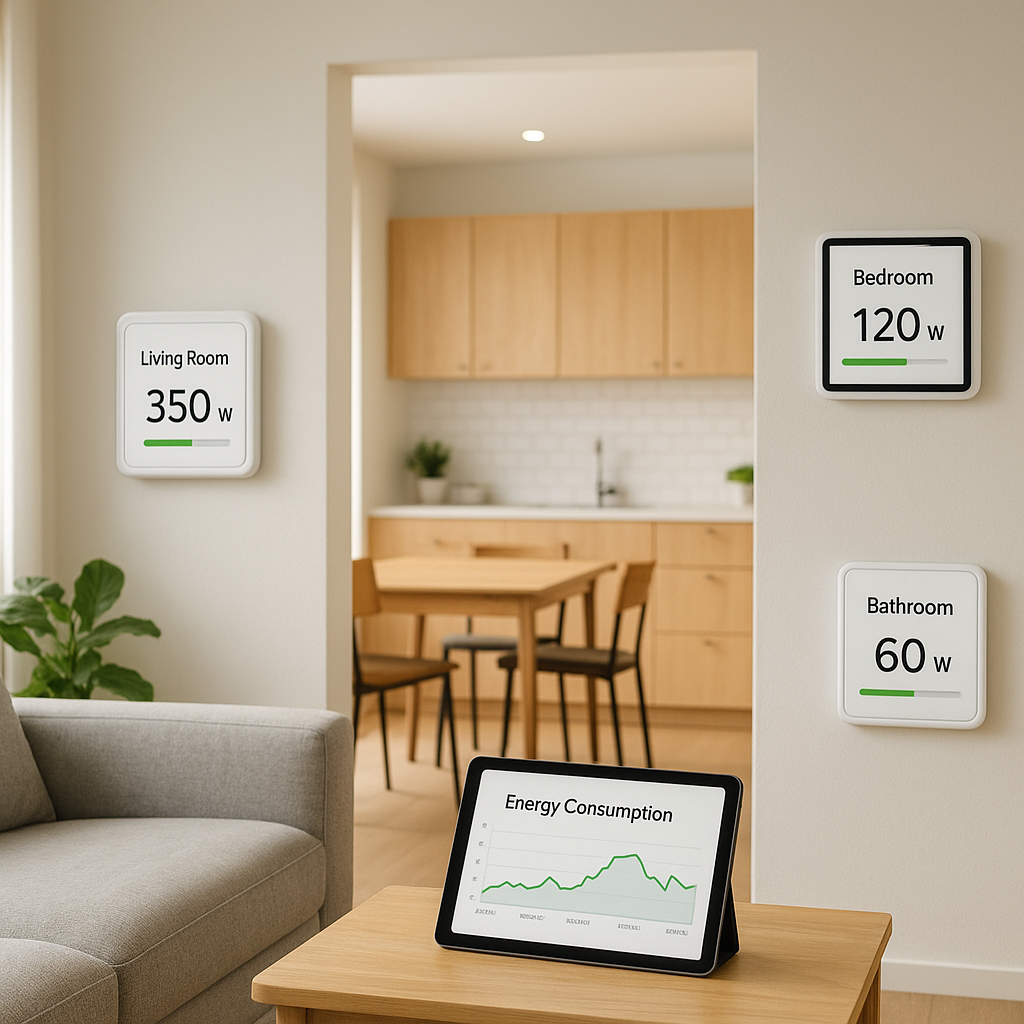
- Energy monitoring on some models, showing real-time watts, kWh history, and estimated cost.
- Integration with other devices like motion sensors, temperature sensors, or smart blinds for more efficient cooling.
Key Safety & Performance Features to Look For
Amperage and wattage ratings for typical window and portable ACs
Before picking a smart plug, you need a rough idea of how much power your AC uses. For 120V window and portable units, you’ll typically see:
- Small bedroom window AC (5,000–8,000 BTU): 500–900W (about 5–8A)
- Medium living room window AC (8,000–12,000 BTU): 800–1300W (about 7–11A)
- Larger portable AC (10,000–14,000 BTU): 1000–1500W (about 9–13A)
Most 120V household circuits and heavy-duty smart plugs top out at 15A (around 1800W at 120V). To stay within safe limits:
- Choose a smart plug rated for at least 15A / 1800W at 120V, not just 10A or 12A.
- Allow a margin—avoid running the plug right at its maximum rating continuously.
- Be careful with multiple devices plugged into one smart strip; their combined load still must stay under the rating.
UL/ETL safety certifications and surge protection basics
Look for smart plugs that are certified by a recognized safety lab such as UL or ETL. This means the device has passed standardized tests for things like overcurrent, heat, and fire resistance.
On the plug or in the manual, you’ll typically see markings like “UL Listed” or “ETL Listed” along with an issue number. These are more meaningful than vague marketing claims like “industrial grade.”
Surge protection is a bonus. Some heavy-duty smart outlets or power strips include basic surge suppression, which can help protect your AC’s electronics from minor spikes, though it’s not a substitute for a whole-home surge protector.
For more background on how North American plug and outlet types are standardized, the article on NEMA connectors is a useful reference.
Safe start-up handling: inrush current and compressor delay considerations
When an AC compressor starts, it draws a short burst of higher current—called inrush current. This can be two to three times the running current for a fraction of a second.
A good AC-capable smart plug should have:
- A relay and contacts rated for motor loads, not just resistive loads.
- Clear specs on max current, with some margin to handle inrush.
- Stable Wi-Fi and firmware to avoid rapid power toggling during glitches.
Some smart plugs and ACs also implement a restart delay after power loss, giving the refrigerant pressure time to equalize before the compressor tries to start again. This reduces strain on the motor.
Why you should avoid continuously toggling power on compressor-based devices
Compressors (in ACs, dehumidifiers, and fridges) do not like being turned on and off rapidly. If your automation or routines cause the smart plug to:
- Turn the AC off and then back on within 1–3 minutes, or
- Cycle power many times per hour
you can shorten the compressor’s life or cause nuisance trips on thermal protection. Instead:
- Use the AC’s own temperature control for fine-grained cycling where possible.
- Use the smart plug for higher-level control (on/off by schedule, occupancy, or geofence) with minimum off times of 5–10 minutes.
- Avoid repeatedly power-cutting the AC when you only need small temperature adjustments.
Can You Use a Smart Plug With Your Window or Portable AC? (Compatibility Checklist)
How to check your AC’s voltage, amperage, and BTU rating
Start with the AC unit’s label, usually found:
- On the side or back of a window unit (behind the front grille or side panel).
- Near the power cord exit or on the rear panel of portable units.
You’re looking for:
- Voltage (V) – typically 115V or 120V for smaller US units; 220–240V for larger or specialty models.
- Amperage (A) – e.g., 7.5A, 10.2A, 12A.
- Power (W) – sometimes listed directly (e.g., 1100W).
- BTU – cooling capacity, often 5000–14,000 BTU for residential units.
If your AC is 120V and under about 12–13A running current, a 15A-rated, properly certified smart plug can usually be used safely, assuming the rest of the circuit is in good condition.
Plug type, outlet type, and dedicated circuit considerations
Next, confirm the plug and outlet type:
- Standard 120V 15A plug (NEMA 5-15P) – two vertical blades and a ground pin. Most consumer smart plugs are designed for this.
- 120V 20A plug (NEMA 5-20P) – one blade is T-shaped. These often require a 20A circuit and are not compatible with typical 15A smart plugs.
- 240V plugs – various shapes, usually for high-capacity units; not suitable for typical Wi-Fi smart plugs.
Also consider the circuit:
- If the breaker is labeled specifically for the AC, it may be a dedicated circuit, which is good from a load perspective.
- If several outlets and appliances share the circuit, you must account for their combined load when the AC is running.
- A smart plug doesn’t increase the circuit’s capacity; it just adds control.
When you must NOT use a smart plug (hardwired, 240V, or high-amp units)
Do not use a plug-in smart plug in these cases:
- The AC is hardwired (no plug; wired directly into a junction box).
- The unit is 240V only or uses a high-amperage plug not matching common 15A outlets.
- The nameplate shows 15A or more running current on a 120V circuit; you’re already at the edge of what a typical circuit and smart plug can safely handle.
- The manufacturer explicitly warns against using extension cords, power strips, or intermediary devices on the power cord.
In these situations, consider a smart thermostat for a through-the-wall or central system, or a dedicated smart AC controller instead.
Smart plug vs smart thermostat vs built-in Wi-Fi AC: which is best?
There are three main approaches to making cooling “smart”:
- Smart plug – best for basic on/off control and simple automations with plug-in ACs that have mechanical or auto-resume controls.
- Smart thermostat or smart AC controller – better for precise temperature management and long-term reliability with mini-splits, central systems, or some window units that respond to IR remote control.
- Built-in Wi-Fi AC – modern window and portable units with native app control; they often support schedules, geofencing, and sometimes energy reports without extra hardware.
For a straightforward 120V window or portable AC where you mainly want remote on/off and energy tracking, a high-quality smart plug is usually the simplest and most affordable option.
Best Smart Plugs for Window AC Units (Safe and Reliable Picks)
Pick #1 – Heavy-duty smart plug for 15A window ACs (core recommendation)
Look for a plug in the class of the TP-Link Kasa KP115 or similar 15A smart plugs. Key traits to prioritize:
- 15A / 1800W rating at 120V with clear labeling.
- UL or ETL certification and a sturdy, non-flimsy housing.
- Reliable app ecosystem with good long-term support (e.g., Kasa, Tapo, or similar brands).
- Optional energy monitoring so you can see exactly how much power your AC uses.
These are good fits for typical 5000–10,000 BTU bedroom and living-room window units that draw 7–11A.
Pick #2 – Compact smart plug for smaller bedroom window units
For smaller 5,000–8,000 BTU bedroom ACs that draw under ~8–9A, a compact 12A smart plug can work if it’s still properly certified and you stay well under its maximum rating.
Choose a model that:
- Is rated for at least 12A at 120V.
- Has a low-profile design so it doesn’t block the second outlet.
- Supports your preferred ecosystem (Alexa, Google Home, Apple Home, or Matter).
These are ideal when space is tight behind furniture or when your AC’s plug is bulky and needs room.
Pick #3 – Smart outdoor-rated plug for ACs on balconies or patios
If your window unit or portable AC is plugged into an outdoor outlet (for example, on a balcony or patio enclosure), consider an outdoor-rated smart plug such as the TP-Link Kasa EP40 or similar:
- Weather-resistant housing (IP rating) to handle moisture and temperature swings.
- Heavy-duty 15A rating suitable for high loads.
- Short pigtail cord that can make tight outdoor outlets more usable.
Outdoor plugs are bulkier than indoor models, but they’re designed to survive conditions that would quickly deteriorate a standard indoor smart plug.
Pros and cons comparison table: max load, certifications, app ecosystem
| Type | Typical Max Load | Best For | Certifications | Pros | Cons |
|---|---|---|---|---|---|
| Heavy-duty 15A smart plug | 15A / 1800W | Medium–large window ACs | Usually UL/ETL | Safest for higher loads; often has energy monitoring | Bulkier; may block adjacent outlet |
| Compact 12A smart plug | 12A / ~1440W | Small bedroom window ACs | Varies; check label | Smaller size; easy to fit behind furniture | Less margin; not ideal for bigger units |
| Outdoor-rated 15A plug | 15A / 1800W | Balcony or patio installations | UL/ETL + outdoor rating | Weather resistant; robust housing | Bulkier; may need extra space at outlet |
Best Smart Plugs for Portable AC Units With Energy Monitoring
Pick #1 – Energy-monitoring smart plug for tracking kWh and cost
For portable ACs, energy use can be significant, so an energy-monitoring smart plug is especially useful. Look for features like:
- Real-time wattage display so you can see spikes when the compressor kicks in.
- Daily, weekly, and monthly kWh totals.
- Cost estimation where you can enter your local utility rate.
Devices similar to the Emporia Smart Plug or Kasa KP115 fall into this category. They help you answer questions like, “How much does it actually cost to cool the home office from 1–6 PM?”
Pick #2 – Multi-outlet smart strip for portable AC plus fan/dehumidifier
Portable AC setups often include extras: a fan, a dehumidifier, or an air purifier. A smart power strip with individually controllable outlets can manage all of these together.
Look for a strip that offers:
- High total load rating (e.g., 15A overall) and per-outlet guidelines.
- Per-outlet on/off control so the AC runs on one outlet and the fan or dehumidifier on others.
- Optional per-outlet energy monitoring for a detailed breakdown.
Just be sure the combined wattage of the AC and extras does not exceed the strip’s total rating or the wall circuit’s capacity.
Pick #3 – Budget smart plug with basic usage stats
If you’re more budget-conscious and just want simple run-time visibility, some low-cost plugs offer basic usage stats—such as total on-time and simple kWh counters—without full analytics.
These are a good entry point if:
- Your portable AC is on the smaller side (under ~1000W).
- You mostly want on/off control with occasional checks of how long it has run.
- You don’t mind more limited data and fewer advanced features.
How accurate is smart plug energy monitoring for ACs?
Smart plug energy monitoring is usually accurate enough for household decision-making, but not as precise as a dedicated power meter. Expect:
- Within roughly 5–10% accuracy for kWh over time with reputable brands.
- Occasional misreads during very brief inrush spikes.
- Better long-term averages if you look at daily or monthly usage instead of second-by-second graphs.
For estimating costs and comparing different schedule strategies, smart plug monitoring is more than adequate.
Recommended Automation Routines for AC Smart Plugs
Schedule examples for cooling only when you’re home
Simple time-based schedules can cut a lot of waste:
- Bedroom AC: Turn on at 8:30 PM, off at 7:00 AM on weekdays; shift later on weekends.
- Home office AC: On at 30 minutes before your typical start time, off automatically at 6:30 PM.
- Guest room AC: Normally off; only scheduled on when guests are visiting.
Use the AC’s own thermostat for temperature control, and use the smart plug to define when the AC is allowed to run.
Using geofencing to pre-cool before arrival
Many smart plug apps or connected platforms (like Alexa Routines or Google Home) support geofencing based on your phone’s location. You can create rules like:
- “When I’m within 3 miles of home and it’s after 4 PM, turn on the living room AC.”
- “If everyone leaves the house, turn off all AC smart plugs.”
This way, you avoid cooling an empty home but still walk into a comfortable space.
Pairing with temperature and humidity sensors for smarter control
For more nuanced control, integrate your AC smart plug with wireless temperature and humidity sensors via platforms like Home Assistant, SmartThings, or Apple Home:
- Turn the AC on when the bedroom reaches 78°F and humidity rises above 60%.
- Switch to fan-only (separate smart plug) when the room reaches your ideal setpoint.
- Run a dehumidifier smart plug whenever the AC is off but humidity is still high.
This sensor-based approach can trim runtime while keeping rooms more comfortable.
Setting up safe “off” delays to protect the compressor
To avoid short cycling via the smart plug:
- Build in a minimum off delay of at least 5 minutes before the plug is allowed to turn back on.
- Avoid chains of routines where multiple platforms might toggle the same plug rapidly.
- Use “cooling windows” (for example, allowed to run between 6 PM and 10 PM) instead of minute-by-minute toggling.
Step-by-Step Setup: Connecting Your AC to a Smart Plug Safely
Pre-checks: circuit load, extension cords, and outlet condition
Before you even open the smart plug box:
- Inspect the outlet for discoloration, looseness, or burn marks. If anything looks off, have an electrician inspect it.
- Avoid extension cords and power strips for the AC if at all possible; plug the AC + smart plug directly into a wall outlet.
- Check what else is on the circuit (microwave, toaster, space heater, etc.). Try not to run multiple heavy appliances on the same circuit as the AC.
Initial pairing in the app (Wi-Fi, Matter, Alexa, Google, HomeKit)
Most smart plugs follow a similar pairing process:
- Plug the smart plug into the wall outlet with no load attached yet.
- Install the manufacturer’s app on your phone.
- Follow the in-app instructions to put the plug into pairing mode (usually by holding a button).
- Connect it to your 2.4 GHz Wi-Fi network (many plugs do not support 5 GHz).
- If supported, add the plug to your ecosystem of choice—Alexa, Google Home, Apple Home, or Matter.
Naming, grouping, and room assignment for better voice control
Good naming saves headaches later. Tips:
- Use clear names like “Bedroom Window AC” or “Office Portable AC,” not just “Plug 1.”
- Assign the plug to the correct room in your smart home app.
- Create groups like “All ACs” so you can say “Turn off all ACs” when leaving.
Testing: temperature stability, plug temperature, and breaker behavior
For the first few days:
- Run the AC through hot parts of the day and occasionally touch the smart plug (carefully). Warm is normal; very hot to the touch or soft plastic is not.
- Monitor for unexpected breaker trips. If the breaker trips repeatedly with the smart plug installed but not without it, you may be too close to its limits.
- Check that the room temperature behaves as expected when your schedules and routines run.
Safety Tips and Limitations When Using Smart Plugs With AC Units
Signs your smart plug is overloaded or overheating
Stop using the plug and reevaluate your setup if you notice:
- The plug or outlet is too hot to comfortably touch.
- Discoloration, a burnt smell, or any sign of melting plastic.
- Frequent breaker trips or the AC randomly shutting off.
- The smart plug app reporting errors or auto-shutoff due to overload.
Why frequent on/off cycling can damage your AC compressor
Every time the compressor starts, it works against refrigerant pressure that builds up when it’s off. Starting too soon, before that pressure equalizes, forces the motor to work harder and can cause:
- Higher inrush current and more stress on electrical components.
- Overheating of the compressor windings.
- Premature failure or lower efficiency over time.
That’s why many manuals recommend waiting several minutes before restarting the AC after a power cut.
When to use a dedicated smart thermostat or smart AC controller instead
A smart plug is not the right tool in every situation. Consider a smart thermostat or a dedicated AC controller (for example, one that controls the AC via IR remote) if:
- You need precise temperature control instead of just on/off.
- You have a mini-split or central system rather than a plug-in AC.
- Your unit doesn’t resume automatically after power is restored.
These solutions talk to the AC in a way it expects, reducing stress on the compressor and electronics.
Maintenance: periodic checks and replacing aging smart plugs
Smart plugs don’t last forever, especially under high loads. Every few months:
- Inspect the plug and outlet for signs of wear or heat damage.
- Check that the plug still connects reliably to Wi-Fi.
- Update firmware in the app to ensure bug fixes and security patches.
If a plug has been running a heavy AC load for several summers and shows any issues, it’s reasonable to retire and replace it.
How Much Can You Save? Estimating Energy and Cost Reductions
Using energy monitoring data to identify wasteful cooling habits
Once your AC is on an energy-monitoring plug, let it run for a couple of weeks and review the graphs. You might discover:
- The bedroom AC runs two extra hours after you fall asleep.
- The home office AC is on full blast during lunch breaks or errands.
- Weekend usage patterns are very different from weekdays.
By tweaking schedules and geofencing rules, you can cut those wasted hours while staying comfortable.
Sample savings scenarios for bedroom, living room, and home office ACs
Here’s a rough idea of how savings can add up:
- Bedroom AC: Reducing runtime by 1 hour per night at 900W saves about 0.9 kWh per night. Over a 90-day season, that’s ~81 kWh—noticeable on your bill.
- Living room AC: Turning it off automatically when you leave for errands might save 1–2 hours of runtime several days per week.
- Home office AC: Scheduling it to start 30 minutes before work instead of all morning can cut several hours per week.
The U.S. Department of Energy has more tips on efficient room air conditioner use at EnergySaver: Room Air Conditioners, which can complement your smart plug strategies.
Combining smart plugs with smart blinds and fans for better efficiency
Smart plugs are even more effective when combined with other devices:
- Smart blinds or shades can automatically close during peak sun to reduce heat gain.
- Ceiling fans or tower fans on smart plugs can run alongside the AC to improve comfort at slightly higher thermostat settings.
- Dehumidifiers controlled by humidity sensors can keep the air feeling cooler even when the temperature is a bit higher.
Troubleshooting Common Issues With AC Smart Plugs
Smart plug disconnects from Wi-Fi or stops responding
If your plug goes offline frequently:
- Verify it has a strong 2.4 GHz Wi-Fi signal (move the router or use a Wi-Fi extender if needed).
- Update the plug’s firmware via the app.
- Avoid placing the plug behind heavy metal objects or inside crowded power strips that can reduce signal strength.
AC not restarting properly after a power cut or smart plug reboot
Some ACs require you to manually press a power button after power returns. If your AC doesn’t automatically resume cooling when the smart plug turns back on:
- Look in the AC’s settings for an auto-restart or “memory” mode.
- If no such option exists, consider a smart remote/IR controller instead of a smart plug.
- Avoid frequent power cuts—use the plug mainly for scheduled on/off at the start and end of the day.
Plug or outlet feels warm: when is it normal vs unsafe?
Under a heavy load like an AC, mild warmth is normal. Concerning signs include:
- The surface feels uncomfortably hot to hold your hand on.
- The plastic is soft, discolored, or smells burnt.
- The plug housing rattles or feels loose.
In those cases, unplug the AC, stop using the smart plug, and have the outlet inspected.
Fixing voice assistant misunderstandings and routine conflicts
Voice assistants sometimes misinterpret commands like “turn on the AC” if you have multiple devices:
- Give each plug a unique name and avoid generic names like “AC” or “Fan.”
- Review your Alexa/Google/HomeKit routines to ensure only one set of rules is controlling each plug.
- If multiple platforms (e.g., the plug’s native app and a hub) schedule the same device, consolidate automations into one place.
Summary: Choosing the Best Smart Plug for Your Window or Portable AC
Quick decision guide by AC size, amperage, and budget
As a quick reference:
- Small bedroom window AC (≤8,000 BTU, <9A): High-quality 12–15A smart plug, ideally compact if space is tight.
- Medium window or portable AC (8,000–12,000 BTU, 9–12A): Heavy-duty 15A smart plug with UL/ETL certification; energy monitoring recommended.
- Larger portable AC or borderline loads: 15A plug with extra margin; consider a smart strip only if total load stays below the rating.
- 240V or high-amp units, or hardwired systems: Skip plug-in smart plugs; use a smart thermostat or dedicated AC controller.
When a smart plug is the right solution—and when it isn’t
A smart plug is a great choice if:
- Your AC is 120V plug-in and under about 12–13A.
- The outlet and circuit are in good shape.
- You primarily want remote on/off, schedules, and basic energy insights.
It’s not the best option if you need deep temperature control, your AC doesn’t auto-restart, or the electrical load is beyond what a plug-in device should handle. In those cases, smarter thermostats or controllers are safer and more robust.
Next steps: monitoring your first month of usage and adjusting routines
After installing a suitable smart plug:
- Run it for a month, then review runtime and kWh data.
- Adjust schedules and geofencing to cut obvious waste.
- Keep an eye on the physical plug and outlet for any early signs of stress.
With a bit of tuning, you’ll have a safer, smarter cooling setup that’s easier to control and more efficient to run.
FAQ
Can any smart plug work with a window AC?
No. Many inexpensive smart plugs are only rated for 10–12A and are not intended for motors or compressors. For most window ACs, you should use a 15A, UL/ETL-listed smart plug designed for higher loads.
Is it safe to leave a window AC on a smart plug all day?
Yes, if the plug is correctly rated, properly installed in a good outlet, and not overloaded. The plug and outlet may feel warm, but they should not become excessively hot, discolored, or emit any odor.
Will a smart plug damage my AC’s compressor?
Used carefully, no. The risk comes from frequent power cycling. Avoid automations that turn the plug on and off every few minutes, and allow several minutes of off time before restarting the AC.
Can I use a smart plug with a 240V or hardwired AC?
Standard consumer smart plugs are made for 120V plug-in devices. Do not use them with 240V or hardwired AC units. For those systems, use a compatible smart thermostat or have a professional install appropriate smart controls.
Do smart plugs work if the internet goes down?
Most Wi-Fi smart plugs will still follow local schedules and can often be controlled manually via their physical button, even without internet. Remote control from your phone away from home and cloud-based routines will not work until connectivity is restored.